REVIEW · OAXACA CITY
Monte Albán, Arrazola, Cuilapam y San Bartolo Coyotepec.
Book on Viator →Operated by Oaxacatours · Bookable on Viator
Monte Albán is a wow-factor in any weather. This Oaxaca day trip pairs the UNESCO scale of Monte Albán with real hands-on culture stops: alebrijes woodcarvings in San Antonio Arrazola and black pottery in San Bartolo Coyotepec. What I love most is how much you fit in without feeling like a drive-by, plus the chance to learn context from your guide as you move from Zapotec to colonial-era sites. The main drawback is the physical side: Monte Albán involves serious stairs and uphill walking, so bring good shoes and plan for a workout.
You’ll start with a hotel pickup in Oaxaca City around 8:30am by air-conditioned coach, then spend about 2.5 hours exploring Monte Albán with a guided route. After that, the pace turns calmer in artisan towns—short walks, workshop-style visits, and time to look and buy at your own speed. I also appreciate the small-group feel (max 18 people), which helps when your guide stops the group for explanations and photos.
Price-wise, $37.55 per person is a fair deal for the guided full-day plan—transport, insurance, and a bilingual guide are included. Just know the day isn’t all-inclusive: Monte Albán tickets and some convent-related admission can cost extra, and lunch is on your own budget.
In This Review
- Quick take: what makes this day trip work
- First stop: Getting to Monte Albán and why the stairs matter
- Monte Albán’s Grand Plaza, ball court, and Los Danzantes
- San Antonio Arrazola: alebrijes woodcarvings you can actually spot in the wild
- Cuilapam de Guerrero: the Dominican convent and the open chapel
- San Bartolo Coyotepec: black pottery, MEAPO, and a craft market stop
- Price and value: what’s included vs what you’ll pay on top
- Pacing, walking load, and how to be comfortable
- Language balance: English-friendly, but ask questions if needed
- Who should book this Oaxaca day trip?
- Should you book Monte Albán, Arrazola, Cuilapam and San Bartolo Coyotepec?
- FAQ
- FAQ
- Do I need to buy tickets separately for Monte Albán and Cuilapam?
- How long is the tour, and what time does it start?
- Is there a lunch stop, and is lunch included?
- Is the tour offered in English?
- How many people are in the group?
- What will I be walking like on this day trip?
- Where does the tour start?
- Is there free cancellation?
- Are service animals allowed?
Quick take: what makes this day trip work
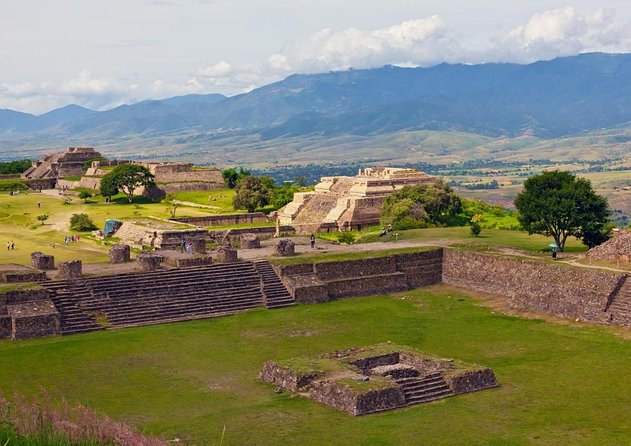
- Monte Albán’s set-piece ruins: Grand Plaza, ceremonial platforms, and the I-shaped ball court (built around 100 BC)
- Los Danzantes (The Dancers): rock carvings you’ll understand more after your guide’s story
- Arrazola alebrijes: a focused look at copal-tree woodcarvings of mythical creatures
- Cuilapam’s capilla abierta: a Dominican open chapel tied to colonial conversion efforts
- San Bartolo Coyotepec black pottery: see how barro negro ceramics are made, plus time in museum and craft market areas
- Small group logistics: max 18 travelers, hotel pickup/drop-off, and an air-conditioned coach for long transfers
First stop: Getting to Monte Albán and why the stairs matter
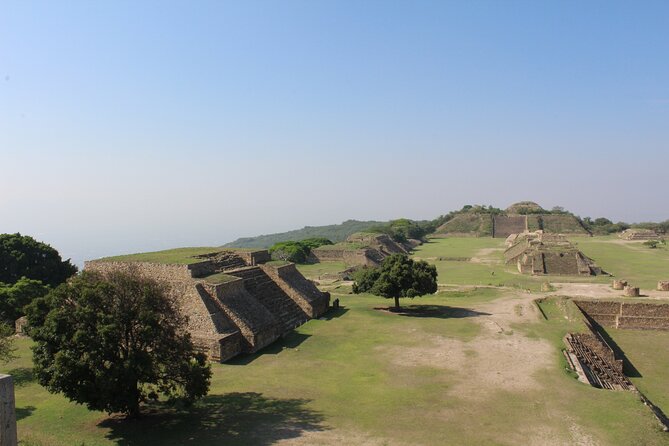
This is an all-day loop built around one big anchor: Monte Albán. You leave Oaxaca City with a midmorning schedule (pickup is around 8:30am from the Quinta Real 5 de Mayo area), and you’ll travel by coach in comfort. The route and timing are designed so you’re not stuck in traffic all morning, and you arrive before the heat gets too intense for a long site visit.
Here’s the honest part: Monte Albán is high up, and walking uphill comes with the territory. Reviews and on-site reality match—expect steps, some uneven paths, and a hike-like feel even if you’re not trying to race up to the South Platform (Plataforma Sur). If you have moderate physical fitness, you’ll be fine, but I’d still wear shoes with grip and plan for slow-but-steady pacing.
Practical tips that help a lot:
- Bring water and a hat. Sun and dust add up fast.
- Use sunscreen. Even “short” stops turn into time in open terraces.
- If you’re sensitive to heat, take the moments your guide pauses the group—shade is limited on the top.
You can also read our reviews of more tours and experiences in Oaxaca City.

Monte Albán’s Grand Plaza, ball court, and Los Danzantes
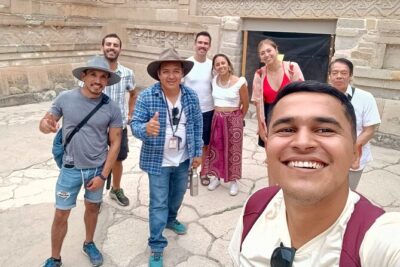
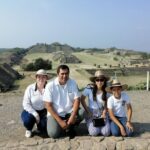
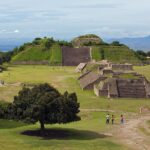
Monte Albán sits on a mountaintop above the Oaxaca Valley, and the views are part of the experience even before you reach the first carved stones. Your guided visit focuses on the big layout: you’ll walk the complex and see how the Zapotec city was organized around ceremonial and civic spaces.
What I like about the way this tour is structured is that you don’t just stand in front of ruins. Your guide points out key zones and ties them to Zapotec life, so landmarks like the Grand Plaza feel more meaningful than “random platforms.”
On the route, you’ll see highlights such as:
- Grand Plaza: a large open area on the plateau where you can grasp the site’s scale
- Ceremonial platforms and rock carvings: including Los Danzantes (The Dancers), a series of carvings often described in connection with recorded figures
- Tombs and excavation finds: the site includes 170 tombs, and you’ll hear how excavations revealed paintings and stone carvings
- Pyramids, temples, and altars: the “religious-and-public center” feeling comes from seeing these in context
- The I-shaped ball court: built around 100 BC, which gives you a better sense of how sports and ritual could overlap in ancient cities
Your guided time is about 2.5 hours, which is long enough to move between major stops and still pause for photos. Toward the end, you’ll go to the South Platform for wide views and a sense of how Monte Albán commanded the valley below.
One more practical note: Monte Albán is a working archaeological site, so paths can be dusty and hot. If you prefer fewer steps, you might still enjoy the guided explanations and the best photo points, but keep your pace steady. This is one place where speed is not the goal.
San Antonio Arrazola: alebrijes woodcarvings you can actually spot in the wild
After the big archaeological hit, the tour shifts gears to craft culture in San Antonio Arrazola. This stop is shorter—around 45 minutes—and that’s a good thing. The goal here is focused viewing, not an all-day workshop session.
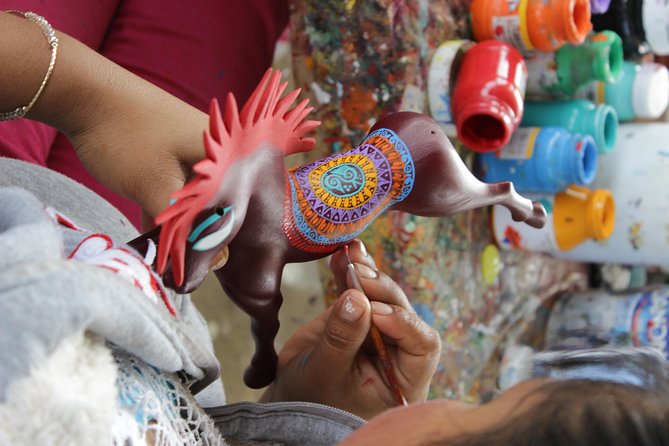
Arrazola is famous for folk art made from copal tree wood—alebrijes, carved animals and mythical creatures that look like they came from a storybook (and sometimes from a full-on fantasy bestiary). During your time there, you’ll walk through the town and admire the pieces, and you’ll get enough context to understand why certain shapes and characters show up again and again.
What makes this stop valuable is the contrast after Monte Albán. You move from ancient stone carving and ritual spaces to a living tradition of carving and design—still detailed, still symbolic, just made for today’s markets.
A realistic expectation: with only 45 minutes, you’ll want to decide early what you’re hunting for.
- If you want small souvenirs, scan first, then buy.
- If you’re hoping for a specific style, ask questions while you’re still together as a group.
Cuilapam de Guerrero: the Dominican convent and the open chapel
Next comes Cuilapam de Guerrero, where the colonial story starts showing up in architecture. Your stop centers on the 16th-century Dominican convent known for its capilla abierta (an open chapel). If you like sites where religion, politics, and local life intersect, this is the kind of place where your guide’s explanations matter.
You’ll visit the convent area and hear why the open chapel design mattered: it was meant to encourage larger numbers of Indigenous people toward conversion to Catholicism. That context changes how you read the building. Instead of just appreciating it as old stone, you start thinking about how the space shaped real experiences—who stood where, and how a sermon could reach many people at once.
Your time here is about 1 hour. One thing to flag: the information you’ll get includes optional museum access. If you choose to visit the museum inside the convent complex, there’s an extra 70 pesos per person cost for that portion.
Worth noting as you plan your day:
- This stop can feel slower if you prefer action-heavy sightseeing only.
- The open chapel is the centerpiece, so if you’re short on energy, focus on that first, then decide how much time you want for anything extra.
San Bartolo Coyotepec: black pottery, MEAPO, and a craft market stop
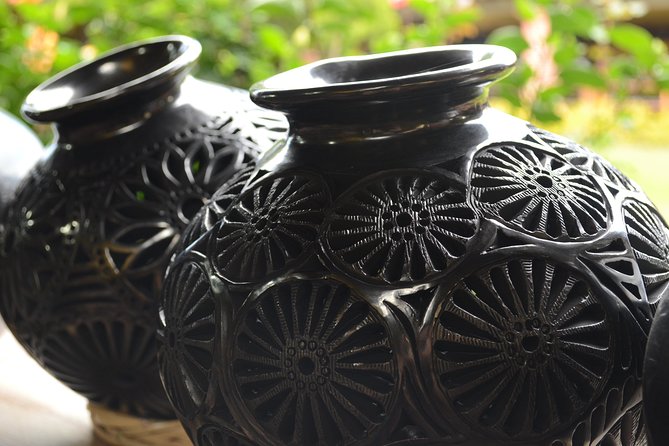
Your final cultural hit is San Bartolo Coyotepec, a town known for barro negro—black pottery. The big idea here is that the ceramics aren’t just decorative; the local process is part of what makes them special, and you’ll get to see that craft work up close.
Your stop includes:
- A visit to the 16th-century San Bartolo Coyotepec Church
- Time at the Oaxaca State Museum of Popular Art (MEAPO) area
- A craft market with work from more than a dozen families
- The chance to observe or learn about the pottery making process for black ceramics
This last part is where the tour earns its keep. Watching pottery production (even in a brief, tour-friendly format) makes it easier to spot quality and understand differences you’ll see once you start shopping. And Coyotepec is one of those places where the temptation to buy is real—good pieces can be hard to resist when you finally see the care that goes into them.
Practical shopping advice:
- If you’re buying pottery, plan for packing. Ask how they wrap items.
- Set a budget before you arrive. It’s a popular stop for a reason.
- If you’re picky about size or thickness, take your time in the market—this is one of the places where browsing feels natural, not rushed.




Price and value: what’s included vs what you’ll pay on top
At $37.55 per person, this feels like a classic Oaxaca-value day: you’re paying for coordination, guide storytelling, and transportation rather than just museum entry tickets.
Included highlights:
- Hotel pickup and drop-off from Oaxaca City
- Air-conditioned vehicle
- Travel insurance
- Professional guide (English and Spanish)
- Mobile ticket
What’s not included (and can add up):
- Monte Albán admission (ticket not included)
- Cuilapam admission (ticket not included)
- Lunch (you refuel with a meal you pay for yourself; the stop is described as a buffet-style restaurant stop)
From real-world on-the-day experience, the costs often break down like this in practice:
- You’ll pay for Monte Albán entry separately.
- If you opt into the convent museum portion in Cuilapam, that extra 70 pesos can be a factor.
- Lunch is your budget choice. The buffet stops are meant to be filling and efficient, but you still choose what you eat.
My take on the math: if you were to do Monte Albán plus two craft towns on your own, you’d spend more time solving logistics and hiring separate guides for meaning. Here, you’re paying for a guided day that moves you between three big themes—ancient Oaxaca, colonial-era architecture, and living artisan production.
Pacing, walking load, and how to be comfortable
This tour is well-paced for a full-day circuit, but it’s still a long day. You’ll be on your feet, and the steep sections at Monte Albán are the main challenge.
Plan around these comfort realities:
- Bring water and sun protection. The top of Monte Albán can be hot and bright.
- Wear shoes that can handle uneven surfaces and steps.
- Consider a light layer for morning air if you’re sensitive to temperature changes.
Group size helps. With a maximum of 18 travelers, you’re not lost in a crowd. It also makes it easier for your guide to keep the group together during transitions.
If you want the best experience, aim for steady effort rather than speed. The best photos often happen when you stop and actually look.
Language balance: English-friendly, but ask questions if needed
The guide is offered in English and Spanish, and that’s a big win for a day that moves between different subjects fast—Zapotec history, Dominican colonial architecture, and artisan craft processes.
That said, in any bilingual setting, the flow can depend on how your group interacts. If you speak limited Spanish, take charge:
- Ask your guide to slow down when details matter most.
- If there’s something you want explained clearly (like Los Danzantes), don’t be shy about requesting more English.
When the guide can keep the narration clear, the whole day clicks—especially at Monte Albán, where names and site layout can otherwise blur together.
Who should book this Oaxaca day trip?
This tour fits best if you want a day that mixes:
- UNESCO-level archaeology with real context
- craft culture that’s living, not just display cases
- colonial-era architecture you can read with a story attached
You’ll likely enjoy it if:
- You like seeing how Oaxaca’s past and present connect
- You’re curious about Zapotec sites and also about how colonial conversion shaped buildings
- You want a guided day that saves you time and planning
You might want to think twice if:
- You dislike steep walking and lots of steps. Monte Albán is the workout here.
- You only want one major site and would rather keep the day shorter. This is designed as a full loop.
Should you book Monte Albán, Arrazola, Cuilapam and San Bartolo Coyotepec?
I’d book it if you want one well-structured day that covers the best of Oaxaca City’s surrounding cultural world, with transport and guide narration handled for you. Monte Albán alone can be worth the trip, and the follow-up craft stops make the day feel complete instead of just archaeological.
Go in with two expectations: you’ll walk and climb, and you’ll pay separately for key entrances and lunch. If that works for you, this is a smart way to get more than one side of Oaxaca in a single day—ruins, craft towns, and colonial architecture—without turning the trip into a DIY puzzle.
FAQ
FAQ
Do I need to buy tickets separately for Monte Albán and Cuilapam?
Yes. The Monte Albán admission ticket is not included, and Cuilapam admission is not included either. The tour includes visits, but you’ll cover entrance costs on your own.
How long is the tour, and what time does it start?
The tour lasts about 8 hours and starts at 8:30am. It includes hotel pickup and ends back at the starting meeting point in the evening.
Is there a lunch stop, and is lunch included?
There is a meal stop described as a buffet-style restaurant stop, but lunch is not included in the price (you pay for it). Brunch is also not included.
Is the tour offered in English?
Yes. The tour notes that it is offered in English, with a guide who speaks both English and Spanish.
How many people are in the group?
The tour has a maximum of 18 travelers.
What will I be walking like on this day trip?
You should have moderate physical fitness. Monte Albán includes a lot of uphill walking and steps, including time on platforms and stair areas.
Where does the tour start?
It starts at Quinta Real5 de Mayo 300, Ruta Independencia, Centro, 68000 Oaxaca de Juárez, Oax., Mexico.
Is there free cancellation?
Yes. Free cancellation is available up to 24 hours in advance for a full refund.
Are service animals allowed?
Yes, service animals are allowed.