REVIEW · OAXACA CITY
Tour to Monte Alban, Arrazola and San Bartolo
Book on Viator →Operated by Syctravel.com · Bookable on Viator
Four stops, three craft worlds, one smart plan. This 8-hour tour links Oaxaca City’s big archaeological story with hands-on creativity in Arrazola and San Bartolo Coyotepec—without wasting your morning. You’ll start early, ride together in an air-conditioned vehicle, and keep moving through some of Oaxaca’s most recognizable cultural scenes.
I especially love how the tour pairs monumental history with living tradition. At Monte Albán, the guide-led walk makes the Zapotec story feel clear, and I like that the experience is paced around a solid 2 hours at the UNESCO site. I also love the craft stops: alebrijes in Arrazola and black clay pottery in San Bartolo are the kind of things you don’t just look at—you understand how and why they’re made, especially with guides like Eda and Christian who bring the context alive.
One consideration: this is a full day with short visits at multiple locations. If you want lots of time to wander slowly, you may feel a little rushed after Monte Albán.
In This Review
- Key highlights you’ll actually notice
- A day that moves from big ruins to real hands-on craft
- Price and logistics: what $73.61 really buys you
- Stop 1: Monte Albán and why Zapotec power still echoes
- Monte Albán practical angle
- Stop 2: Arrazola alebrijes, from paper and wood to imagination
- The workshop museum visit
- Stop 3: San Bartolo Coyotepec and the art of black clay pottery
- What you’ll learn to recognize in the pottery
- Tip for this stop
- Stop 4: Cuilapan de Guerrero’s convent history and local names with meaning
- From 1551 founding to today’s convent and museum
- A small caution about entry costs
- The day’s pace: what it feels like between stops
- The guide and driver make the difference
- Where food fits (and how to plan it)
- Who this tour is best for
- Should you book this Oaxaca tour?
- FAQ
- FAQ
- How long is the tour?
- What time does the tour start?
- Is pickup available?
- Is the tour in English?
- How big is the group?
- What’s included in the price?
- Are admission tickets included?
- What happens if the weather is bad?
Key highlights you’ll actually notice
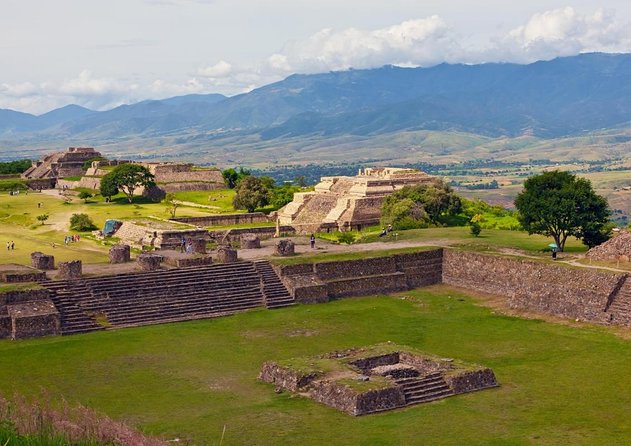
- UNESCO Monte Albán first with a full 2-hour admission-included stop
- Alebrijes at Arrazola plus a museum-workshop visit tied to the Jiménez family
- Black clay pottery at San Bartolo Coyotepec where many residents work in the craft
- San Bartolo’s 16th-century church and vestiges that hint at older ceremonial life
- Small groups up to 14 for easier conversations with the guide
- English tour option with pickup and a driver who keeps the day moving safely
A day that moves from big ruins to real hands-on craft
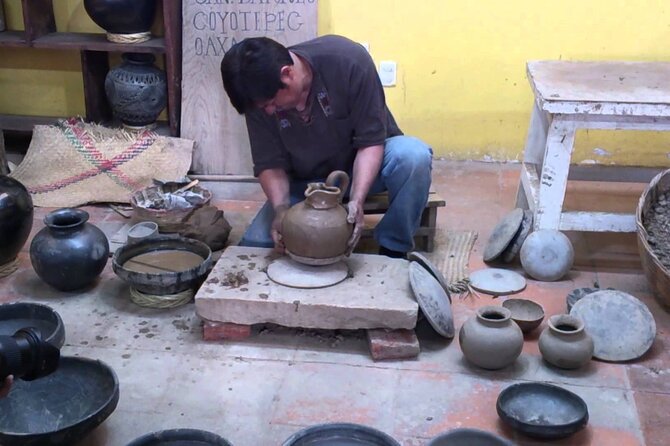
This tour has a clean rhythm: big landmark, then two focused craft communities, then a major colonial site. It’s the kind of route that works well in Oaxaca because each area “explains” the others. You go from a Zapotec political center on a hill, to local creativity rooted in long-held practices, to a convent complex that shows how Spanish-era evangelization reshaped the region.
You also get an efficient structure. Monte Albán gets the longest time, and then the other stops settle into a comfortable 1-hour window each. That matters because the day totals around 8 hours, and you’ll want the time to feel intentional, not chaotic.
Small-group size—up to 14—helps too. The difference is subtle but real: you can ask a question without shouting, and the guide can keep the group together during transitions.
You can also read our reviews of more tours and experiences in Oaxaca City.

Price and logistics: what $73.61 really buys you

At about $73.61 per person, this tour is priced for a full-day cultural mix without nickel-and-diming every step. Air-conditioned transport is included, and so are traveler insurance, plus the tour includes “all fees and taxes” as part of the package.
The one thing to watch is the fine print around admission. Monte Albán’s admission is listed as included, and Arrazola plus San Bartolo are marked as free in the stop notes. But the tour also lists admission in Cuilapan de Guerrero as not included. Translation: don’t count on that stop being fully free on the day. If you’d rather avoid surprises, plan a little extra budget just in case they collect an entry fee there.
Another practical note: the tour starts at 9:00 am with hotel pickup available (as long as your hotel is on their pickup list). If it isn’t, you provide your full address so they can still grab you.
Finally, this experience requires good weather. That matters because Oaxaca’s sights are outdoor-heavy, and tours can shift or refund if conditions aren’t right.
Stop 1: Monte Albán and why Zapotec power still echoes
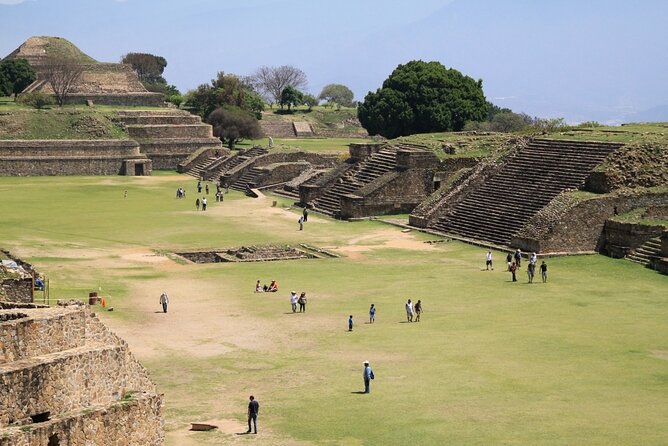
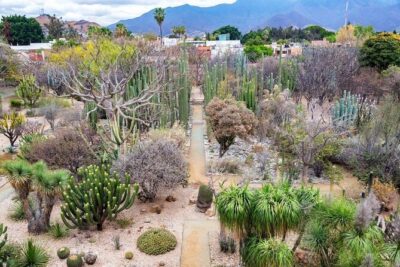
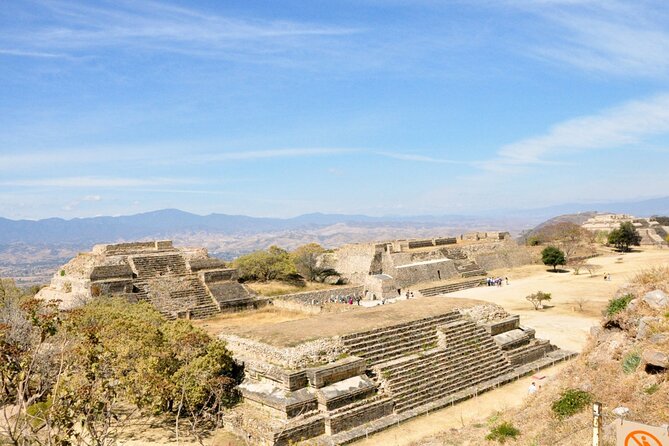
Monte Albán is the kind of place that instantly changes your perspective. From the start, you’re in the large urban center associated with the Zapotec culture, and it’s often described as Oaxaca’s most important archaeological area. It’s also a UNESCO World Heritage site, so you’re walking into a recognized, protected landscape—not just a ruin.
What I like about how this stop is framed is that it doesn’t treat Monte Albán as a single “moment.” The tour connects architecture, ceramics, and mural painting to Teotihuacana influence, then explains what happened as the link weakened. You learn that by the end of the Early Classic, the connection with Teotihuacán was broken, and the Zapotec territorial political system rose to its highest level—along with social inequality.
That “power came with gaps” idea helps you read what you’re seeing. When you look at monumental spaces, you understand them as symbols of organization and control, not just stone for stone’s sake.
Then the story pivots again for the Postclassic. Monte Albán’s power as a hegemonic city declines, and central-valley cities show Mixtec influence. The tour points you toward one of the most famous threads of that story: Tomb 7, discovered by Alfonso Caso in 1932.
If you’re the type who likes architecture and cultural layers, this stop is the anchor of the whole day.
Monte Albán practical angle
- 2 hours here is a good balance for seeing key areas without feeling like you’re sprinting.
- Shoes with grip help since you’ll likely move across uneven terrain.
- You’ll be glad you came early, because the light and crowds are usually easier to manage before the day fills up.
Stop 2: Arrazola alebrijes, from paper and wood to imagination

After the stone scale of Monte Albán, Arrazola feels like a shift into color and voice. This community—San Antonio Arrazola, about 10 km from the road to Zaachila—is known for making alebrijes: carved, painted figures with playful, surreal designs.
The guide-led context here matters. Alebrijes aren’t just decorative. The route explains how the figures are made from different types of material (paper or wood carving and painting), but it also highlights what makes Arrazola distinct today: many makers still use wood carving, a skill transmitted across generations.
You’ll see the kinds of creatures that define the style—jaguars, tigers, mermaids, cats, and nahuales—and you’ll also get the bigger point: this is a living craft tradition tied to community identity.




The workshop museum visit
This tour includes a visit to the Museum – Workshop of Angelica Jiménez, linked to the grandson of Don Manuel. Even if you don’t buy anything, you’ll come away understanding that these pieces are the output of practice over time, not just a one-off souvenir project.
If you’re shopping, I recommend treating it like a conversation with the maker’s tradition. Ask what’s carved, what’s painted, and how long it takes. That turns a purchase into a story you can carry home.
Stop 3: San Bartolo Coyotepec and the art of black clay pottery
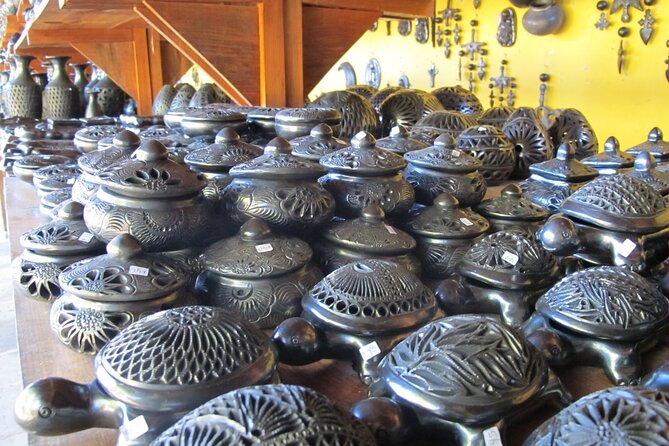
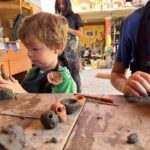
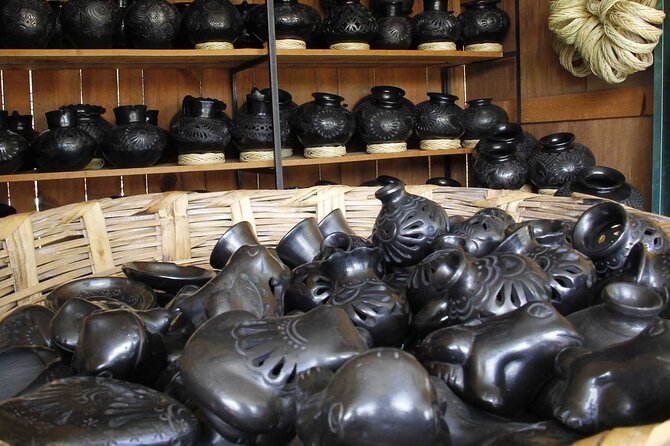
San Bartolo Coyotepec is one of those stops where you realize Oaxaca has more than one kind of heritage. Here, the story is built around black clay pottery, a craft described as pre-Hispanic in origin.
The tour notes that San Bartolo was once known as Zaapeche, meaning Place of jaguars, tied to the Zapotec ethnic group of the central valleys. That detail isn’t there just for trivia. It’s a hint that the town’s identity is older than the current streets and buildings.
What makes this stop special is the way the craft is woven into daily life. The tour describes the town as the only place in the world where a high percentage of the population dedicates itself to making black clay pottery. Even if you don’t want to treat that as an absolute fact, the practical takeaway is clear: you’ll see a community with serious focus and continuity.
What you’ll learn to recognize in the pottery
You’ll hear about utilitarian pieces (things made to be used) as well as decorative work. The tour emphasizes that the knowledge and practice have been passed down for generations, and that artisans make both practical slab forms and aesthetic objects.
And then there’s the built landscape. San Bartolo has a church dating from the sixteenth century plus vestiges of buildings that were meant as ceremonial centers or for local lords. That pairing of church-era architecture and pre-Hispanic craft roots is exactly what makes Oaxaca feel like a layered place rather than a set of isolated attractions.
Tip for this stop
Don’t rush your looking. Pottery is one of those arts where the details matter. Plan to slow down just a bit so you can tell differences in shapes and finishes.
Stop 4: Cuilapan de Guerrero’s convent history and local names with meaning
Cuilapan de Guerrero is a sharp close to the day because it connects language, local history, and colonial-era architecture in one place.
The tour explains the name comes from Nahuatl and points to a valley of cocoyoles—then ties “Guerrero” to Vicente Guerrero, honored as a national hero who was shot in 1831 in this area. Even if you’ve never studied the region’s history, you can feel the importance of names here. They are memory.
From 1551 founding to today’s convent and museum
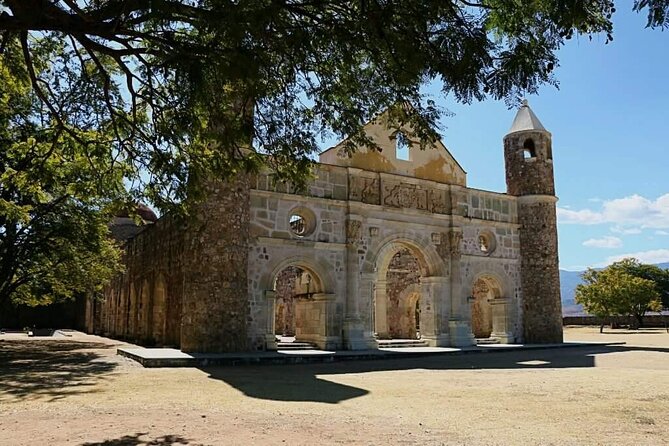
You’ll also get the historical arc: Cuilapan was founded in 1551 at the initiative of Fray Domingo de Oguinaga. Early on, the Spanish mission efforts included a rudimentary temple and a small aqueduct, and over time, Spanish orders granted permits for the inhabitants to build the current convent.
The included stop for ex-convent and museum is listed as the main tourist attraction of the community and one of the important stops in Oaxaca. It’s a good final lesson because it shows what evangelization meant on the ground—reshaping settlement, infrastructure, and the local built environment.
A small caution about entry costs
Even though the stop description says admission is free, the tour’s “not included” section flags admission in Cuilapan de Guerrero. So for budgeting, I’d treat this as possibly paid at the site and not assume it’s handled for you.
The day’s pace: what it feels like between stops
This isn’t a slow, sit-down “one place only” trip. It’s more like a curated loop that keeps you moving, with enough time for photos and basic exploration.
Because the day is structured around 2 hours at Monte Albán and about 1 hour for each of the craft and colonial stops, you’ll likely spend most of your day alternating between:
- a guided walk or explanation,
- a short window to look around and take photos,
- and a vehicle ride to the next location.
That pace can be great if you like variety. It can feel tight if you’re the type who wants to linger and repeat what you like. My advice: go in with one or two “must-see” priorities. For many people, it’s Monte Albán plus one craft stop—either alebrijes or black pottery.
The guide and driver make the difference
The overall rating for this tour is strong, and the recurring theme is people who make the day feel alive.
One guide named Eda is described as animated, funny, and full of specifics about Monte Albán, alebrijes, and black clay pottery. Another team includes Christian, paired with Eda in one experience, and the overall impression is that the history sticks because the delivery feels energetic, not like a lecture.
There’s also Ere, described as sincere and charismatic, with a talent for history plus little anecdotes and a personal love for the city. And on the driving side, Isaias is singled out for keeping the ride safe and steady.
Even if you don’t know the route ahead of time, that kind of guiding makes it easier to connect the dots between each stop.
Where food fits (and how to plan it)
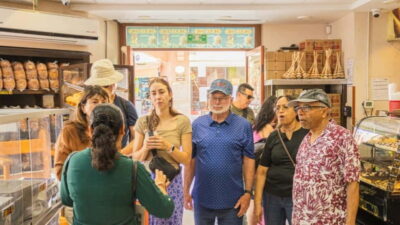
Food and drinks aren’t included, but the tour often includes a lunch stop. When lunch time comes, plan on choosing from traditional dishes, and expect the price to be reasonable compared with many tourist-heavy sit-down meals.
Bring your appetite for a variety of flavors. Since you won’t have a pre-set lunch included, you’ll have the freedom to pick what you want at that moment.
Who this tour is best for
This one suits you if:
- you want a focused introduction to major Oaxaca cultural pillars in one day,
- you like both archaeology and everyday craft traditions,
- you prefer small groups and English guidance,
- and you’re okay with a schedule that doesn’t linger too long in any single spot.
It’s also a strong pick for first-time visitors to Oaxaca City who want a route that feels “representative” without being generic.
If you’re already deep into Zapotec archaeology and want only Monte Albán, you might prefer a longer, more customized archaeology-focused plan. But if you want the full cultural blend—ruins plus making—this tour hits the sweet spot.
Should you book this Oaxaca tour?
I’d book it if you want an efficient, well-structured day that connects Monte Albán to two living craft traditions and ends at a major convent site. The pricing feels fair for a full loop with air-conditioned transport, a guided UNESCO stop, and small-group pacing.
I’d hesitate if you’re sensitive to rushed timing. This route is about variety, not long stays. Also, be ready for the possibility that Cuilapan admission may not be fully covered even if the stop notes say free.
If you’re deciding, here’s the best way to choose: pick this tour when you want breadth—and bring comfortable shoes, a little flexibility, and curiosity. Oaxaca rewards that combination.
FAQ
FAQ
How long is the tour?
The tour runs about 8 hours (approx.).
What time does the tour start?
It starts at 9:00 am.
Is pickup available?
Yes. Pickup is offered. If your hotel isn’t on the pickup list, you’ll need to provide your full address.
Is the tour in English?
Yes, it’s offered in English.
How big is the group?
The maximum group size is 14 travelers.
What’s included in the price?
Included items are an air-conditioned vehicle, all fees and taxes, and traveler’s insurance.
Are admission tickets included?
Monte Albán admission is included. Arrazola and San Bartolo Coyotepec are listed as free in the stop notes. Admission in Cuilapan de Guerrero is listed as not included, so you may need to pay there.
What happens if the weather is bad?
The experience requires good weather. If it’s canceled due to poor weather, you’ll be offered a different date or a full refund.