REVIEW · OAXACA CITY
Tour to artisan towns of Oaxaca
Book on Viator →Operated by Syctravel.com · Bookable on Viator
Four crafts, one smooth Oaxaca day. This tour strings together alebrijes, black clay pottery, natural-dye wool rugs, and a classic stop at El Árbol del Tule, with hotel pickup and a comfortable day pace. It’s a great way to see how Oaxaca makes its most recognizable art without bouncing around on your own.
I especially like the up-close making factor. In San Martín Tilcajete, you’re not just looking at finished colorful pieces—you get a workshop-style experience around alebrijes tied to Oaxacan identity, including the idea of spirit animals using the Zapotec calendar. I also like how the tour keeps things practical and human: you see artisans working, and the guide (for example, Javier in one standout account) communicates clearly in English and adapts if your group has questions.
One thing to keep in mind: food and drinks aren’t included. You’ll want to plan for a snack stop or budget for lunch so the day doesn’t feel rushed by hunger.
In This Review
- Key highlights that make this tour worth your time
- Oaxaca’s artisan towns tour: a full-day craft map
- Price and logistics: what $297.05 really covers
- Getting picked up and moving comfortably from Oaxaca City
- San Martín Tilcajete: alebrijes beyond the gallery shelf
- San Bartolo Coyotepec: black clay pottery with real tradition
- Teotitlán del Valle: wool rugs, natural dye color, and technique
- El Árbol del Tule: a giant juniper that resets your eyes
- What makes this tour feel authentic (and not just “a shopping day”)
- Group discounts, private format, and who this tour fits best
- Small planning tips so you enjoy the full 9 hours
- Should you book the Artisan Towns of Oaxaca tour?
- FAQ
- Where does the tour start?
- How long is the tour?
- Which towns and sites are included?
- Are tickets included for the stops?
- What’s included in the price?
- Is food or drinks included?
- Is this tour private?
- Can I change or get a refund if my plans shift?
Key highlights that make this tour worth your time
- Alebrijes, made in San Martín Tilcajete with hands-on-style attention to the creative process
- Black clay pottery in San Bartolo Coyotepec, where the craft is the main event
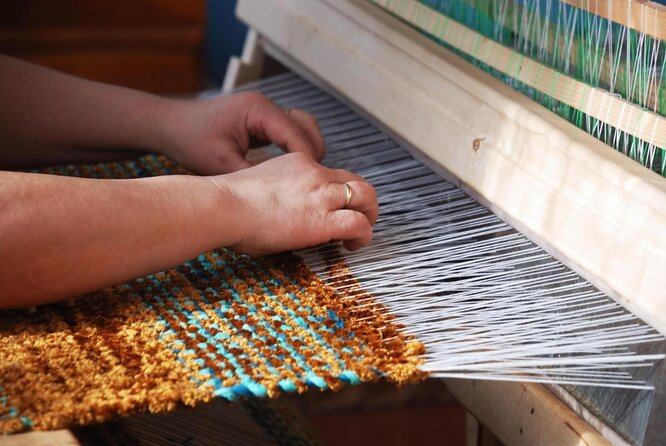
- Natural-dye wool rug traditions in Teotitlán del Valle, focused on how color gets made
- El Árbol del Tule and its massive scale, a calm nature break between crafts
- A guided, private format so your group can move together and ask questions
Oaxaca’s artisan towns tour: a full-day craft map
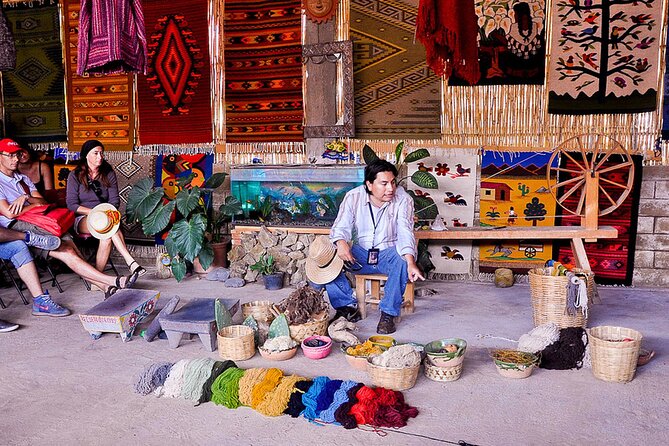
If you love Oaxaca for its hands-on creativity, this itinerary feels like a best-of sampler built around real production. Instead of treating crafts as souvenirs, the stops focus on process—how people shape, bake, dye, and finish the materials. You’ll watch different traditions using different techniques, from wood carving to clay to wool.
The route also makes sense for a day out of Oaxaca City. You start in the morning, spend real time at the biggest “making” stop, then move through shorter craft visits before landing at El Tule for a breather. It’s an efficient way to get variety without feeling like you’re constantly changing plans.
And because it’s set up as a guided experience with pickup and a vehicle, you don’t have to negotiate the logistics. That matters here. Local towns are part of the charm, but coordinating transport on your own can turn into wasted time.
You can also read our reviews of more tours and experiences in Oaxaca City.


Price and logistics: what $297.05 really covers
At $297.05 per person, you’re paying for more than a bus ride. You get an air-conditioned vehicle, travel insurance, and GST included. You also get guided stops across multiple artisan towns plus a return to Oaxaca City.
Where it’s good value is in how the day is structured. With a total length around 9 hours, you’re hitting four meaningful stops, with the first craft town getting 2 hours and the others getting 1 hour each. That’s enough time to see the work and browse without turning it into a quick stop-and-sprint.
What it doesn’t cover is food and drinks. Each town visit is focused on artisan demonstrations and time on the ground, not restaurant time. If you’re the kind of person who likes to eat leisurely, plan for a longer lunch on your own schedule afterward—or bring a snack to stay comfortable during the midday stretch.
You’ll also want to note the tour is private in the sense that it’s only your group. That can make the experience feel more personal, especially when you have questions about materials, tools, and local traditions.
Getting picked up and moving comfortably from Oaxaca City
Start time is 10:00 am, with pickup offered from your hotel. That’s a big deal in Oaxaca City, where it’s easy to lose time organizing transport when you’re already excited to get out of town.
The day is designed for a smooth flow: guided transit between towns, then structured time at each stop. With a total duration near 9 hours and multiple 1-hour craft visits, you’ll likely feel like you’re seeing a lot, but you won’t be constantly wandering without direction.
You’ll also get a mobile ticket. That’s one less thing to manage on a day where you might be tempted to just jump out and start looking at artwork. (Pro tip: keep your phone charged. You’ll want it for maps and photos too.)
San Martín Tilcajete: alebrijes beyond the gallery shelf

San Martín Tilcajete is one of Oaxaca’s key alebrije towns, famous for wood carving those boldly colored, imaginative figures. The value here is that you’re not only shopping. You’re seeing the process connected to the craft’s identity and how it’s taught and practiced.
You’ll spend about 2 hours at this first stop, which is the right amount of time. It gives you room to observe, ask questions, and then actually enjoy browsing without feeling rushed. Alebrijes can be addictive to look at. They’re detailed, and once you notice the patterns and shapes, the finished pieces stop being just pretty and start becoming a story.
A standout detail from an experience perspective: there’s a spirit-animal element connected to the Zapotec calendar. That turns the craft from decorative into cultural. Even if you’re not fluent in every concept, you’ll likely pick up the meaning through the way the guide explains the connection between identity, symbols, and the animals represented.
What to watch for at this stop:
- Ask how carving decisions are made (shape, expression, finishing).
- Look for differences between styles. Even within alebrijes, you’ll often see distinct approaches by workshop or carver.
- Give yourself time to compare small pieces versus larger ones. It’s easier to understand value and craftsmanship when you can see multiple examples side by side.
Possible drawback here is simple: it’s popular, so you may want to stay patient if the workshop area has people moving through. The upside is that you’re seeing the real-making portion early, before the day gets slower.
San Bartolo Coyotepec: black clay pottery with real tradition
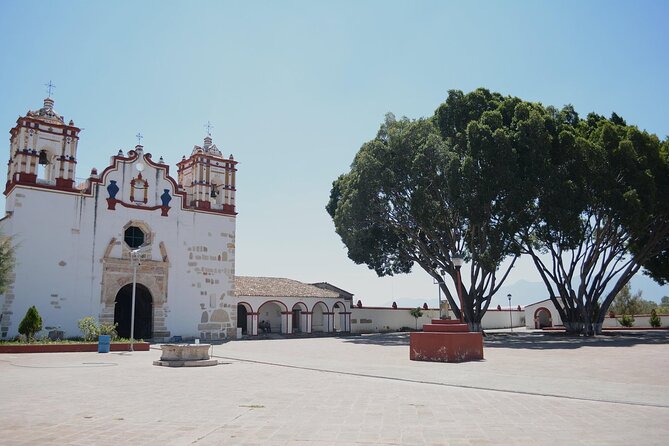
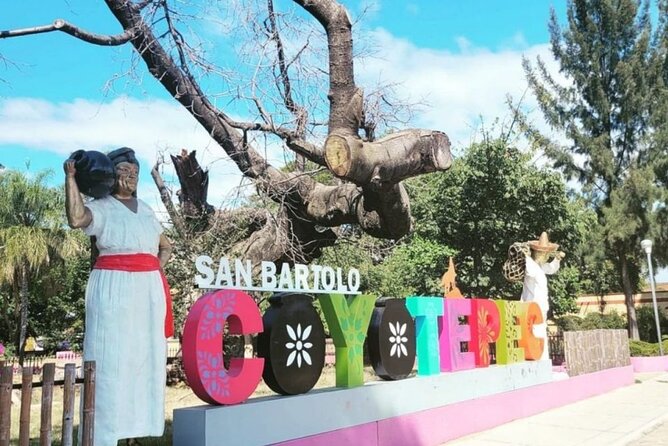
San Bartolo Coyotepec is the craft-town for black clay pieces. The big idea is that the town’s pottery tradition isn’t a side hobby—it’s part of daily culture and passed along from one generation to the next.
Your time here is about 1 hour, and that’s a good length for this kind of stop. You’ll learn about the process of making clay figures and likely see a demonstration. Even when language is a barrier, watching hands at work teaches you more than photos do.
This stop has a different feel than Tilcajete. Alebrijes hit you with color and imagination, while black clay pottery leans into form and material. There’s something satisfying about how the craft depends on technique and consistency. The finished look is dramatic, but you can often understand it faster when you see how the clay is handled and shaped.
What I’d do as a practical move: take a moment before you start browsing. Look closely at how shapes are formed and how surfaces get treated. Then, as you walk through pieces, you’ll be able to connect the finished work to the steps you just watched.
If your group has questions, use them here. A shorter stop is perfect for focused answers—materials, timing, and how the craft differs from other clay traditions in Oaxaca.






Teotitlán del Valle: wool rugs, natural dye color, and technique

Teotitlán del Valle is known for wool textiles: rugs, jackets, bags, sarapes, tapestries, and more. Your time here is about 1 hour, and the core focus is learning the process of making the rugs with naturally dyed wool.
This stop is where the craft becomes partly sensory. Wool and color behave differently than wood or clay. When you learn how natural dyes are used, the colors stop looking random and start looking intentional—dependent on materials, preparation, and repetition.
A good way to get value from this short visit is to look at the rug logic. For example, notice how patterns repeat and how borders and central areas are balanced. Then tie that back to what you were told about process. Even if you don’t understand every word, the visual system often clicks quickly.
Keep in mind: textile shops can be overwhelming because there’s so much to see. The best approach is to pick one category and stay with it for a few minutes. Look closely at one size, one pattern type, and one color family, and compare it to two other examples. That’s how you understand quality and design decisions faster than by scanning everything at once.
Also, because food isn’t included, this can be a good moment to decide whether you’re going to snack before you hit the last stop. If you need energy for the El Tule walk-around, you’ll thank yourself.
El Árbol del Tule: a giant juniper that resets your eyes

The last stop is Santa María del Tule and El Árbol del Tule, described as the tree with the largest trunk diameter in the world. It’s a standout natural site: about 40 meters tall with a trunk diameter roughly 52.58 meters and a weight estimated around 509 tons.
This is more than a photo stop. After hours of close-up crafts—wood, clay, and fibers—El Tule gives you a different kind of attention. You stop studying details made by people and start appreciating scale made by time.
Your time here is about 1 hour. That’s enough to look from multiple angles, watch how other people react to the sheer size, and take a slower pace without turning the day into a long nature detour.
Practical advice: wear comfortable shoes. Even if the area isn’t a hiking expedition, you’ll be moving around for viewing points, and you might be tempted to linger for photos.
What makes this tour feel authentic (and not just “a shopping day”)

Craft tours sometimes turn into a sales funnel. This one works better because the sequence is organized around making: workshop-style understanding first, then browsing with context.
Alebrijes give you story and symbolism tied to local culture. Black clay pottery shows you material discipline. Wool rugs show you natural dyes and the labor behind color. Then El Tule provides a pause that feels like Oaxaca too—big scale, unique identity, and a sense of place.
The guide’s role matters for that authenticity. In one account, Javier was adaptable and communication was strong in English, including explaining a spirit-animal concept connected to the Zapotec calendar. Even if you’re traveling for the visuals, a clear guide keeps the experience from becoming a collection of random stops.
Also, because admission tickets are listed as free for these stops, you’re not paying extra just to enter the key points. That keeps the day’s value tied to what you’re learning and seeing rather than ticket add-ons.
Group discounts, private format, and who this tour fits best
You’ll see group discounts listed, but the tour is also private in the sense that it’s only your group. That combination is a good sign if you want a guided experience without the stress of being packed into a massive tour bus.
Most travelers can participate, which makes this a solid option for mixed groups. The stops are mainly about walking a bit, standing for demonstrations, and moving between locations.
This tour is especially suited for:
- First-time visitors who want a craft snapshot beyond Oaxaca City neighborhoods
- People who like process-focused travel
- Families or friends who want an easy day structure without driving
If you’re the type who wants long, free-form time in each town, the 1-hour stops may feel short after the adrenaline of the morning. But if you like being guided and leaving with ideas (and maybe a couple of pieces), it’s a good match.
Small planning tips so you enjoy the full 9 hours
This is one of those days where your comfort choices affect your experience more than you’d expect.
Bring:
- A light layer for the vehicle (AC can run cool).
- A charged phone for the mobile ticket and photos.
- Cash or card if you decide to buy from artisans (the tour is craft-heavy).
Plan for food:
- Since food and drinks aren’t included, decide in advance if you’ll snack between stops or budget for lunch around midday.
- Don’t wait until you feel hungry. The day moves, and you’ll enjoy it more if you stay comfortable.
And manage expectations:
- You’re seeing four anchor moments. You’re not trying to cover every workshop in Oaxaca in one day. That’s what keeps the day enjoyable instead of exhausting.
Should you book the Artisan Towns of Oaxaca tour?
I’d book it if you want a guided, high-value craft day with clear themes and enough time to see how Oaxaca’s art gets made. The combination of alebrijes in Tilcajete, black clay pottery in Coyotepec, natural-dye wool rugs in Teotitlán del Valle, and El Tule gives you variety with a logical flow.
Skip it if you hate guided schedules and prefer to roam slowly at your own pace. Also skip if you’re expecting food included, because you’ll need to handle meals separately.
If you’re visiting Oaxaca City and want to leave with more understanding than just photos, this is the kind of tour that earns its place on your itinerary.
FAQ
Where does the tour start?
Pickup is offered from your hotel in Oaxaca City, and the start time is 10:00 am.
How long is the tour?
The tour duration is about 9 hours.
Which towns and sites are included?
You’ll visit San Martín Tilcajete (alebrijes), San Bartolo Coyotepec (black clay pottery), Teotitlán del Valle (wool rugs), and El Árbol del Tule in Santa María del Tule.
Are tickets included for the stops?
Admission tickets are listed as free for each stop.
What’s included in the price?
Included items are an air-conditioned vehicle, GST, and travel insurance.
Is food or drinks included?
No. Food and drinks are not included.
Is this tour private?
Yes. Only your group will participate.
Can I change or get a refund if my plans shift?
This experience is non-refundable and cannot be changed for any reason.