REVIEW · OAXACA CITY
Prepare an Oaxacan Mole by a Traditional Cook
Book on Viator →Operated by Etnofood Experiencias · Bookable on Viator
Mole starts at the market. This Oaxacan cooking class blends a market ingredient hunt with real hands-on mole prep, not just watching. I love how you learn the logic behind the ingredients, and I love that you leave with a full spread, not a single dish. One thing to consider: it’s an active class, with lots of chopping and time on your feet.
The experience is led by local chefs and instructors (Chef Víctor is the name I kept seeing come up, alongside Chef Wendy), and it’s offered in English for comfortable participation. You’ll work in a kitchen setting that’s made for cooking, and the group stays small enough to feel involved while still sharing the meal together.
If you’re hoping for a purely instructional, step-by-step show-and-tell where you sit back and watch everything, this may feel a bit participatory. You will cook everything in class, and that means you’ll be doing tasks as the meal comes together.
In This Review
- Key highlights worth your time
- TeoLab start: why the kitchen location matters
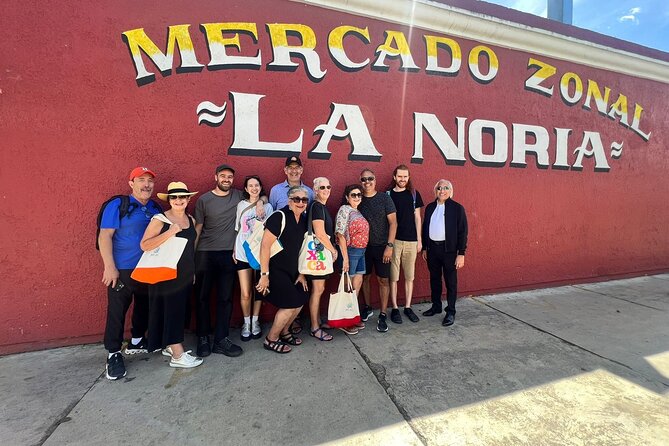
- Mercado ingredient shopping: learning mole by shopping
- Chef-led mole cooking: what you make and why it feels different
- Traditional sauces and green mole: building your own Oaxaca table
- Corn dough practice: tortillas, memelas, and tetelas
- Lunch payoff: how the meal lands after 3.5 hours
- Group size, pacing, and English support
- Price and value: is $59.68 a good deal in Oaxaca City?
- Who should book this cooking class
- Should you book?
- FAQ
- How long is the Prepare an Oaxacan Mole by a Traditional Cook class?
- Where do I meet the group?
- Is this tour offered in English?
- What’s included in the price?
- Do I get to cook and eat what I make?
- Is there a recipe to take home?
- What size group is it?
- Is there an age or alcohol restriction?
- (Optional) Dietary and comfort notes
Key highlights worth your time
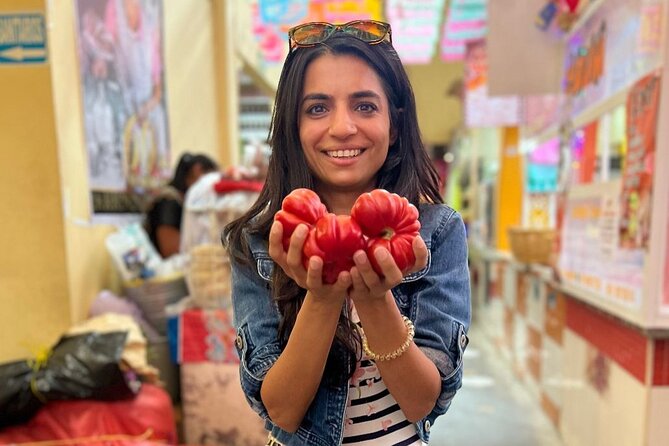
- Market visit to choose mole ingredients: You shop for key components rather than arriving with a mystery shopping list.
- Traditional Oaxacan mole methods: You learn the recipe workflow behind mole, not just the final sauce.
- Corn dough in multiple forms: Tortillas plus regional dough expressions like memelas and tetelas.
- Several Oaxaca sauces in one meal: You build a table, not just one pot of mole.
- A locally grown ingredient twist: The menu includes an ingredient sourced locally to add a unique note.
- Recipes shared after class: They say they send mole recipes, so you have something to reference later.
TeoLab start: why the kitchen location matters
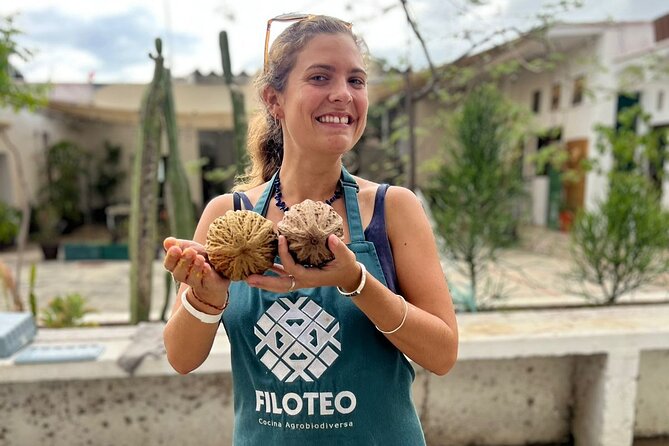
The class begins at TeoLabXicoténcatl 609, in Oaxaca City’s Centro. This matters because you’re not trekking all over town for supplies and then collapsing into a makeshift setup. The kitchen base is part of the experience, so you can shift from market walking into cooking mode without losing time.
TeoLab also gives you a real starting point to orient yourself. If you’re using the Centro area as your home base, this stop is easy to plug into a day of food wandering and Zócalo sightseeing later.
One practical note: the tour description says it’s not for people with knee problems or with canes. So if mobility is an issue for you, you’ll want to factor that in before booking.
You can also read our reviews of more tours and experiences in Oaxaca City.



Mercado ingredient shopping: learning mole by shopping
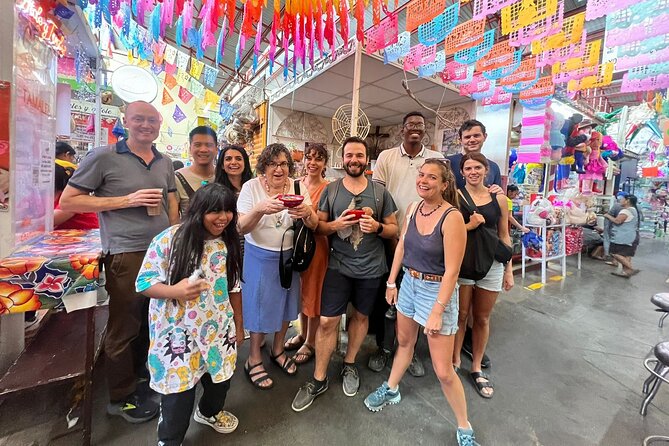
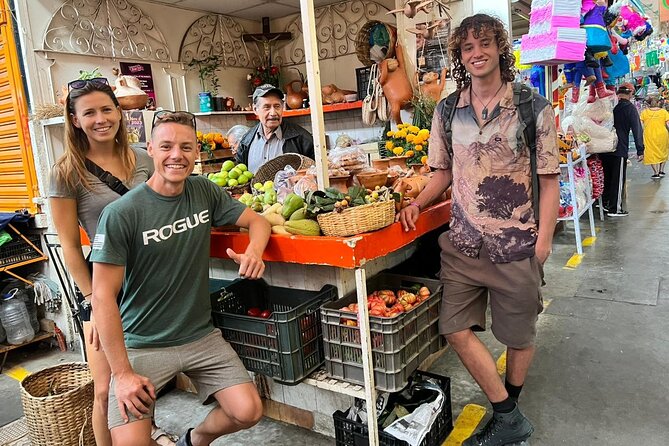
You kick things off with a market tour where you pick up essential ingredients for the mole. This is more than cute photo time. It’s how Oaxaca mole actually makes sense: you start learning which chilies, spices, seeds, and aromatics bring different layers of flavor.
In the kitchen, mole becomes a lot more approachable because you’ve already seen the raw ingredients up close. I like this approach because it connects taste to sourcing. It also helps you understand why different moles in Oaxaca taste different: the ingredient mix drives the result.
You’ll also be guided through the basics of traditional Oaxacan sauces during the day. That way, you’re not just building one sauce in a vacuum. You’re starting to build a framework for an entire flavor system: heat, sweetness, toasted notes, and the balancing bitterness that mole is known for.
Chef-led mole cooking: what you make and why it feels different
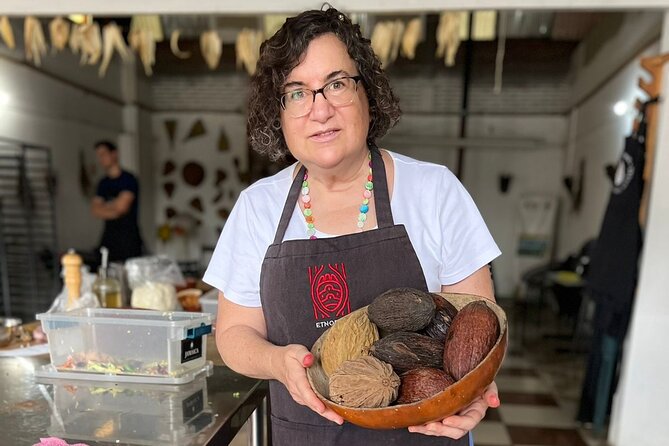
Back in the kitchen, you prepare Traditional Oaxacan Mole using authentic methods. Mole in Oaxaca is not one recipe. It’s a family of styles, and this class sets you up to think in variations instead of assuming there’s only one version.
The class also includes a main-dish approach, meaning you don’t just end up with a small spoonful of sauce. You’re making mole as part of a meal experience, paired with other dishes you cook alongside it. That changes how you remember the flavor, because you taste it in context with corn dough, salsas, and sides.
A locally grown ingredient twist is also part of the menu. You won’t always get the same thing every time, but the point is to add a fresh, regional nuance rather than relying only on the most famous staples. In a place like Oaxaca, those local adjustments are often what make a dish feel personal.
They also state that they do not use products of illegal origin and that they do not use products of animal origin. Since mole and Oaxacan cooking can include a wide range of ingredients depending on the recipe, the safest move is to ask if you have strict dietary needs. If you’re vegetarian or avoiding animal-based ingredients, ask how they handle cheese or other common add-ins before you go.
Traditional sauces and green mole: building your own Oaxaca table
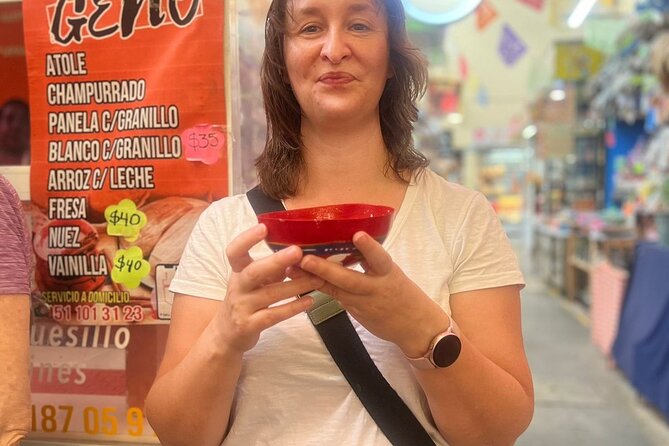
Besides mole, you make several Oaxaca sauces. The format is designed so you can taste the differences and understand how a sauce behaves on a plate.
You’ll prepare Traditional Sauces and work with what the class frames as various Oaxaca sauces. The menu also specifically mentions green mole. That’s a great addition because it shows mole’s flexibility: same world, different flavor direction.
This matters for two reasons. First, you stop thinking of mole as only dark and chocolatey. Second, you start recognizing how Oaxaca’s heat is often layered rather than just loud. You may see chilies used in different ways, plus toasted or ground components that add depth.
In short: by the time you sit down, you’re not eating one big bowl and calling it a day. You’re tasting a set of sauces that belong together. That’s where the class feels like real Oaxaca cuisine, not a single-dish workshop.
Corn dough practice: tortillas, memelas, and tetelas
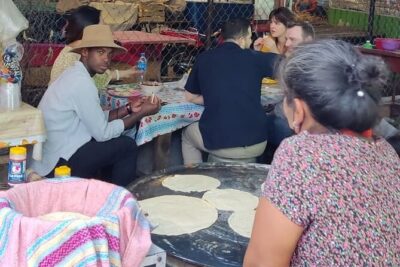
One of the most fun parts is the corn work. The class covers dough and dishes made with corn dough, including tortillas, memelas, and tetelas.
If you’ve never pressed or shaped tortillas, you’ll find this part surprisingly satisfying. It’s hands-on, and the skills are simple but not automatic. The feel of the dough, the thickness, and the cooking method all affect the final texture.
I also like that the class doesn’t treat corn dough as an afterthought. Oaxaca corn cooking isn’t just a side. It’s a core technique that carries flavor and structure. Mole tastes better when the base is right, and corn dough is that base.
There’s an extra benefit here: even if you don’t make mole again at home, you can still use what you learned about corn dough for other Oaxacan-style meals. It’s a practical skill with repeat value.





Lunch payoff: how the meal lands after 3.5 hours
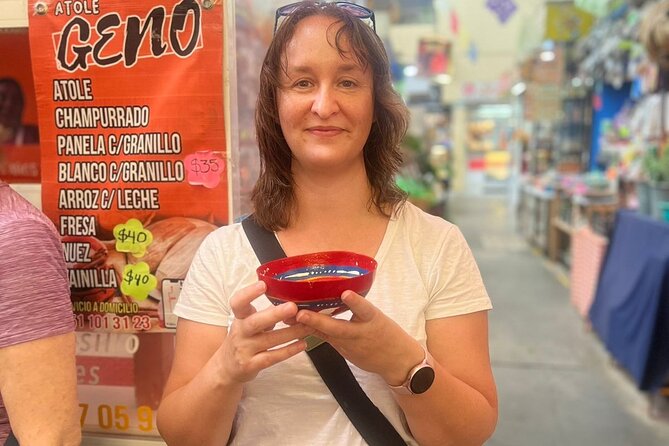
The class includes lunch, and it’s not a tiny “taste and go.” You’ll eat what you help prepare: traditional mole as the main dish, plus the sauces and corn dough dishes you made during the class.
Alcoholic beverages are included for travelers 18+, and bottled water is also part of the deal. That turns lunch into a full break rather than a quick snack. You’ll likely be ready for it by the time you reach the table, because mole work and corn dough prep take time.
The class also mentions a typical Oaxacan dessert. Dessert is where a cooking class can feel either tacked on or meaningful. Here, it’s presented as part of the full menu flow, which makes the day feel like a complete meal experience rather than a single project with a random finish.
One more detail: they add a locally grown ingredient twist, and that flavor may show up in the meal you eat. That’s the kind of thing that makes your last bites feel special instead of generic.
Group size, pacing, and English support
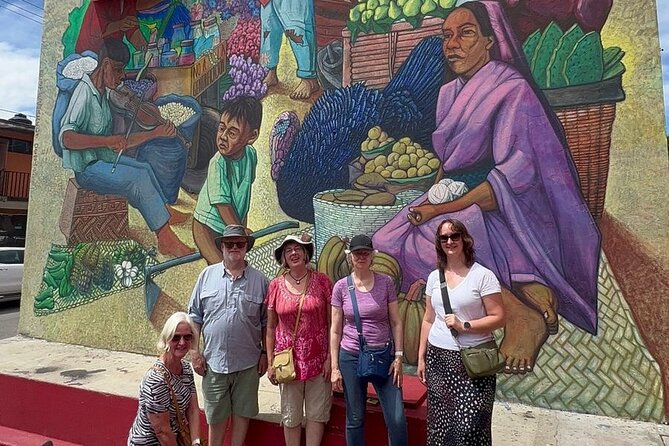
The booking details say the experience has a minimum of 1 and a maximum of 12 people. It also lists a maximum of 4 travelers for this activity. Either way, you should expect a small-group feel with more interaction than a large cooking factory.
Time-wise, you’re in the class for about 3 hours 30 minutes. That’s enough to do market prep, active cooking, and then eat without dragging into the evening.
English is supported, and confirmation is received at booking time. A mobile ticket is included, which is convenient if you’re already juggling maps, cash, and restaurant reservations.
On pacing: mole and sauce work often requires stages (toasting, grinding, simmering). Even with strong teaching, you’ll be doing tasks during that flow. If you’re the type who gets anxious when you can’t control the pace, plan to relax and let the rhythm happen.
Price and value: is $59.68 a good deal in Oaxaca City?
At $59.68 per person for about 3.5 hours, the value depends on what you want from your day.
Here’s what you’re getting:
- Market ingredient shopping as part of the experience
- Hands-on cooking for mole and multiple sauces
- Corn dough dishes (tortillas plus regional forms)
- Lunch included
- Bottled water included
- Alcohol included for those 18+
Compared to paying only for a plate at a restaurant, this is expensive. Compared to a cooking class without market time or without a full meal, it feels more reasonable. You’re paying for guided sourcing, technique coaching, and a menu you actually eat.
In plain terms: if you like food that makes sense (how it’s built, not just how it tastes), this is the kind of class that gives you lasting memories and skills.
Who should book this cooking class
This is a great pick if you:
- Want a hands-on Oaxacan mole experience, not just a tasting
- Like learning through ingredients, including the market side
- Enjoy corn dough cooking and want to try tortillas, memelas, and tetelas
- Prefer small-group cooking with English support
It’s also a good option if you’re traveling with someone and want a shared activity that ends with a meal you helped make.
Consider skipping or asking questions first if:
- Your knees or mobility are limited
- You need strict clarity on animal-free ingredients (since the operator states no animal-origin products, but Oaxacan markets can include dairy items depending on the day)
Should you book?
Yes, I think you should book this if your goal is authentic, practical Oaxaca food learning with a real meal at the end. The combination of market sourcing, traditional mole methods, and corn dough work is what makes it more valuable than a generic cooking class.
If your main goal is a hands-off demonstration where you watch every step, ask in advance how much you’ll be expected to prep and cook. And if dietary restrictions matter, contact them before you go and confirm how they handle specific ingredients.
If you do book it, come hungry, wear comfortable shoes, and be ready to chop. Oaxaca rewards active attention.
FAQ
How long is the Prepare an Oaxacan Mole by a Traditional Cook class?
It lasts about 3 hours 30 minutes.
Where do I meet the group?
The meeting point is TeoLabXicoténcatl 609, Centro, 68000 Oaxaca de Juárez, Oax., Mexico. The activity ends back at the meeting point.
Is this tour offered in English?
Yes, it’s offered in English.
What’s included in the price?
Lunch is included, along with bottled water. Alcoholic beverages are included for travelers 18+.
Do I get to cook and eat what I make?
Yes. The class is hands-on, and you cook everything in the class, then enjoy the meal together.
Is there a recipe to take home?
The experience description says recipes will be sent.
What size group is it?
It lists a maximum of 12 people for the experience, and it also states a maximum of 4 travelers for the activity.
Is there an age or alcohol restriction?
Alcoholic beverages are included for travelers who are 18+. The tour description specifies that.
(Optional) Dietary and comfort notes
The experience states they do not use products of animal origin or illegal origin. It also says it’s not for people with knee problems or with canes.