REVIEW · OAXACA CITY
Ruta mágica de las artesanías
Book on Viator →Operated by Oaxacatours · Bookable on Viator
Craft days in Oaxaca beat museum days.
This tour is a practical way to see how three big Oaxacan crafts are made, from wood alebrijes to barro negro pottery and textiles. I especially like the day-trip flow: you leave the city, meet artisans in their own towns, and get a guide who explains what you’re looking at. One drawback to plan for: a few stops can tilt toward shopping, and the bilingual format (Spanish then English) can feel repetitive if you’re trying to watch closely while you listen.
With hotel pickup and drop-off, you spend less time figuring out transportation and more time at the workshops. The group stays small (up to 18), and admission is free at the stops, which helps the value. Still, you’ll want to bring patience and a light shopping mindset: even when the craft is excellent, you’re also moving through sales spaces.
In This Review
- Key highlights to look for on this Oaxaca craft route
- Getting out of Oaxaca City: the smooth start that makes this day work
- Stop 1: San Martín Tilcajete alebrijes and the fun of seeing wood become animals
- Stop 2: Santo Tomás Jalieza textiles—huipiles, cotton, and careful hand work
- Stop 3: Ocotlán Friday market—direct buying and the reality of a crowded market day
- Stop 4: San Antonino Castillo Velasco—finished textiles you can actually wear
- Stop 5: San Bartolo Coyotepec black pottery—why barro negro stays famous
- Price and value: why $53.73 can make sense for an artisan day
- Group size and guide style: what changes when it’s up to 18 people
- Practical tips to get more from each craft stop
- Who this Oaxaca craft tour fits best (and who might not love it)
- Should you book Ruta mágica de las artesanías?
- FAQ
- How long is the Ruta mágica de las artesanías tour?
- What’s the starting point and where do I end up?
- What time does the tour start?
- What kinds of crafts do you see on the tour?
- Is the tour available in English?
- What’s included in the price?
- Are snacks or bottled water included?
- How big are the groups?
- Is it free to cancel?
Key highlights to look for on this Oaxaca craft route
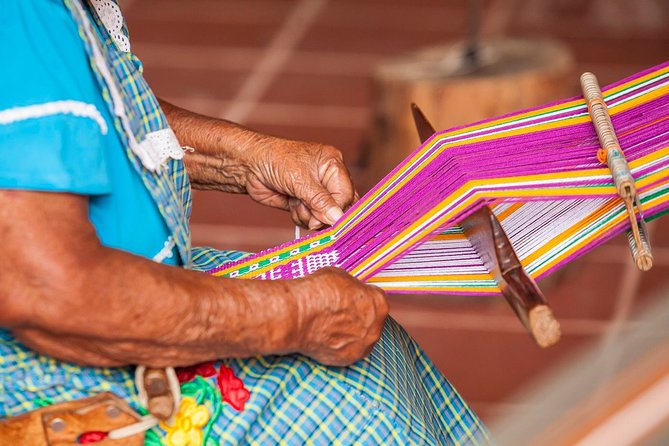
- San Martín Tilcajete alebrijes: watch carving and paint process in a wood-focused workshop town
- Santo Tomás Jalieza textiles: cotton garments with detailed hand embroidery, often including back-strap weaving demonstrations
- Ocotlán Friday market stop: a real local market feel, with lots of browsing and direct artist buying
- San Antonino Castillo Velasco finished textiles: see completed pieces and how the work shows up in the final clothing
- San Bartolo Coyotepec black pottery: a strong stop if you care about craft technique, not just shopping
- English is offered, plus a friendly guide in many cases, with historical context along the way
Getting out of Oaxaca City: the smooth start that makes this day work
Oaxaca City can swallow a whole day fast. This tour solves that with hotel pickup and drop-off, and a start time around 9:30am. You meet at 5 de Mayo 300, Ruta Independencia, in the Centro area, then head out to artisan towns outside the city. If your goal is to see crafts without stress, this “leave early, return later” setup is a big part of why it’s popular.
The tour runs about 8 hours, with multiple short stops rather than one long lecture. That matters because crafts are visual and hands-on—when the timing is right, you can actually watch tools, materials, and steps instead of just hearing about them.
One practical note: snacks and bottled water are not included, so I’d plan to buy what you need during the day. Also, wear shoes you’re happy to walk in. Even when the group stays together, you’ll move through workshop areas and market aisles.
You can also read our reviews of more tours and experiences in Oaxaca City.


Stop 1: San Martín Tilcajete alebrijes and the fun of seeing wood become animals
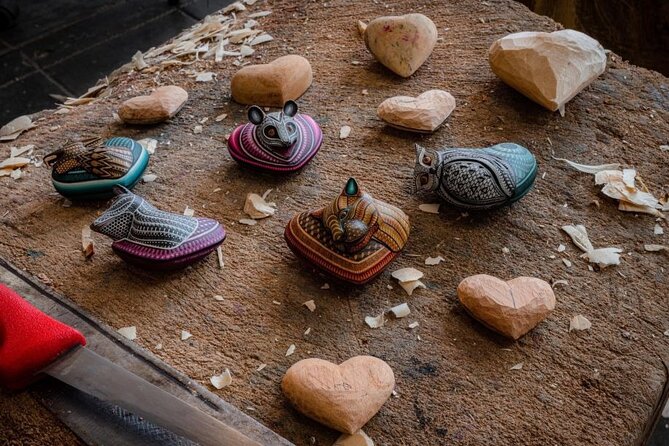
San Martín Tilcajete is built around alebrijes de madera—wooden creatures carved and painted with Oaxacan symbolism. This stop is typically about the full chain: you get to observe local workshop work, from carving basics to the application of paint.
Why this stop works: alebrijes aren’t just decorative. The process shows how a raw block becomes character—edges sharpen, textures appear, and then color turns it into the animal people recognize. If you enjoy crafts where technique drives the look, you’ll likely find this a highlight.
What to expect on the ground:
- You’ll likely spend about 1 hour in the workshop town.
- You can usually watch artisans at work and then browse pieces afterward.
What to watch out for: a mixed review pattern shows up here—some tours spend plenty of time on the making side, and others can feel short on demonstrations. If alebrijes carving is your top priority, ask your guide early (at the van) whether you’ll see the carving steps and explanations for symbols and colors, not just the final products.
Stop 2: Santo Tomás Jalieza textiles—huipiles, cotton, and careful hand work
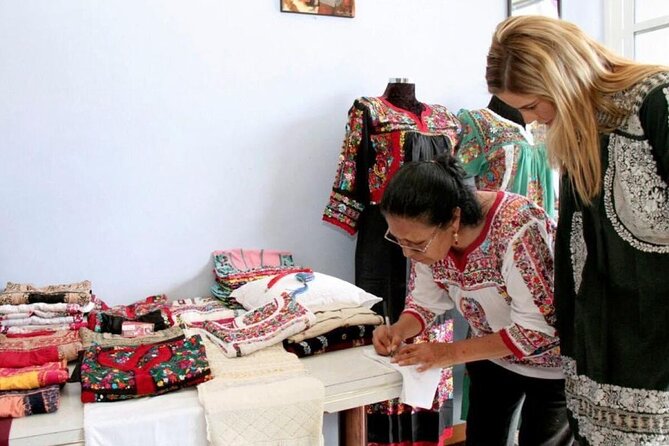
Santo Tomás Jalieza is known for textiles de algodón and embroidered clothing, especially huipiles and blouses. This stop centers on the kind of work where a small detail matters: stitching density, color placement, and the way patterns are built.
The itinerary gives you about 1 hour here, and the typical value is in watching artisans create pieces by hand and hearing about traditional techniques. Reviews also mention back-strap weaving showing up in this general textile theme, so if you care about how fabric is produced (not just sold), this is the stop to focus on.
What I like about this segment:
- It’s structured around craft-making, not just gallery-style viewing.
- You learn what you’re looking at: embroidery work has logic, and the guide’s explanation helps you see it instead of treating it like random decoration.
Possible drawback: textile stops can sometimes drift toward shopping-heavy environments. If you’re hoping for clear demonstrations and time to watch hands at work, keep expectations realistic: you’ll likely get a mix of seeing craft and browsing finished items. If a shop doesn’t show a demo when you arrive, you can politely ask what’s happening today and whether someone can walk you through the steps.
Stop 3: Ocotlán Friday market—direct buying and the reality of a crowded market day

Ocotlán is known for its Friday market, and this stop leans into the “local life” side of Oaxaca crafts. Expect a lot of browsing: textiles, ceramics, and colorful alebrijes show up in the same general market atmosphere.
You get about 1 hour at this stop. That’s enough time to do two useful things:
1) see how crafts look in a real buying setting
2) compare prices and styles without feeling trapped in one shop
A practical thing to plan for: market areas can involve some safety talk from the guide, especially around theft awareness. That doesn’t mean you should panic. It just means you should treat the market like a market: keep valuables controlled, use common sense, and don’t leave your phone loose in your hand while you haggle.
Also, one review notes that certain purchases here were cash-only, so bring pesos if you plan to buy. Some stops may accept cards, but the market can be the wild card.
Stop 4: San Antonino Castillo Velasco—finished textiles you can actually wear

San Antonino Castillo Velasco is a step toward the finished look. Instead of only raw craft process, you’ll see clothing and textile work that’s already completed, known for delicate bordados and careful construction.
Time here is about 1 hour 30 minutes, which is one of the longer blocks on the day. That extra time helps because finished textiles are easier to evaluate than an in-progress demo. You can look closely at seams, pattern alignment, and the overall feel of the fabric and embroidery.
Why this stop matters:
- It bridges the gap between what you saw earlier (hands making) and what you might actually take home (wearable pieces).
- You also get a sense of how traditions translate into real modern garments.
A reasonable consideration: because this is more “finished items,” it can feel more like a shopping stop if you’re not in a buying mood. If you’re not purchasing, still take your time. Use the guide’s context to look for telltale signs of technique and quality, not just color.






Stop 5: San Bartolo Coyotepec black pottery—why barro negro stays famous
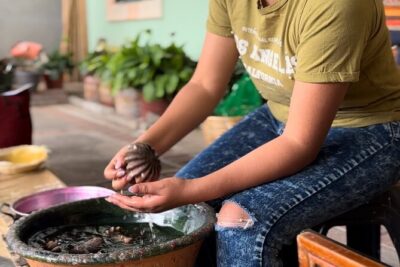
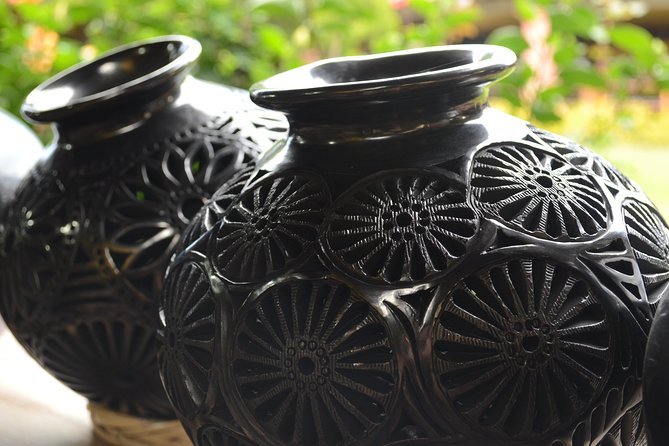
San Bartolo Coyotepec is where cerámica negra shines. This community is known for elegant pieces in black clay, including both useful wares and decorative objects. The stop lasts about 40 minutes, which is short, but it’s often one of the strongest craft memories of the day.
The best part is that you typically get to see workshop areas and local stores with a range of pieces—from tableware to sculptures. Reviews also mention seeing process and noticing differences in who makes the items (and how), which is the real value: black pottery isn’t a one-step trick. It’s a craft with technique you can spot when you watch closely.
What you should know before you go:
- This stop can feel like a mini “craft demo plus browsing.”
- 40 minutes means you’ll want to move with purpose: look at the clay work first, then browse pieces while the guide explains what makes the craft distinctive.
If you’re choosing what to prioritize, I’d bet black pottery is a safe bet. Even when other stops feel overly sales-driven, Coyotepec tends to hold up.
Price and value: why $53.73 can make sense for an artisan day
At $53.73 per person for about 8 hours, the biggest value driver isn’t the low cost—it’s what’s included. You get:
- a local guide
- hotel pickup and drop-off
- and free admission at the craft stops listed in the plan
That combination is important. Without transport and a guide, you’d burn time (and money) just getting between towns, especially if you don’t want to rent a car.
Still, here’s the honest budget picture:
- Snacks and bottled water aren’t included, so add that to your day plan.
- Craft stops are buying-friendly. If you plan to purchase, your final total depends on how serious you are about taking pieces home.
Value tip: I’d treat this as a craft education day first, shopping second. If you see a piece you genuinely love, you’ll be able to judge quality better because you’ve already seen how other crafts work today.
Group size and guide style: what changes when it’s up to 18 people

The tour caps at 18 travelers, which is a meaningful detail. In a group that size, the guide can usually keep things moving and answer questions without turning everything into a one-way lecture.
English is offered, and reviews mention guides who kept Spanish and English participants informed. Names that come up include Clemente (with Francisco as driver on one tour) and Moses on another group. Different guides can change the feel of the day—what stays consistent is that the guide connects the craft to local meaning and technique.
One drawback to consider: reviews point out that bilingual tours can mean the same message is delivered twice (Spanish then English), which can slow down the pace. If you hate that, look for ways to stay engaged: focus on what hands are doing and let the guide’s words explain details you spot yourself.
Practical tips to get more from each craft stop
Here are the small choices that make a real difference on this kind of tour.
1) Bring cash for purchases if you can.
At least one review notes that the market and some woven-item purchasing may be cash-only. Even if cards work at some stops, having pesos protects you.
2) Ask one question early.
On days where demonstrations vary by workshop, it helps to ask the guide early: Will we see the making process today, or mainly finished items? You’ll learn fast whether this is a watching day or more of a shopping day.
3) Watch the process, not just the products.
Alembrijes, textiles, and pottery all have technical steps. If you focus on the steps while you browse, you’ll get better value whether or not you buy.
4) Respect photo rules.
One mixed review mentions signs about no photography at an embroidery shop. Follow what’s posted. If you want proof you visited, take a photo where allowed, then move on.
5) Plan for a long day, not a quick hop.
Even when each stop is about an hour, travel time adds up. You’ll stand, walk, and shift between workshop and market settings.
Who this Oaxaca craft tour fits best (and who might not love it)
This tour is ideal if you want:
- a guided day trip that takes you beyond central Oaxaca
- a clear set of craft categories: alebrijes, textiles, and barro negro
- time that’s short enough to keep the day active, but long enough to see real work
It’s also a great choice for first-timers who want to understand what makes Oaxaca crafts distinct before buying. You’ll see the range—wood carving, embroidery/weaving, and black clay—and you’ll be less likely to buy something without understanding what you’re paying for.
Who might not love it: if your top priority is nonstop hands-on demonstrations at every stop, be aware that some segments can feel more like showrooms. Also, if you strongly prefer single-language guiding with faster pacing, the bilingual rhythm may annoy you.
Should you book Ruta mágica de las artesanías?
I’d book it if you want a well-priced day that gets you out of Oaxaca City and into artisan towns with real craft focus. The best parts—the alebrijes making, strong black pottery stop, and textile learning—are exactly the kind of experiences that make Oaxaca crafts feel personal instead of like souvenirs.
I’d think twice if you’re allergic to shopping environments or you only want to watch the making with no retail time. In that case, go in with a plan: ask early about demonstrations, bring pesos, and treat browsing as part of the craft reality, not as a detour.
If your goal is to leave with better understanding and maybe one or two meaningful pieces, this tour is a solid, efficient choice.
FAQ
How long is the Ruta mágica de las artesanías tour?
It runs about 8 hours (approx.).
What’s the starting point and where do I end up?
It starts at 5 de Mayo 300, Ruta Independencia, Centro, Oaxaca de Juárez, and ends back at the same meeting point.
What time does the tour start?
The start time is 9:30am.
What kinds of crafts do you see on the tour?
You’ll visit artisan towns focused on wooden alebrijes, cotton textiles (including embroidered huipiles and blouses), and black pottery (cerámica negra).
Is the tour available in English?
Yes. The tour is offered in English.
What’s included in the price?
The price includes a local guide and hotel pickup and drop-off. Admission tickets at the stops listed are free.
Are snacks or bottled water included?
No. Snacks and bottled water are not included.
How big are the groups?
The tour has a maximum of 18 travelers.
Is it free to cancel?
Yes, you can cancel for a full refund up to 24 hours before the experience starts.