REVIEW · OAXACA CITY
Mitla, Tule, Hierve el agua and Teotilán
Book on Viator →Operated by Encuentro T · Bookable on Viator
A single ancient tree can reset your day. This Oaxaca tour strings together Santa María del Tule, Mitla, Hierve el Agua, and Teotitlán del Valle in one smooth loop, so you get real context on how people here think about land, craft, and time. I like that the day is built around iconic stops with included admissions where it counts, and I especially like the small group size that helps you get answers instead of just watching and rushing.
The second thing I really like is the guide-driven value. Reviews call out guides such as Martha, Pablo, Hugo, and Angel for being friendly, patient, and well prepared, and that matters on a long day when you want the story behind what you’re seeing (not just a timeline of dates). You’ll move with an air-conditioned vehicle and a professional driver, plus pickup is offered in Oaxaca Downtown for selected hotels.
One drawback to consider: timing and logistics can vary. Mitla runs only Wednesday to Sunday, and some past guests reported issues with drop-off distance or meals/water during the day. If you’re picky about strict pickup/drop-off accuracy or you hate buying your own lunch, plan smart before you go.
In This Review
- Key highlights you’ll feel right away
- Why This Oaxaca Circuit Works: Tule, Mitla, Hierve el Agua, Teotitlán
- Price and Logistics: What $88 Buys You (and what it doesn’t)
- Stop 1: Santa María del Tule’s 2,000-Year-Old Tree
- Stop 2: Mitla Archaeological Zone and Its Geometric Stepped Fretwork
- Stop 3: Hierve el Agua Petrified Waterfalls and Warm Turquoise Pools
- Stop 4: Teotitlán del Valle Wool Rugs and Cochineal Dye Demonstrations
- How Much Walking and Free Time Should You Expect?
- Guide Matters: What You Get When You Land With Martha, Hugo, Pablo, or Angel
- Who This Tour Suits (and who should be cautious)
- Should You Book This Tour?
- FAQ
- How long is the tour?
- What’s the price per person?
- What does the tour include?
- Is food included?
- Do I need tickets for each stop?
- Is the tour in English?
- Is pickup available from my hotel or Airbnb?
- How big is the group?
- Which days is Mitla available?
- Are children allowed?
Key highlights you’ll feel right away
- Two-millennia scale at Santa María del Tule: a 2,000-year-old tree with bark patterns you can actually interpret.
- Mitla’s geometric stonework: stepped fretwork designs tied to the Nahuatl meaning place of the dead.
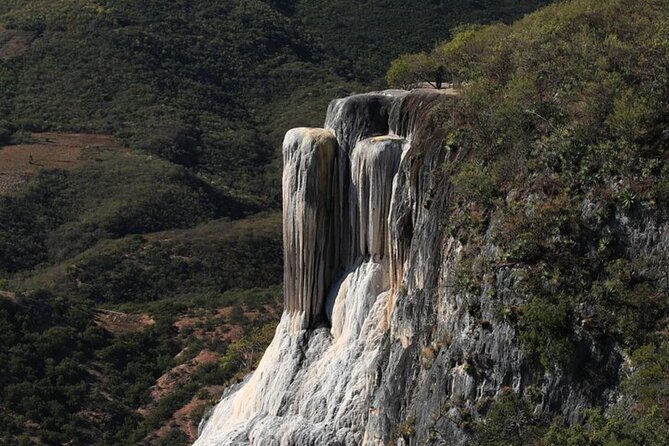
- Hierve el Agua’s petrified falls and warm pools: more than 200 meters tall in a surreal rock-and-water formation.
- A craft stop that’s not just a shop: wool rug weaving and a dye demonstration using natural colors, including cochineal grana.
- Small group day trip: capped at 20 travelers, usually making questions easier.
Why This Oaxaca Circuit Works: Tule, Mitla, Hierve el Agua, Teotitlán
This is a classic “Oaxaca greatest hits” day trip, but it’s more than check-the-box sightseeing. The route connects four very different experiences that still feel linked: an ancient natural landmark, a major archaeological site, a geological wonder with warm spa-like pools, and a living craft tradition you can watch being made.
I like the pacing because each stop has a clear identity. Santa María del Tule is about scale and imagination; Mitla is about design and cultural meaning; Hierve el Agua is about natural physics turned into art by time; Teotitlán del Valle is about technique you can trace with your eyes.
You’ll also get the practical benefit of having the driving handled. For a day that runs about 9 to 10 hours, that peace of mind is real. You’re not negotiating taxis between sites, and you’re not trying to figure out schedules mid-trip.
You can also read our reviews of more tours and experiences in Oaxaca City.

Price and Logistics: What $88 Buys You (and what it doesn’t)
For $88 per person, you’re paying for a lot of moving parts that would cost you time (and often money) on your own: an air-conditioned vehicle, a professional driver, a guide, and hotel pickup for selected downtown stays.
Here’s the value math that helps you decide: most travelers pay for transportation anyway, and admissions can add up. This tour includes admissions for Mitla and Hierve el Agua, while Santa María del Tule and Teotitlán del Valle stops don’t require tickets (Tule is noted as free; Teotitlán is free as well). So you’re not just paying for driving—you’re paying to have the stops packaged with the right access.
What’s not included is equally important. Food and drinks are not included, even though there’s a meal window around 1 hour 20 minutes during the day. Some guests described that lunch stop as a buffet where you pay for yourself, and water availability wasn’t consistent for everyone. If you want control, bring a little cash and plan to buy water or snacks.
Also keep the start time in mind. The daily pickup window is listed as 8:00 AM to 8:30 AM. If you’re staying slightly outside the downtown pickup area, confirm your exact pickup details early so you don’t lose time at the start.
Stop 1: Santa María del Tule’s 2,000-Year-Old Tree
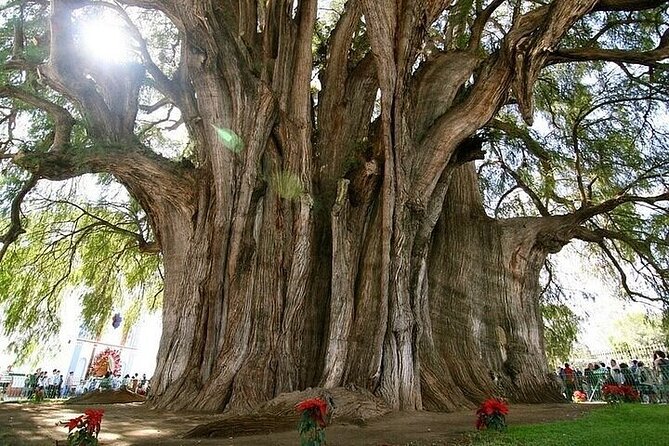
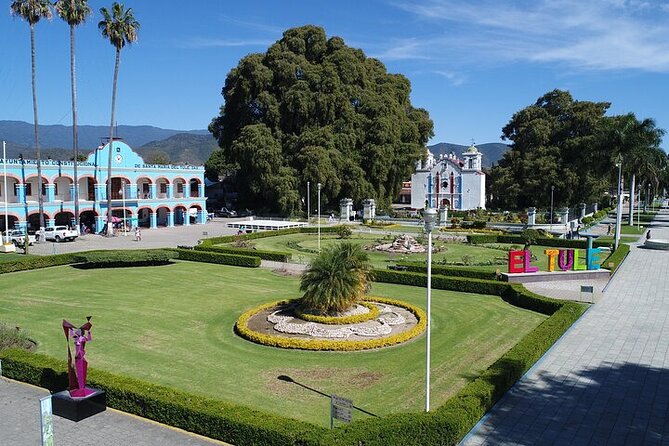
Santa María del Tule is one of those places where your brain has to catch up with what your eyes see. The tree is listed at about 2,000 years old, and the interest is less about a museum label and more about the way the bark forms shapes.
The bark texture has grooves and projections that can look like faces, animals, or even fantastical figures if you let your imagination do a little work. This is also the first “slow down” moment of the day, which helps because the rest of the tour becomes more structured and schedule-based.
A practical tip: don’t assume you’ll always get a guided close-up explanation. One review noted that at Tule the guide didn’t walk with them to point out what to look for, so if you want the full value of the story, ask your guide right away. A quick question—what should I look for in the bark?—can turn a 30-minute stop into a memorable one.
One more thing to consider: another guest mentioned you can’t get right up to the tree. So wear shoes for standing and viewing from where you’re allowed, and don’t count on a selfie-at-the-bark experience.
Stop 2: Mitla Archaeological Zone and Its Geometric Stepped Fretwork

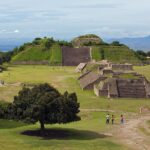
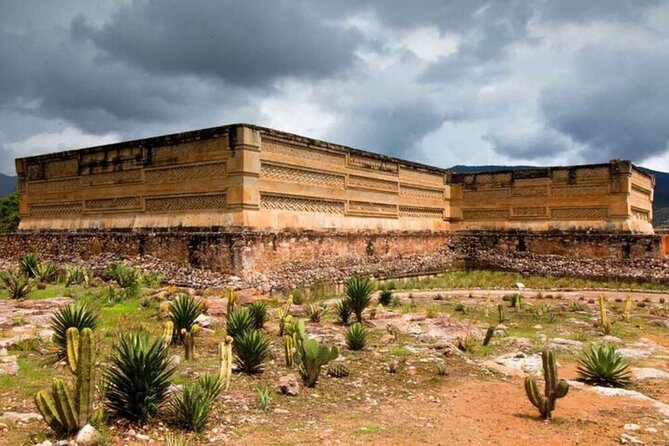
Next comes Zona Arqueológica de Mitla, tied to the Nahuatl meaning place of the dead. This is the stop where the tour shifts from “wow, that’s old” to “this is how people designed meaning into stone.”
Mitla is famous for its fine geometric decorations, including stepped fretwork patterns. The visual payoff is strong because the shapes repeat in a way that makes the architecture feel organized rather than random. You’ll have around 2 hours here, and admission is included.
The big consideration is the calendar. Mitla is noted as available Wednesday to Sunday only. If your trip date falls outside that range, you may not get the same site visit, so it’s worth double-checking your tour date before you book and setting expectations accordingly.
Also, expect that on-site time can shift. The information notes that time on site may vary due to pandemic-related factors. Even without pandemic today, archaeological sites can have temporary timing changes, so stay flexible.
Stop 3: Hierve el Agua Petrified Waterfalls and Warm Turquoise Pools
If Mitla is the stone-and-pattern stop, Hierve el Agua is the science-meets-surreal stop.
You’re looking at a series of petrified waterfalls that are described as white and massive—over 200 meters high. The formation is attributed to carbonated water runoff from springs at the top of the ravine. The result is an impossible-looking mix of rock, water, and mineral texture.
But the part that feels most human is the warm pools. The springs are described as creating pools of warm, turquoise water that are used as natural spas. Even if you don’t plan a full soak, the idea changes how you view the place: it’s not just a lookout. It’s a place built around water that people actually use.
Your time here is typically about 1 hour to enjoy Hierve el Agua, plus about 1 hour 20 minutes for meals. That structure is good, but it does mean you should treat Hierve as a focused visit, not a long hangout.
Two practical notes from real-world feedback:
- Bring (or budget for) water. One guest specifically reported there wasn’t water available during the trip.
- Plan for a meal stop you pay for. Because food isn’t included, your lunch experience can vary. One review described a buffet that left a bad taste in their mouth—literally and emotionally. You can’t control the restaurant style, but you can control your prep: eat something light earlier, bring a snack, and don’t rely on the lunch stop to be your highlight.
Finally, this is a day where timing matters. You’ll be outside for a while, and the sun can be strong in Oaxaca. Bring sun protection, and don’t wear brand-new shoes you can’t break in.





Stop 4: Teotitlán del Valle Wool Rugs and Cochineal Dye Demonstrations

Teotitlán del Valle is the craft side of Oaxaca, and it’s a nice contrast after archaeology and natural wonders. This town is known for artisans who make wool rugs using natural colors.
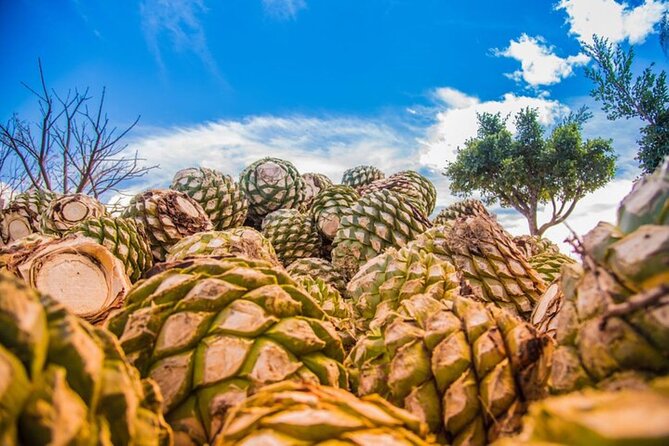
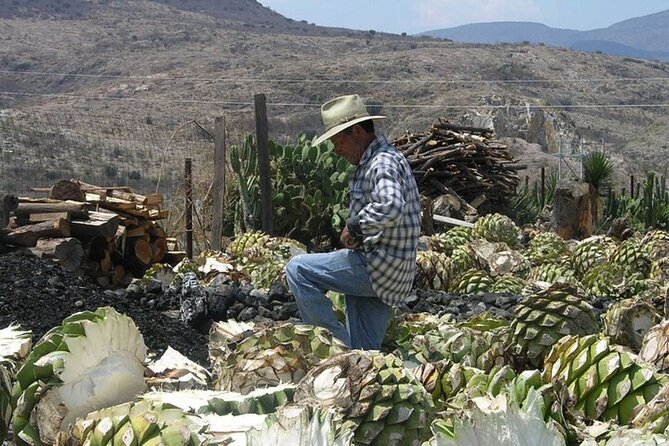
The highlight here is the color origin story, especially cochineal grana, which is a characteristic Oaxaca product. You’ll get a demonstration of how the dyes are elaborated, which makes the whole rug-buying scene feel less like retail and more like tradition.
You only have about 30 minutes in Teotitlán del Valle, so it’s not a “learn weaving for half a day” situation. But it can still be worthwhile if you care about process. Even a short demo can help you understand why hand-dyed colors don’t look flat like synthetic dye and why natural shades can have depth.
If you want to buy a rug, treat this stop as “ask questions, compare, and decide.” You’ll see enough to know what you’re paying for, but the time is short—so don’t let decision fatigue steal your best bargaining mood.
Also, admissions at this stop are listed as free. That’s a small detail that adds up when you’re thinking about overall value.
How Much Walking and Free Time Should You Expect?
This tour is built for viewing, not for long wandering. The times are pretty specific: 30 minutes at Tule, 2 hours at Mitla, about 1 hour at Hierve el Agua (plus meals), and 30 minutes at Teotitlán del Valle.
In real terms, that means you’ll likely spend most of your day standing, walking short distances between viewpoints, and moving with the group. If you’re traveling with knees that hate uneven stone, wear supportive shoes. If you love photo time, you’ll probably want to travel with a “quick shot then look longer” strategy.
Free time seems limited by design. Some guests noted they would have liked more time at certain places, especially churches when those were part of the route in their version of the day. So if you’re the type who wants slow museum pace, you might find the day a little structured.
One way to improve your experience is to use your guide like a timer. Ask what the best photo window is at each stop, and where to stand for the best view. That turns the schedule from stress into a plan.
Guide Matters: What You Get When You Land With Martha, Hugo, Pablo, or Angel
On paper, this tour includes a guide. In practice, the guide quality can make or break the day.
The best feedback in the provided reviews praises guides by name:
- Martha is described as amazing and well prepared.
- Pablo is called fantastic, knowledgeable in a positive way, and patient.
- Hugo is praised as a great guide who made the experience feel smooth.
- Angel is mentioned as friendly and professional, with interesting stories.
That lines up with why small-group matters. When you’re capped at 20 travelers, it’s easier for a guide to answer questions like:
- What’s the meaning of these patterns at Mitla?
- How should I interpret the bark shapes at Tule?
- What makes the dye process at Teotitlán different?
Not every review was perfect—some mentioned guides who seemed less personable or had issues with communication. So here’s the practical way to protect yourself: at the first stop, set the tone. Ask for one “where should I focus?” question at each location. You’ll get more out of the time you’re paying for.
Who This Tour Suits (and who should be cautious)
This is a strong pick if you want an all-in-one day with a clear route and minimal planning. It fits well if:
- You’re short on time in Oaxaca City.
- You want guided context for Mitla and Hierve el Agua.
- You like craft culture and want to see dye work related to cochineal grana.
It may not be ideal if you:
- Need strict lunch inclusion or dislike self-paid meal stops.
- Are very sensitive to small route changes or limited on-site time.
- Travel on a date when Mitla is not available (since Mitla is listed as Wednesday through Sunday only).
If you’re the kind of traveler who loves deep, slow exploration, consider pairing this with a separate half-day focused purely on one site. Otherwise, you can end the day with great photos and big impressions, but not enough lingering.
Should You Book This Tour?
I’d book this tour if you want a practical, guided day that covers four of Oaxaca’s most memorable themes: ancient nature at Tule, patterned stone at Mitla, otherworldly water at Hierve el Agua, and living wool craft in Teotitlán del Valle. The $88 price feels reasonable for a full long day with transport, guide, and key admissions included, especially if you’re staying in Oaxaca Downtown and want pickup handled.
I’d pause and check a few things first:
- Confirm your visit day works with Mitla’s Wednesday to Sunday schedule.
- Be prepared to buy food and drinks, and don’t assume water is included.
- Ask the operator to confirm your exact pickup and drop-off point so you don’t end up walking extra.
If those boxes feel fine, this is the kind of tour that saves energy and gives you a coherent Oaxaca story in one day.
FAQ
How long is the tour?
It runs about 9 to 10 hours.
What’s the price per person?
The price is $88.00 per person.
What does the tour include?
You get an air-conditioned vehicle, a professional driver, hotel pickup (selected hotels), and a guide.
Is food included?
No. Food and drinks are not included, even though meals time is built into the schedule.
Do I need tickets for each stop?
Admission is included for Mitla and Hierve el Agua. Santa María del Tule and Teotitlán del Valle are listed as free.
Is the tour in English?
Yes, the tour is offered in English.
Is pickup available from my hotel or Airbnb?
Pickup is available in Oaxaca Downtown for selected hotels. The operator meets you in the lobby and asks for your name.
How big is the group?
The tour has a maximum of 20 travelers.
Which days is Mitla available?
Mitla is available Wednesday through Sunday.
Are children allowed?
Children must be accompanied by an adult.