REVIEW · OAXACA CITY
Make Your Own Chocolate with Oaxacan Tradition Private Class
Book on Viator →Operated by Chimalapa Cacao · Bookable on Viator
Cacao turns into a hands-on lesson in Oaxaca. This small workshop with Chimalapa Cacao teaches the craft behind Oaxacan chocolate using a traditional process, from bean tasting to drink-making. You also get to work on a clay comal sourced from San Marcos Tlapazola, which gives the class a real sense of place.
I love that it’s not just a cooking step. You start by learning how to judge cocoa seeds by their organoleptic qualities, then you sort out the difference between cocoa, commercial chocolate, and conscious chocolate. Guides like Fernanda, Diego, and Ruth are especially good at keeping the science practical and the hand work fun.
One possible drawback: at $98.57 per person for about 2.5 hours, it’s pricier than a basic chocolate shop stop. If you’re trying to fill a whole day in Oaxaca, you may find it a little short—though you do leave with the results of your labor.
In This Review
- Key things to look for before you go
- Why This Oaxacan Chocolate Class Feels Local, Not Manufactured
- Cacao 101: Learning to Judge Beans Before Roasting
- Roasting on a San Marcos Tlapazola Clay Comal
- Peeling Cocoa by Hand and Hearing the Cultural Story
- Turning Roasted Cacao into Your Own Chocolate Blend
- Grinding the Traditional Drink and Finishing with Cocoa Toast
- Price and Value: Is $98.57 Worth It?
- Timing, Group Size, and Where to Meet in Oaxaca Centro
- Who This Chocolate Class Is Best For (and Who Might Want Something Else)
- Should You Book This Make-Your-Own Oaxacan Chocolate Class?
- FAQ
- How long is the chocolate class?
- How many people can join the class?
- Is the class offered in English?
- Where is the meeting point?
- What do I make during the class?
- Will I taste what I make?
- Do I get to take chocolate home?
- What ingredients can go into the chocolate?
- Is cancellation free?
- Are service animals allowed?
Key things to look for before you go
- Clay comal tradition: Roasting on a clay cooking surface from San Marcos Tlapazola keeps the process rooted in Oaxacan methods.
- Cacao quality tasting: You’ll learn to assess beans by smell and taste before anything gets roasted.
- Hand-peeling as a ritual: Peeling cocoa by hand is slow on purpose, and the teacher shares the cultural story as you do it.
- You control the sweetness: Pick your sugar percentage and mix in regional ingredients, including options that can add chili heat.
- A grinder-driven drink: You’ll prepare your drink with a traditional kitchen tool that helps the chocolate integrate.
- You eat what you make: The session ends with a cocoa-based tasting and cocoa toast (plus you take home your chocolate).
Why This Oaxacan Chocolate Class Feels Local, Not Manufactured
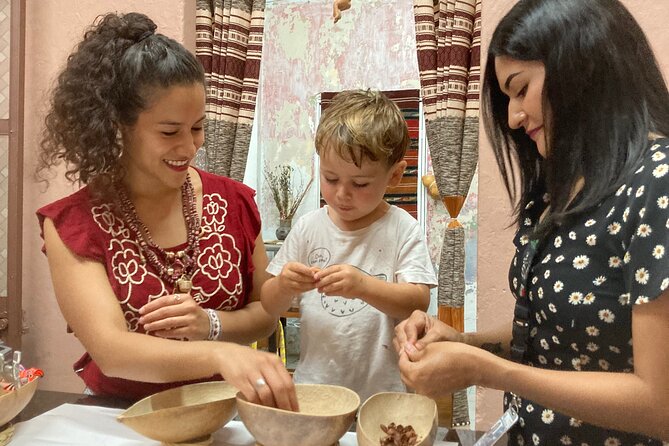
Oaxaca is full of chocolate stands, tastings, and bottles that promise authentic flavor. This class gives you something different: the slow, physical process of turning cacao seeds into drinking chocolate the way locals do it—without shortcuts.
What makes it work is the structure. You don’t jump straight to hot chocolate. You learn what to look for in the cacao first, then you roast and grind, then you build your own blend and drink it. Even the tools matter. You roast on a clay comal tied to a specific community, and you finish with a grinder method that affects texture and how the flavors lock in.
The vibe is also intentionally small. With a maximum of 4 travelers, the class doesn’t feel like a conveyor belt. That matters when you’re doing hands-on steps like peeling beans and grinding. It’s easier to ask questions, get corrected, and actually taste and adjust as you go.
There’s also a steady human element. The experience is run by a team behind the cacao, and guides such as Fernanda, Lupita, Diego, and Ruth show up in the way they teach: clear explanations, patience with kids, and real enthusiasm when someone nails a step.
You can also read our reviews of more private tours in Oaxaca City


Cacao 101: Learning to Judge Beans Before Roasting
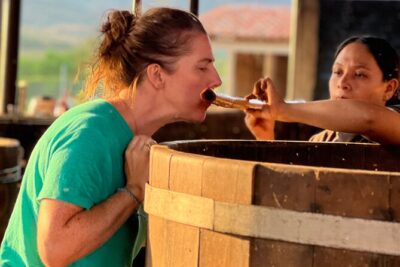
Your session starts with an introduction to cacao in Oaxaca, and it’s built around your senses. You’ll learn how to identify the organoleptic qualities of each seed—basically how smell, flavor, and overall character show up in different cacao.
This part is more valuable than it sounds. Most chocolate experiences teach you what chocolate is supposed to taste like. This one helps you train your palate to notice why cacao varies from batch to batch. That’s the difference between tasting something once and understanding it enough to choose well later.
You’ll also sort out the difference between:
- Cocoa (the raw ingredient)
- commercial chocolate (what changes when cacao meets industrial processing)
- conscious chocolate (a framing that emphasizes attention to origin and production choices)
That quick theory-to-practice bridge makes the later steps feel meaningful. When you roast and peel, you’re not just following instructions—you’re working with a material you can actually “read.”
If you like food education, you’ll appreciate that it’s not a lecture-only setup. The tasting is part of the learning, and it keeps the session moving.
Roasting on a San Marcos Tlapazola Clay Comal
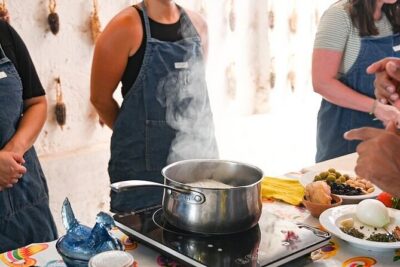
Next comes the first big transformation: roasting the cocoa in a clay comal. This isn’t a random kitchen trick. The comal used here comes from the community of San Marcos Tlapazola in Oaxaca’s Central Valleys, which gives the process a specific cultural and craft lineage.
Roasting is where the magic starts to smell like chocolate instead of just cocoa. And because you’re roasting in a traditional way, you get a clearer connection between method and taste. Clay conducts heat differently than a flat modern surface, and the teacher’s approach helps you notice how the cacao shifts during the roast.
This is also a good time to pay attention to what you smell and what you expect the finished chocolate to taste like. Later, when you grind and mix, you’ll have a reference point.
Practical note: expect this to be hands-on and sensory. You’re smelling roasted cacao, handling ingredients, and learning by doing, not just watching from a chair.
Peeling Cocoa by Hand and Hearing the Cultural Story
After roasting, you peel the cacao with your hands. That may sound like a simple step, but it’s a guided ritual. You’ll be told history and culture of cacao in the community as you work.
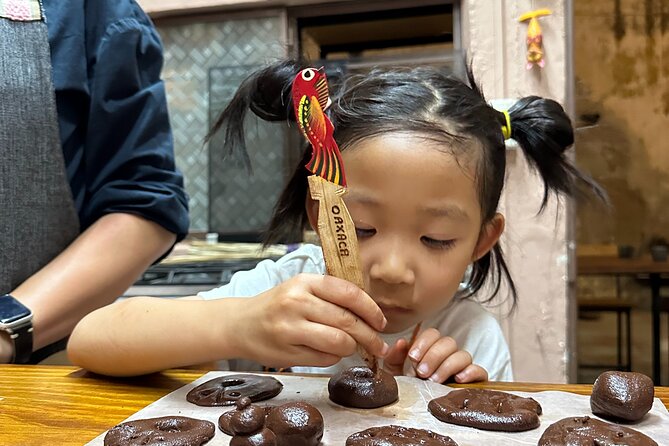
This is one of the most praised parts because it slows you down. You can’t rush it, and you feel the material change as you peel. Kids tend to get a kick out of this step too, partly because it’s tactile and partly because the explanation is matched to the activity.
If you’re traveling with children, this is a strong age-range fit. Families often love it because the pace is interactive and the teaching style is patient. One family even described it as the best tour in Oaxaca for their 9-year-old, which makes sense: it has a clear story, a concrete task, and a tasty payoff.
And if you’re an adult who just wants good chocolate: the payoff is real. The better you understand what’s happening in the peel and roast stage, the better your final drink and blend tend to taste.
Turning Roasted Cacao into Your Own Chocolate Blend
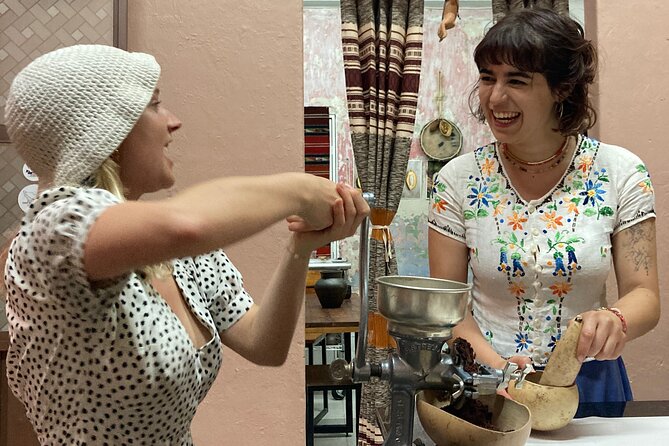
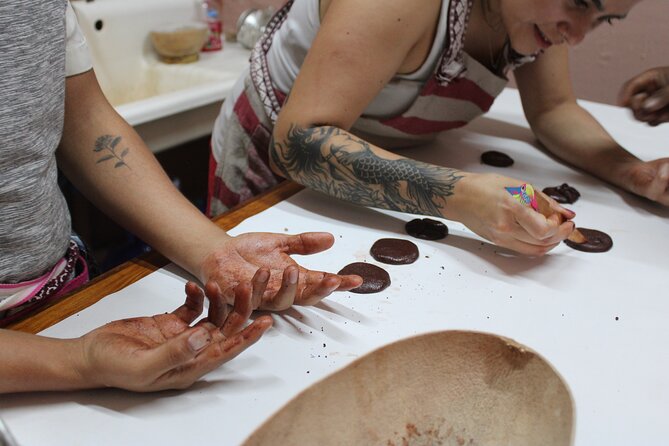
Now you get to the creative part: transforming cocoa into chocolate in an artisanal way. This is where your hands and your choices matter.
You’ll learn how to mix in different regional ingredients and—here’s the fun control knob—choose the percentage of sugar for your chocolate. That means your final flavor profile can be more bitter and cocoa-forward or sweeter and more dessert-like.
From the experience design and the way the class is described, you’re building a custom blend, not just copying someone else’s recipe. Some classes include options like chili in the mix, so you can make your chocolate blend shift toward warm spice heat. If you like the Oaxacan habit of balancing chocolate and chili, this is your moment.
This section is also a good place to ask questions. If you’re unsure what sugar percentage to pick, you can use your tasting earlier as a guide. Think: if your cacao smelled more intense or bitter, you may want a different sweetness than you’d choose for a milder bean character.
And yes, you end up with chocolate you made yourself, which is way more satisfying than buying a pre-made bar you didn’t influence.
You can also read our reviews of more tours and experiences in Oaxaca City

Grinding the Traditional Drink and Finishing with Cocoa Toast
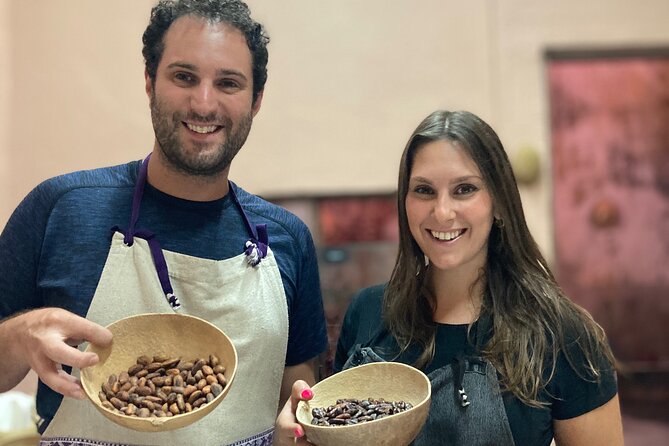
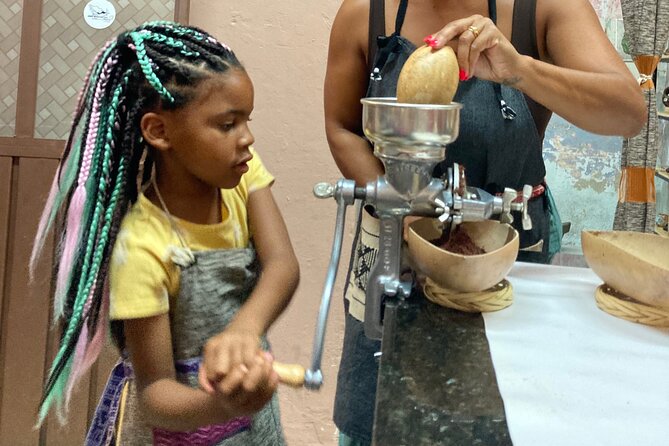
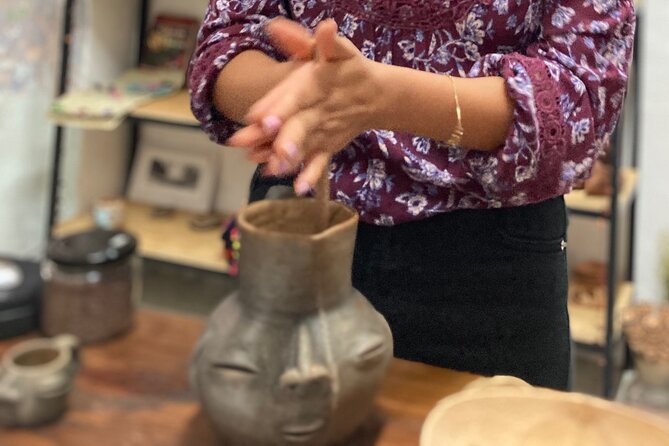
The last stretch is all about turning your chocolate blend into a drink the traditional way. You’ll learn how to prepare the beverage using a grinder—a kitchen utensil that helps incorporate and integrate the chocolate.
This is another hands-on step that many people love because it’s physical. Grinding takes effort, and you can feel the transformation as the mixture thickens and changes texture. It also gives you a better appreciation for why traditional hot chocolate isn’t always the same as what you get from a packet or a bar.
Once your drink is ready, you’ll taste it. That tasting isn’t random either. You can compare the flavors you chose (sweetness level, added ingredients) with what you learned earlier about cacao quality. It’s a full-circle moment.
To finish, the experience includes a cocoa-based tasting plus food. The sample menu points to cocoa toast as the dessert, and the session ends with tasting a cocoa-based sandwich as well. It’s a nice way to keep the focus on cocoa beyond just liquid chocolate.
Price and Value: Is $98.57 Worth It?
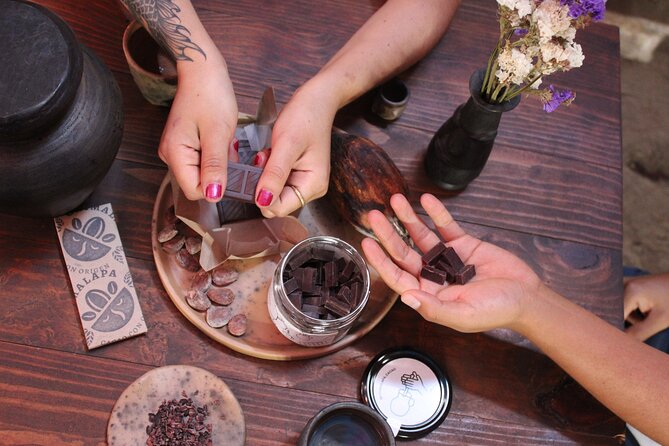
At $98.57 per person for about 2 hours 30 minutes (and often closer to around 3 hours in practice), you’re paying for more than a snack and a photo. You’re paying for:
- a structured education about Oaxaca cacao
- hands-on roasting, peeling, grinding, and blending
- tastings during the process
- your own finished chocolate drink
- a cocoa-based food finish
- a group limit that keeps the attention on you
The value angle here is simple: if you care about food craft, this class turns cacao into an experience you can repeat at home in your head. You won’t just remember that chocolate was good—you’ll remember why it tasted the way it did.
It’s still not a budget activity. If you’re traveling with a tight schedule or you only want a quick chocolate stop, you might prefer something shorter. But if you want one memorable, hands-on food class in Oaxaca, this price starts to make sense quickly.
Timing, Group Size, and Where to Meet in Oaxaca Centro
Plan for roughly 2.5 to 3 hours total. The flow is typically split across instruction, tasting, and making the drink. Because the class is small (up to 4 travelers), you won’t feel rushed, but you should still treat it like a real activity window, not a quick detour.
You’ll meet at:
5 de Mayo 210, Ruta Independencia, Centro, 68000 Oaxaca de Juárez, Oax., Mexico
The activity ends back at the meeting point.
It’s offered in English, and you’ll get a mobile ticket. Confirmation happens at booking. It’s also near public transportation, which matters because cacao classes are easier when you aren’t fighting the city schedule.
Service animals are allowed, which is a helpful detail for many travelers.
Who This Chocolate Class Is Best For (and Who Might Want Something Else)
This is a strong fit for:
- couples who want a shared activity that ends with something delicious you made
- families with kids who handle hands-on tasks well and enjoy short guided stories
- food lovers who want to understand cacao quality, not just consume dessert
It’s also a great pick if you’ve been to other tastings but felt like they didn’t teach you how to choose flavors. Here, you get to make choices: sugar level and ingredient direction, plus you learn how cacao characteristics can differ.
Who might look elsewhere?
- If you’re only chasing cheap eats or a quick souvenir, the price and time may feel heavy.
- If you need a very passive experience (mostly sitting and watching), hands-on peeling and grinding will be central.
Should You Book This Make-Your-Own Oaxacan Chocolate Class?
If you want one Oaxaca experience that mixes education with real craft and ends in a drink you helped create, I’d book it. The strongest reasons are the small group size and the sequence: quality tasting first, then traditional roast and peel, then custom blending, then a grinder-based drink you taste at the end.
Book it especially if you like to learn by doing. Even if you’re not a chocolate expert, the class is built to make cacao understandable through senses and steps. And if you’re traveling with kids, this is the rare workshop where the hands-on parts are matched with patient teaching.
If you’re on the fence, use this rule of thumb: if you’d rather leave Oaxaca with a skill and a flavor memory than just a store-bought bar, this is your kind of activity.
FAQ
How long is the chocolate class?
The duration is about 2 hours 30 minutes.
How many people can join the class?
The maximum group size is 4 travelers.
Is the class offered in English?
Yes, it’s offered in English.
Where is the meeting point?
You meet at 5 de Mayo 210, Ruta Independencia, Centro, 68000 Oaxaca de Juárez, Oax., Mexico.
What do I make during the class?
You make your own chocolate and learn how to prepare the chocolate drink using a grinder.
Will I taste what I make?
Yes. You’ll taste your chocolate drink at the end, and the experience includes a cocoa-based food finish such as cocoa toast and a cocoa-based sandwich.
Do I get to take chocolate home?
Yes. Each person takes their own chocolate made with their own hands.
What ingredients can go into the chocolate?
You choose the sugar percentage and mix it with different regional ingredients, with options that may include chili.
Is cancellation free?
Yes. You can cancel for a full refund up to 24 hours in advance.
Are service animals allowed?
Yes, service animals are allowed.