REVIEW · OAXACA CITY
Oaxaca: Beyond the surface
Book on Viator →Operated by Oaxaca by locals · Bookable on Viator
Oaxaca’s landmarks hit differently when you understand the stories. This 2.5-hour walk through Oaxaca City focuses on the places you already see—then explains why they matter. You’ll get a small-group experience that keeps moving, with free entry at each stop.
I especially like how the tour blends famous sights with neighborhood-level context. In the guiding style, I’d bet you’ll feel it right away: a guide named Itzel is known for strong English, clear answers, and going beyond dates to connect the sites to culture and even local politics.
One drawback to plan for: the route stacks several short visits back-to-back, and at Teatro Macedonio de Alcala the narration can include a more graphic description. Also, the experience needs good weather, so keep an eye on conditions.
In This Review
- Key highlights worth knowing
- A walking route that teaches you how to read Oaxaca City
- Price and value: why $25 makes sense here
- Meeting at Oaxaca by Locals Cosijoeza and how to plan your morning
- Stop 1: Cathedral of Our Lady of the Assumption (30 minutes)
- Stop 2 and 3: Templo de Santo Domingo de Guzmán and the Basilica de Nuestra Señora de la Soledad
- Stop 4: Teatro Macedonio de Alcala (20 minutes) and vivid storytelling
- Stop 5: Plaza Cruz de Piedra (10 minutes) for a quick history jolt
- Stop 6: Museo Textil de Oaxaca (10 minutes) and practical context
- Stop 7: Zócalo for the big-picture finish (20 minutes)
- What makes the tour click: Itzel’s Q&A style and local recommendations
- Pacing and comfort: who this suits best
- Should you book Oaxaca: Beyond the surface?
- FAQ
- How long is the tour?
- How much does the tour cost?
- Where does the tour start?
- What time does it start?
- Is the tour offered in English?
- Is there a mobile ticket?
- Are the listed stops free to enter?
- What is the group size limit?
- Is the tour affected by weather?
Key highlights worth knowing
- 7 major stops in about 2.5 hours, with quick but meaningful time at each place
- Free admission at every listed stop, so your money stays for food and crafts
- English offered, and guides can answer broader questions about Oaxaca and Mexico
- A small group (max 12), which usually makes it easier to ask follow-ups
- Teatro Macedonio de Alcala includes vivid storytelling—go in with that in mind
- Ends back at the meeting point, so you avoid the last-minute scramble
A walking route that teaches you how to read Oaxaca City
This is the kind of tour that helps your brain do something useful. Instead of treating churches and plazas like scenery, it frames them as part of a living city—religion, power, community life, and public space all tangled together.
The pace is built for short attention spans and real-world travel energy. Each stop is timed tightly: you’ll spend 30 minutes at the Cathedral, then 20 minutes at key church and cultural spots, followed by shorter breaks at plazas and a textiles museum. That structure matters. It keeps you from hovering too long while also preventing the opposite problem—rushing through without any context.
You’ll walk through Oaxaca City’s center and hit the landmarks people point to on maps, but the real value is what gets explained while you’re standing right there.
You can also read our reviews of more tours and experiences in Oaxaca City.

Price and value: why $25 makes sense here
At $25 per person for about 2 hours 30 minutes, the main “value lever” isn’t just the guide—it’s the fact that admission is listed as free for every stop. That changes the math in your favor. Even a couple of paid museum tickets can add up fast in big-city sightseeing.
This tour also keeps the group size limited (up to 12 travelers). Smaller groups usually mean fewer people competing for the guide’s time when you ask questions—especially the kind of questions that turn a walk into a real conversation. If you’ve ever done a tour where you only hear half the story, this setup is meant to reduce that.
Finally, it’s offered in English, which means you’re not paying for translation app fatigue. You can focus on listening, not decoding.
Meeting at Oaxaca by Locals Cosijoeza and how to plan your morning
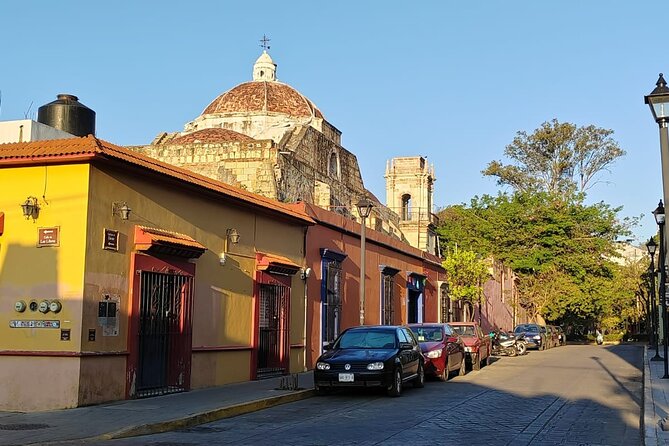
The tour starts at Oaxaca by Locals Cosijoeza, address: 110A, Ruta Independencia, Centro, 68000 Oaxaca de Juárez. It kicks off at 10:00 am and returns to the same meeting point at the end.
That return-to-start detail is small, but it’s practical. After a morning walk, you can keep exploring without guessing transit routes or where the group will end up.
The tour is also described as being near public transportation. In a city like Oaxaca, that matters because you’ll likely pair this with other plans—street food, craft shopping, or a museum later. When you can hop on and off easily, you get more control over the day.
Stop 1: Cathedral of Our Lady of the Assumption (30 minutes)
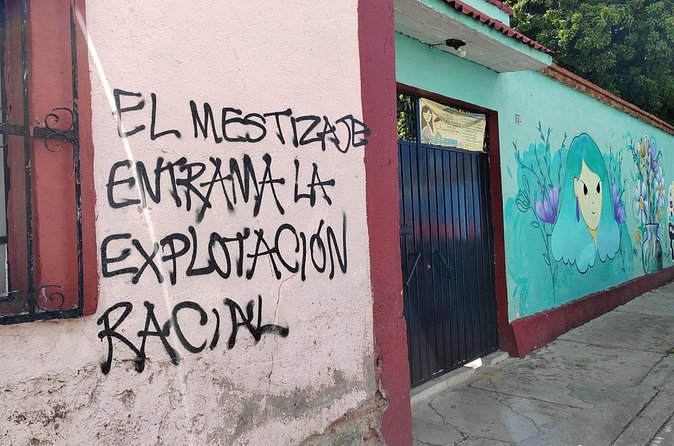
This is your anchor stop, and it sets the tone for the whole tour. You’ll spend 30 minutes here, with free admission.
What makes a cathedral the right opening? It’s big enough to be obvious, but complex enough to reward a guide-led read. You’re not just looking at architecture—you’re hearing stories and legends, which helps the building feel less like a postcard and more like something tied to real community memory.
Expect a mix of visuals and narration. If you want to understand how religious history shaped Oaxaca City’s public identity, this is where you start building that mental map.
Tip: arrive with a calm pace. The first stop works best when you’re ready to listen for patterns, not just admire details.
Stop 2 and 3: Templo de Santo Domingo de Guzmán and the Basilica de Nuestra Señora de la Soledad
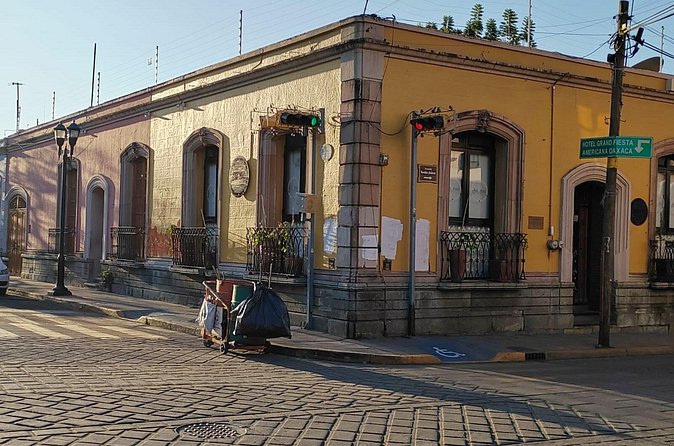
Next comes two major church stops back-to-back:
- Templo de Santo Domingo de Guzmán (20 minutes, free admission)
- Basilica de Nuestra Señora de la Soledad (20 minutes, free admission)
These aren’t filler. They help you compare how different sacred spaces function in the same city. Even if you’re not a church-history nerd, you’ll likely notice how the guide frames each one: what people associate with the place, and how the stories connect to broader themes.
This pairing also helps you avoid the “one church is just another church” trap. When a guide keeps explaining connections—why a particular site got attention, how it relates to local identity—it feels like you’re learning a system instead of collecting isolated facts.




Stop 4: Teatro Macedonio de Alcala (20 minutes) and vivid storytelling
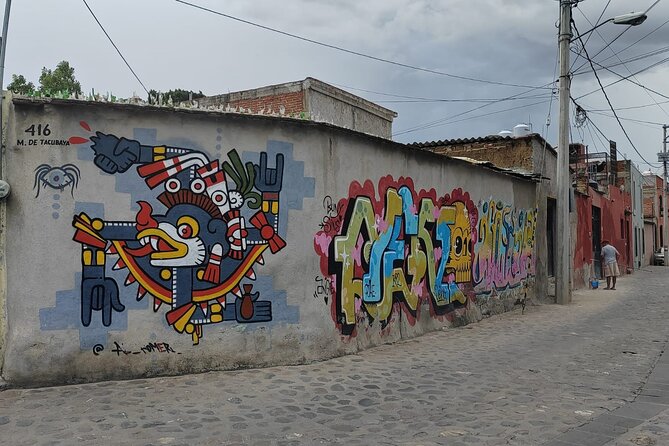
Then you shift from churches to a cultural landmark: Teatro Macedonio de Alcala, scheduled for 20 minutes with free admission.
Here’s the consideration: the tour description includes graphic storytelling. That doesn’t automatically mean it’s inappropriate for everyone, but it does mean you should mentally prepare. If you’re sensitive to darker historical accounts, you’ll want to know ahead of time that the narration may get intense.
Why include a theater in a history walk at all? Because theater is public storytelling—power, identity, and community emotion all folded into performances and the cultural life around them. Even a short stop can clarify how Oaxaca City used art and public spaces to communicate ideas.
Stop 5: Plaza Cruz de Piedra (10 minutes) for a quick history jolt
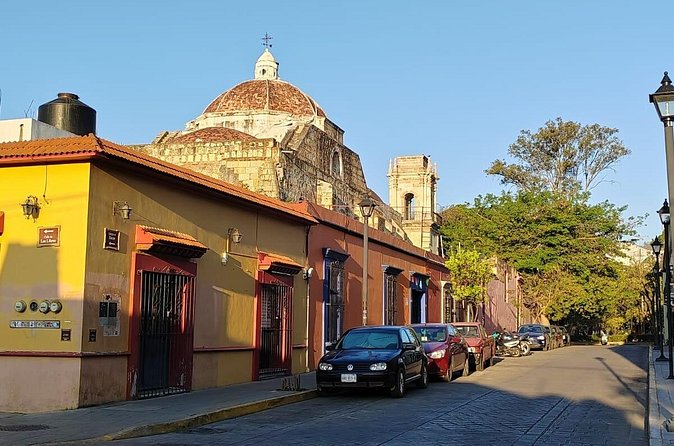
After the intensity of the theater story, you get a shorter reset: Plaza Cruz de Piedra for 10 minutes, free entry.
Plazas are underrated because they’re not always dramatic from a distance. Up close, though, they function like city living rooms. A history-focused walk through a plaza can help you notice everyday details—how people circulate, where people pause, and why certain public areas become reference points over time.
This one is brief, but short time can still work when you’re given a clear story hook.
Stop 6: Museo Textil de Oaxaca (10 minutes) and practical context
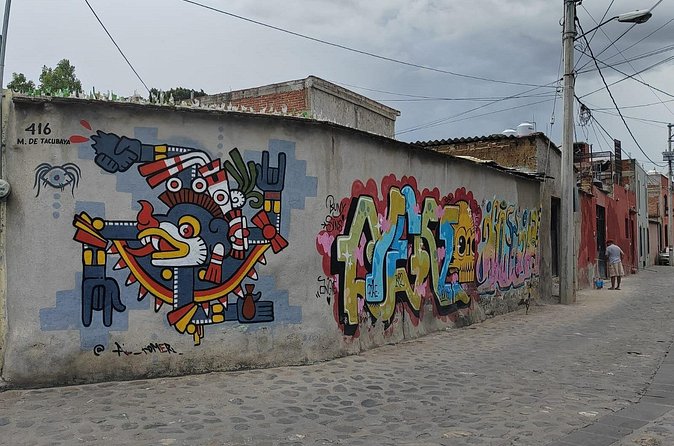
Next you’ll stop at Museo Textil de Oaxaca for 10 minutes with free admission.
You’re not spending a full half-day here. This is a quick introduction. That can be a smart move if you’re trying to keep your day flexible. A short textiles stop also pairs nicely with the rest of the walk because Oaxaca’s textile tradition isn’t just “craft”—it connects to identity, heritage, and local meaning.
If you feel the itch to learn more afterward, that’s actually a good sign. A brief museum visit often works like a spotlight: it helps you decide what you want to investigate deeper later.
Stop 7: Zócalo for the big-picture finish (20 minutes)
The final stop is the Zócalo, with 20 minutes and free admission.
This is the perfect place to end because it’s the city’s public center. The guide provides a historical description, which gives you a way to interpret what you see around you once the tour wraps.
I like finishing at a major square because it turns your last moments into a self-guided extension. When you’ve heard the background, the Zócalo feels less generic. You’re better at noticing what’s happening right then: how people use the space, how history lingers in the layout, and how the square functions as an everyday gathering place.
And since the tour ends back at the meeting point, you don’t have to pivot awkwardly at the end—you can head out with a clearer plan.
What makes the tour click: Itzel’s Q&A style and local recommendations
The standout theme in the guidance style is simple: you don’t just hear a script. A guide named Itzel is described as local, with strong English, and able to answer questions about both history and culture.
I think that’s the real reason this tour gets high marks. Architecture and plazas are physical. But what turns them into a memorable experience is conversation. When your guide also handles political and cultural context, you walk away with more than a list of names—you walk away with a lens.
You’ll also likely appreciate the practical side of the experience. Itzel is noted for offering suggestions for things like art galleries, street art, and restaurants. That kind of local guidance is gold because it reduces guesswork after the tour ends.
If you enjoy asking follow-up questions—about what you’re seeing, what to do next, or how Oaxaca fits into the larger story of Mexico—this tour format supports that.
Pacing and comfort: who this suits best
This tour is built for “walking but not marathon walking.” It’s 2 hours 30 minutes total and keeps the time at each stop relatively controlled.
It’s a good fit if:
- you want a high-context walk through Oaxaca City’s center
- you like learning from a guide instead of reading plaques
- you’re planning multiple activities later and don’t want a day-long commitment
It may be less ideal if:
- you’re uncomfortable with graphic descriptions included in the Teatro stop
- you prefer longer, unhurried museum time (this has a few short museum moments, not deep study)
- the weather is iffy—this experience is described as requiring good weather
Should you book Oaxaca: Beyond the surface?
If you’re doing Oaxaca City for the first time and you want to understand what you’re looking at, this is a strong booking. Free admission at each stop lowers the risk, the group size stays small, and the English-speaking guide style (especially with someone like Itzel) is designed to answer real questions, not just deliver a monologue.
I’d book it if your goal is to get your bearings fast and leave with ideas for what to do next—especially art and food suggestions. I’d think twice if you’re sensitive to vivid storytelling at the theater stop or if you hate weather-related uncertainty.
Overall, this one feels like a smart way to spend a morning in Oaxaca: focused, efficient, and anchored in the city’s real culture.
FAQ
How long is the tour?
The tour lasts about 2 hours 30 minutes.
How much does the tour cost?
The price is $25.00 per person.
Where does the tour start?
It starts at Oaxaca by Locals Cosijoeza, 110A, Ruta Independencia, Centro, 68000 Oaxaca de Juárez.
What time does it start?
The start time is 10:00 am.
Is the tour offered in English?
Yes, it is offered in English.
Is there a mobile ticket?
Yes, this experience includes a mobile ticket.
Are the listed stops free to enter?
Admission is listed as free for each stop in the tour.
What is the group size limit?
The tour has a maximum of 12 travelers.
Is the tour affected by weather?
Yes. The experience requires good weather. If it’s canceled due to poor weather, you’ll be offered a different date or a full refund.