A city can teach you fast. This Oaxaca City walk does it by mixing colonial art with street-level stories. You’ll move past landmark churches, a historically reused building, and a XIX-century paranormal tale, all in about 2.5 hours. I especially like the small-group size (max 8) and how the route pairs big architectural sights with the human stories that shaped how people talk about them. One thing to consider: you’re walking between multiple Centro locations, so comfortable shoes help.
The vibe is part art lesson, part legend stroll—think façade details one moment, then a spooky local story the next. Your guide leads the pacing, keeps it understandable, and makes time for questions while you’re out on the streets. With a guide style like Verónica (often called Vero) showing up in the guide notes and storytelling descriptions, expect energetic, plain-language narration rather than a lecture.
In This Review
- Key highlights (what makes this walk worth your time)
- Entering Oaxaca’s colonial-art core at Templo de Santo Domingo de Guzmán
- C. de Manuel García Vigil 205: architecture with a history of reinvention
- El Calvario 103: the XIX-century paranormal legend in the middle of town
- Avenida de la Independencia: ice cream, color, and the city’s street soundtrack
- Basilica de Nuestra Señora de la Soledad: façade art plus relic legend
- Zócalo: how Oaxaca’s layout carries clues
- What you’ll enjoy most: storytelling that stays practical
- Price and value: $38.81 for a 2.5-hour Centro hit
- How logistics shape the experience (and how to prepare)
- Who this tour fits best
- Should you book Oaxacan Urban Mythology and Colonial Art?
- FAQ
- How long is the Oaxaca City walk?
- What’s the price per person?
- How many people are on the tour?
- Is the tour offered in English?
- Where does the tour start?
- Where does the tour end?
- Are tickets and admissions included?
- Is there food or drink included?
- Are service animals allowed?
- What’s the cancellation policy?
Key highlights (what makes this walk worth your time)
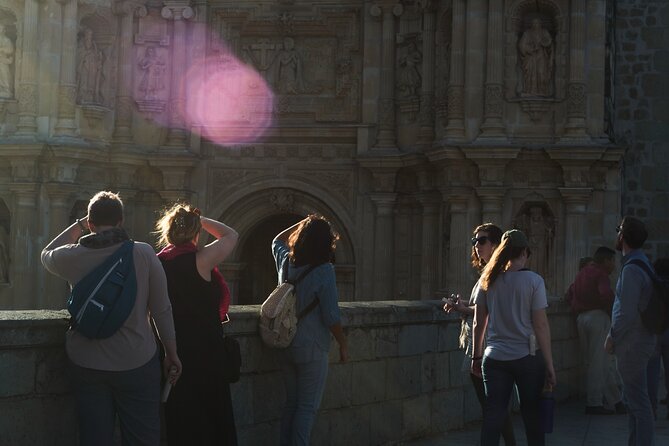
- Colonial-art stops you can actually see up close at Santo Domingo and the Basilica de Nuestra Señora de la Soledad
- Urban mythology on the route, including a XIX-century paranormal legend tied to El Calvario
- A mixed-use architectural detour at C. de Manuel García Vigil 205 that explains why buildings evolve
- An included ice-cream plaza moment on Avenida de la Independencia with color, street energy, and local treats
- Zócalo “map clues” about how the city’s layout reflects its founding and key players
Entering Oaxaca’s colonial-art core at Templo de Santo Domingo de Guzmán
You start where Oaxaca’s colonial visual language is loud and clear: Templo de Santo Domingo de Guzmán in Centro. This stop sets the tone, because Santo Domingo isn’t just a pretty church façade. It’s a starting point for understanding how colonial power expressed itself through stonework, religious design, and the way art framed everyday public life.
What makes this kind of first stop work is that you’re given something practical to look for. Instead of only hearing that a church is old, you’ll learn how to “read” what you’re seeing: the way colonial-era buildings communicate status, devotion, and community purpose. And because the stop is about 25 minutes with free admission, it’s a low-pressure way to get your bearings fast.
Tip: If you can, look up before you look straight ahead. Façades and rooflines tell stories even when you’re standing in a crowd.
You can also read our reviews of more tours and experiences in Oaxaca City.

C. de Manuel García Vigil 205: architecture with a history of reinvention
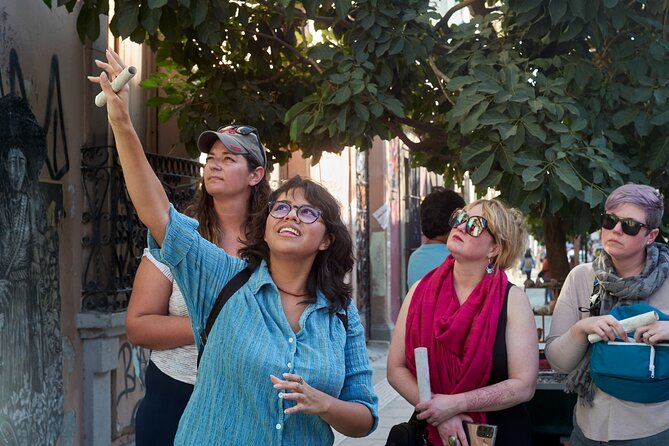
Next comes a change of pace: C. de Manuel García Vigil 205, a building in Centro that’s had several uses in history and has a unique architectural style. This stop is valuable for a simple reason: Oaxaca’s urban story isn’t only about famous churches. It’s also about the everyday buildings that kept being repurposed as the city’s needs shifted.
This is the part of the tour where your brain stops treating history like a museum display. You start thinking in layers: the same structure, different roles; the same street, different eras. That helps the rest of the walk click, because when you reach later landmarks, you’ll notice how Oaxaca preserved, adapted, and reinterpreted its built environment.
The time here is short—about 15 minutes—but that’s enough to frame what you’re seeing without turning the walk into a marathon.
El Calvario 103: the XIX-century paranormal legend in the middle of town
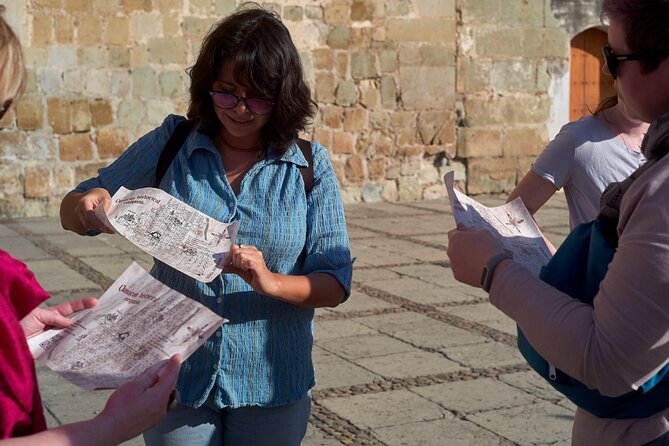
Then you step into the tour’s signature mix: El Calvario 103, a street location tied to a popular paranormal legend from the XIX century. This is not history in the textbook sense. It’s local mythology rooted in real urban space—exactly the kind of “why does this place get talked about” story that helps you understand how cities become living folklore.
What you’ll get from a stop like this is perspective. Oaxaca’s legends don’t live in isolation; they attach to streets and corners where people repeatedly pass, gather, and remember. When you’re standing in the same setting, the story feels less like a random ghost tale and more like part of how the city communicates.
This stop is also quick—around 10 minutes—so you don’t have to choose between structure and atmosphere. You get a jolt of storytelling, then you move on.
Consideration: If you dislike spooky themes, you can still enjoy this stop for its cultural purpose, since the focus is how legends shape local identity and storytelling.
Avenida de la Independencia: ice cream, color, and the city’s street soundtrack
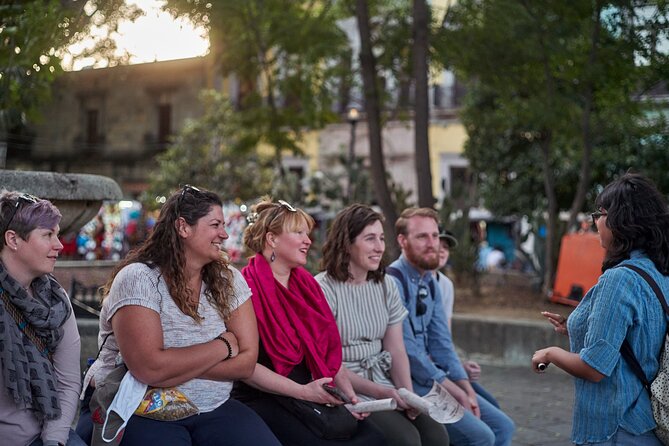
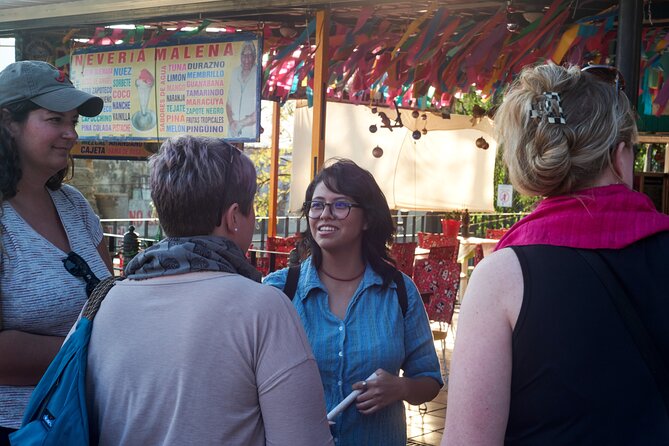
Now the walk shifts from architecture to street life at Avenida de la Independencia, where there’s a small plaza vibe with color and the chance of musicians playing traditional Mexican melodies. This is the tour’s built-in “breather,” and it matters because it keeps the experience from feeling like nonstop facts.
You’ll spend about 30 minutes here, with admission/treat included. The highlight is the traditional ice cream, the kind you’d actually want to seek out after you learn where to stand and what to watch for. It’s also one of the easiest spots to interact with the city on its own terms—just you, a plaza, and the soundtrack.
Even if you’re not planning to linger for hours elsewhere, this stop gives you a taste of how Oaxaca sounds and looks when it’s not staged for tourists.
Practical move: Use this time to check your phone map and plan your next meal nearby. You’ll be in the Centro rhythm already.
Basilica de Nuestra Señora de la Soledad: façade art plus relic legend
One of the most rewarding moments comes at Basilica de Nuestra Señora de la Soledad. This isn’t just another church stop. You’ll look at the architecture and façade art while hearing about a relic that’s part of Oaxaca’s legends.
You’ll spend about 25 minutes here, with admission included. That included entrance time is a real value piece, because it saves you the mental load of figuring out costs and access while you’re in the middle of a walking schedule. The tour also helps you connect the visual details on the façade to the story context—why people care about a particular object or symbol, and how art becomes part of the legend ecosystem.
This is also where the “urban mythology and colonial art” theme shows its best balance. You’re not choosing between church art and spooky story; you’re seeing how both function together in local culture.




Zócalo: how Oaxaca’s layout carries clues

You finish at the Zócalo, stopping there for about 30 minutes to learn how the city was founded and how earlier moments left clues in the layout of buildings and streets.
This is a smart ending, because the Zócalo is where it all converges. You can look around and test your new understanding: which structures feel like they belong to certain eras, and how the city’s plan reflects its past decisions. The tour’s framing helps you see urban design as something more than background.
Also, the tour ends at C. de Manuel Doblado 117, and that final point is about five blocks from the Zócalo. So even after the walking portion ends, you’re still close enough to keep exploring at your own pace.
What you’ll enjoy most: storytelling that stays practical

The best part of this kind of tour is that it gives you a way to keep looking after you leave. A strong guide doesn’t just point at landmarks; they teach you a set of questions. On this walk, those questions show up through the mix of stops:
- When you’re at Santo Domingo, you learn what to notice in colonial church art and design.
- When you’re at Manuel García Vigil 205, you understand that buildings change roles over time.
- When you’re at El Calvario 103, you see how a XIX-century legend attaches to the street itself.
- When you’re at Avenida de la Independencia, you experience the city’s social energy, not just its monuments.
- At Nuestra Señora de la Soledad, you connect façade art with legend and relic meaning.
- At the Zócalo, you practice reading the city plan like a living map.
This is why many people use the tour as their first big Centro anchor. You’re not just ticking off sights—you’re learning a lens.
Price and value: $38.81 for a 2.5-hour Centro hit

At $38.81 per person for about 2 hours 30 minutes, this is priced like a focused small-city introduction. The value comes from three things:
- Time efficiency: You cover multiple Centro landmarks without needing a private guide.
- Inclusions that matter: Ice cream is included, and admission is included for the Plaza stop and the Basilica stop (while other major stops are free). That reduces add-on surprises mid-walk.
- Small group pacing: Max 8 travelers means you’re more likely to get answers instead of being rushed through.
If you’re traveling on a mid-range budget and you want more than “look, photo, next,” this price feels fair. If you hate walking and prefer slow museum-style time, you might find the pace more active than your ideal day.
How logistics shape the experience (and how to prepare)
This is a walking tour, so prep is simple but important. Wear comfortable shoes, bring water, and keep your camera ready because Centro details are the kind you’ll want to capture.
You’ll use a mobile ticket, which is easy if you already travel digital-first. The meeting point is Templo de Santo Domingo de Guzmán, at C. Macedonio Alcalá s/n, Centro. The tour ends at C. de Manuel Doblado 117, about five blocks from the Zócalo, so you’re well positioned for lunch or a second wander.
Language is listed as English, and the tour notes say most travelers can participate. Service animals are allowed, and the start area is near public transportation, which helps if you’re planning the rest of your day around Transit.
Who this tour fits best
This is a great match if you:
- Want a first or second day in Oaxaca City that helps you understand what you’re seeing
- Like the mix of church architecture plus local folklore
- Prefer small groups and conversational storytelling
- Want a structured walk without committing to a full half-day of museum hopping
It might not be the best fit if:
- You dislike paranormal themes completely (the legend stop is short, but it is part of the concept)
- You want a more relaxed, stop-and-stay-longer sightseeing plan rather than a guided route
Should you book Oaxacan Urban Mythology and Colonial Art?
Yes—if you’re heading into Centro and want a fast, meaningful orientation, book it. This is the kind of tour that helps you stop seeing Oaxaca as separate categories of church, street, and legend. You’ll leave with a sense of how colonial art and local mythology share the same physical space.
Use this as your foundation walk. Then you can spend the rest of your trip choosing your own rabbit holes—church corners, plaza snacks, and Zócalo-side wandering—with a better sense of what you’re looking at.
FAQ
How long is the Oaxaca City walk?
It runs for about 2 hours 30 minutes.
What’s the price per person?
The price is $38.81 per person.
How many people are on the tour?
The tour has a maximum of 8 travelers.
Is the tour offered in English?
Yes, it’s offered in English.
Where does the tour start?
The meeting point is at Templo de Santo Domingo de Guzmán, C. Macedonio Alcalá s/n, Centro, Oaxaca de Juárez.
Where does the tour end?
It ends at C. De Manuel Doblado 117, Centro, about five blocks from the Zócalo.
Are tickets and admissions included?
Most stops are free. Admission is included for the Avenida de la Independencia stop and for the Basilica de Nuestra Señora de la Soledad.
Is there food or drink included?
Yes. The Avenida de la Independencia plaza stop includes traditional ice cream.
Are service animals allowed?
Yes, service animals are allowed.
What’s the cancellation policy?
You can cancel up to 24 hours in advance for a full refund. If you cancel less than 24 hours before the start time, the payment is not refunded.