REVIEW · OAXACA CITY
Bicycle Tour through Oaxaca learning about its Urban Art and History
Book on Viator →Bookable on Viator
Oaxaca looks different from a bike seat. This short ride mixes street art and neighborhood history in places like Jalatlaco and Xochimilco, plus a big stop at Santo Domingo de Guzmán. I like that you get frequent photo breaks in the oldest streets, and your guide Daniel brings the stories to life in excellent English.
What I love most is the balance: you’re moving fast enough to see a lot, but the tour still slows down for the art and the meaning behind it. It’s also a smart value since the tour includes your bicycle and helmet, and all the listed admissions are free. One thing to consider: the ride includes cobblestones and city streets, so if you’re nervous about traffic, go in focused and follow Daniel’s safety cues.
In This Review
- Key highlights you’ll feel right away
- How this 2-hour urban art bike tour really works
- Starting point and what to bring for a smooth ride
- Stop 1 in Oaxaca City: street art streets plus quick breaks
- Jalatlaco and the Templo de San Matías: Day of the Dead energy in architecture
- Xochimilco’s Los Arquitos: the aqueduct arches you shouldn’t skip
- Cerro del Fortín: panoramic city views and a Benito Juárez connection
- Santo Domingo de Guzmán: a church, an ex-convent, and a culture center
- Safety, pacing, and the cobblestone reality check
- Price and value: why $34.65 makes sense here
- Who should book this bike tour (and who should skip it)
- Should you book this Oaxaca street art bike tour?
- FAQ
- How long is the bicycle tour?
- Is the tour offered in English?
- What is included in the price?
- Are admission tickets included for the stops?
- Where does the tour start and end?
- Do I need to bring bottled water?
- What happens if the weather is poor?
Key highlights you’ll feel right away
- Small group max of 8 so you’re not lost in the crowd, and the guide can keep an eye on everyone
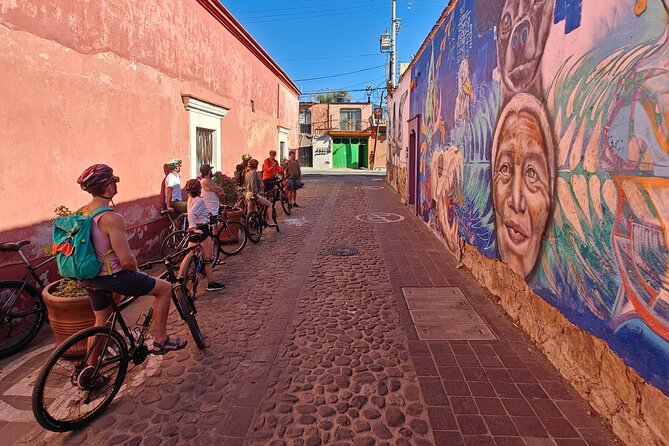
- Photo stops in Jalatlaco and Xochimilco for murals, alleys, and historic details
- Daniel’s city + art explanations in English, tied directly to what you’re seeing
- Cerro del Fortín viewpoint for panoramic views and sunset-friendly photos when timing works
- Santo Domingo de Guzmán cultural complex with major New Spain baroque architecture and multiple spaces to explore
- Cobblestones included, but helmets plus technical support help the ride stay manageable
How this 2-hour urban art bike tour really works
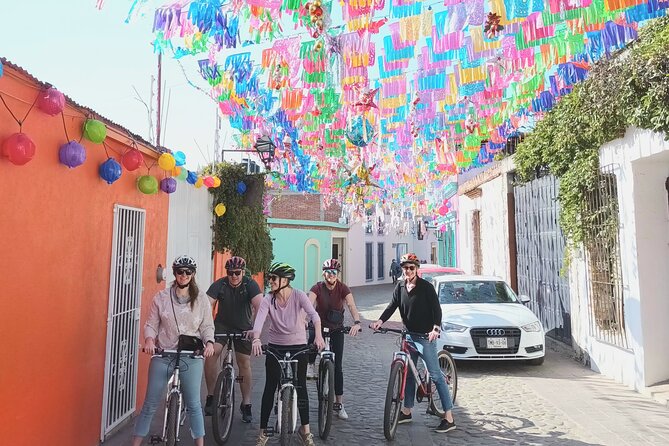
This is a compact, easy-to-fit-in Oaxaca City experience: about 2 hours total, booked well in advance, with a mobile ticket and an English-speaking guide. You’ll roll through central areas and key neighborhoods, stopping often enough to learn and photograph without feeling rushed the whole time.
The tour is built around movement plus meaning. In Oaxaca, the best street art isn’t just on giant walls. It’s in tight alleys, next to old architecture, and in the same places where community traditions play out year after year. Riding the route by bicycle is how you get that street-level context quickly.
Group size matters here. With a maximum of 8 people, you’re more likely to get help when you need it and stay together when the streets narrow. You’ll also get technical assistance during the ride, which is reassuring when you’re dealing with cobblestones and turns.
You can also read our reviews of more historical tours in Oaxaca City


Starting point and what to bring for a smooth ride
You meet at Bike & Roadtrips Oaxaca on C. de Mariano Abasolo 315, Ruta Independencia, Centro (Oaxaca de Juárez). The tour returns to the same meeting point at the end.
Bring athletic clothes and expect some uneven surfaces. Cobblestones and urban traffic are part of the experience, and that’s exactly where having a helmet (provided) makes a difference in how relaxed you feel. Bottled water is not included, so plan to carry some water with you.
Bicycle sizes run from S to XL, so ask for the size that fits your comfort level. A good fit makes a short tour feel effortless instead of like you’re constantly adjusting your balance.
Stop 1 in Oaxaca City: street art streets plus quick breaks
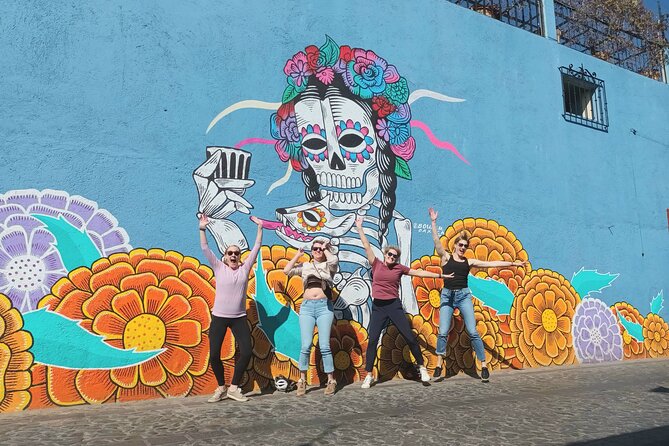
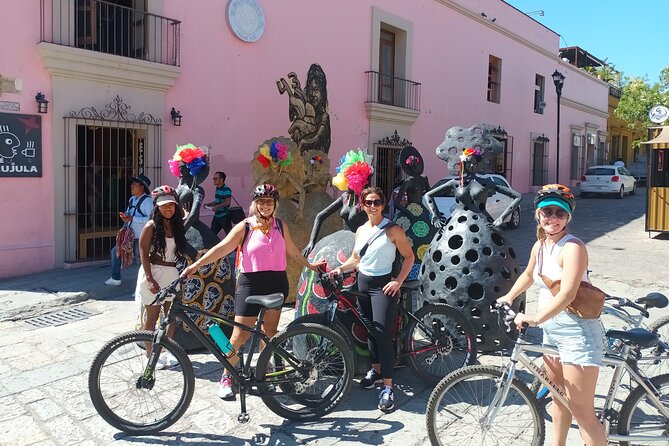
Your first stretch focuses on representative areas of Oaxaca City, using bicycles to link picturesque blocks and mural-lined streets. This is where the tour sets the tone: you’re not just sightseeing monuments. You’re watching how Oaxacans paint and build their identity into everyday life.
You’ll also pause multiple times to observe art and take photos. Those breaks are practical. You’ll want a second to zoom in on details, capture the colors, and listen to the story before you move on.
If you’re arriving for the first day in Oaxaca, this is a good way to get your bearings fast. The route helps you understand how different neighborhoods connect, and it gives you a visual map for the rest of your trip.
Jalatlaco and the Templo de San Matías: Day of the Dead energy in architecture
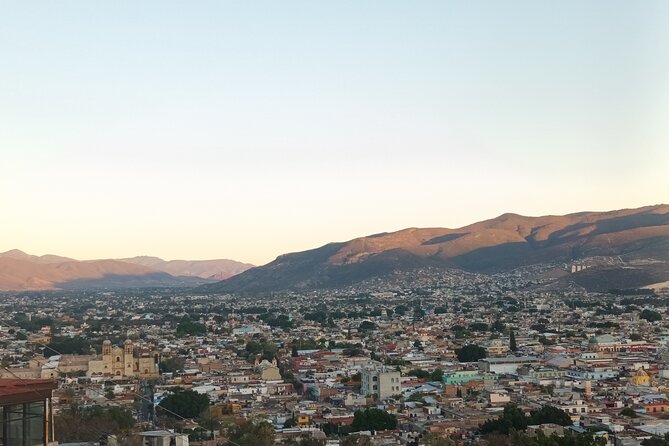
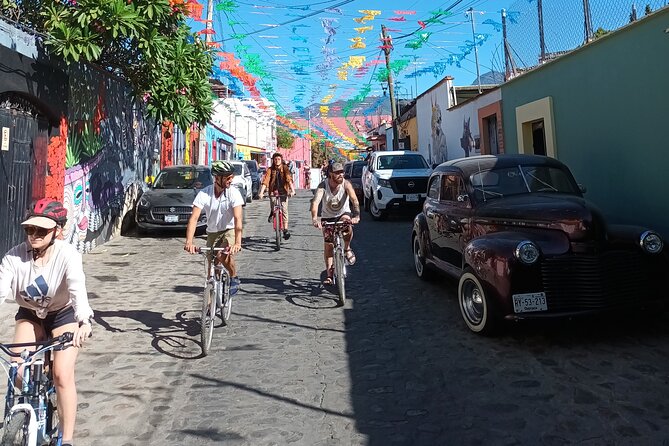
Jalatlaco is the kind of neighborhood where art and daily life share the same walls. At the Templo de San Matias Jalatlaco, the stop is built around the area’s distinctive architecture and its close relationship to colorful imagery tied to Day of the Dead traditions.
You’ll get time to take photos and learn how the neighborhood’s layout supports its cultural celebrations. Jalatlaco is also known for its traditional comparsas, which are community music-and-dance groups. The result is more than postcard beauty: you’re seeing how the neighborhood functions as a stage for tradition.
Practical note: this is a short stop. Give yourself time to look up and around, not only straight ahead. The murals and details you’ll want usually sit at eye level and above you on older facades.
Xochimilco’s Los Arquitos: the aqueduct arches you shouldn’t skip
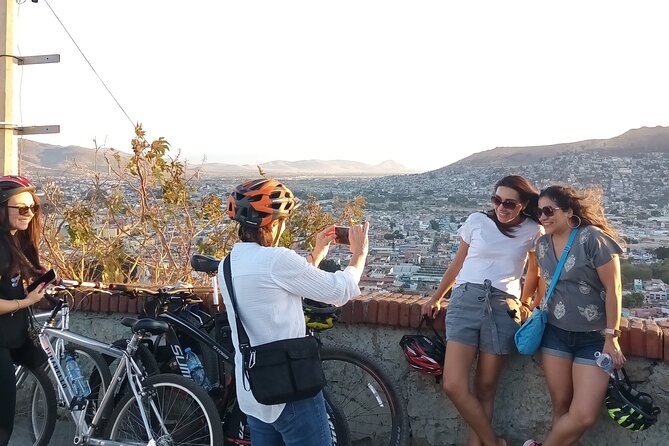
Next comes Xochimilco, one of Oaxaca City’s older neighborhoods. Here, the vibe shifts toward historic streets, older houses, and pre-colonial references. The tour frames Xochimilco’s roots back to the founding era (Xochimilca–Aztec warriors in 1486), which helps you understand why certain architecture feels built for continuity.
The highlight is Los Arquitos de Xochimilco: colorful streets plus old arches from a colonial-era project. These arches were part of the San Felipe aqueduct, built in the mid-eighteenth century to supply water to the population. That means you’re seeing infrastructure, not just decoration.
Why this stop is valuable: street art tours can sometimes treat murals like separate art events. This one ties art and urban identity to the physical history of the city—water, settlement, and the way communities shaped their environment.
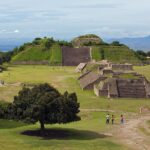




Cerro del Fortín: panoramic city views and a Benito Juárez connection
If the group’s physical condition allows, you’ll head toward Cerro del Fortín, a viewpoint on the highest hill near the city center. This is your chance for panoramic photos and the kind of wide-angle perspective that makes you understand Oaxaca’s layout.
Along the way, you’ll pass by the Oaxaca crafts house and the home of one of Mexico’s most emblematic figures, Benito Juárez García. That passing view matters because it adds a thread of national history to your neighborhood-focused art day.
This is also a good reminder: Oaxaca isn’t only walls and churches. It’s people, politics, and identity layered onto neighborhoods over time. A viewpoint stops the story from staying flat at street level.
Santo Domingo de Guzmán: a church, an ex-convent, and a culture center
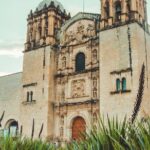
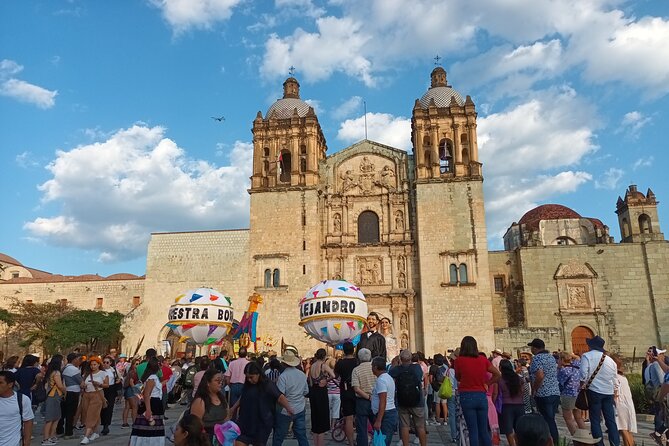
The final major stop is the Templo de Santo Domingo de Guzmán, one of the most beautiful church complexes in Latin America. Today, the complex functions as a cultural center made up of multiple spaces, not just a single church visit.
You’ll find the Ex-convent setting plus stops that connect to the broader Oaxacan story: the Museum of the Cultures of Oaxaca, the Ethnobotanical Garden, the Burgoa Library, and the public newspaper archive. It’s a reminder that Oaxaca’s history isn’t locked behind glass. It’s alive in how people study, remember, and preserve.
The architecture is New Spain baroque, and it’s often the kind of detail you only catch when you’re standing there after riding through streets all afternoon. With luck, you might also see a calenda or wedding celebration in the streets. Even if you don’t, the complex itself gives you a sense of how community life and formal spaces overlap here.
Safety, pacing, and the cobblestone reality check
The ride is described as easy bike riding by most people, but you should respect the conditions. Cobblestones and some city traffic make this feel more like “street cycling” than a smooth park path. The good news: helmets are included, and the guide keeps the group safe at turns and crossings.
One small timing consideration: setup can take time. Some guests reported an extra chunk of time just getting bikes adjusted and ready, meaning the actual riding portion may feel closer to an hour and a half rather than the full two hours.
I think that’s fine for what this tour is. It’s a short intro to Oaxaca City neighborhoods through street art and history, so you’re not trying to go long distance. Just plan your day so you can enjoy it without rushing to the next thing the second you hop off the bike.
Price and value: why $34.65 makes sense here
At $34.65 per person for about two hours, the value is strong because you’re paying for more than a bike rental. Your price covers the bicycle, helmet, a local guide, and technical assistance.
Admissions for the listed stops are free, which matters when you’re planning on a tight travel budget. Bottled water isn’t included, but that’s normal for city tours. If you carry water, you’re essentially set.
For me, the best value part is what you get at the end: a clear sense of where to go next in Oaxaca. The guide-style experience tends to include practical recommendations for the rest of your trip, and you’ll feel like you left with a better plan than when you arrived.
Who should book this bike tour (and who should skip it)
Book it if you want:
- A fast orientation to Oaxaca City neighborhoods
- Street art with context (not just photos)
- A safe-feeling bike experience with a guide who stays close to the group
- A mix of street-level culture plus a major architectural stop at Santo Domingo
Consider skipping or choosing another format if:
- You’re very uncomfortable around traffic or uneven cobblestones
- You want a deep, slow museum-style visit rather than short art-and-history stops
- You’re expecting bottled water to be provided, since it’s not part of the included items
This tour fits especially well early in your trip, when you’re still learning the city’s rhythm and want a route you can build on later.
Should you book this Oaxaca street art bike tour?
Yes, if your priority is urban art plus real neighborhood context in a short, practical ride. The combination of mural streets, Jalatlaco and Xochimilco’s historic references, and a final stop at Santo Domingo de Guzmán gives you a strong mix for the time and money.
I’d book it soon after you arrive in Oaxaca City, and I’d come with athletic clothes and water in your bag. If you’re a little nervous about bikes on cobblestones, that’s still okay—just listen carefully, keep your pace steady, and let Daniel’s safety-first approach do its job.
FAQ
How long is the bicycle tour?
The tour lasts about 2 hours, including time for bike setup and the scheduled stops.
Is the tour offered in English?
Yes. The tour is offered in English.
What is included in the price?
You get bicycle use, a helmet, a local guide, and technical assistance.
Are admission tickets included for the stops?
Admission tickets for the listed stops are free.
Where does the tour start and end?
It starts at Bike & Roadtrips Oaxaca on C. de Mariano Abasolo 315, Ruta Independencia, Centro, and it ends back at the same meeting point.
Do I need to bring bottled water?
Bottled water is not included, so you should bring your own.
What happens if the weather is poor?
The experience requires good weather. If it’s canceled due to poor weather, you’ll be offered a different date or a full refund.