REVIEW · OAXACA CITY
Monte Alban Chesillo and handicrafts alebrijes and black mud
Book on Viator →Operated by TONALLI TOURS OAXACA · Bookable on Viator
Oaxaca in one long, well-paced morning. You’ll start with quesillo (Oaxaca cheese) made and rolled by hand in Reyes Etla, then move on to Monte Albán for guided ruins plus big valley views. I like that the day connects food and craft to the same underlying idea: Oaxaca traditions live in real families, not just on plaques.
I especially like the craft stops at San Antonio Arrazola and San Bartolo Coyotepec. You get a clear sense of why the figures (tones and nahuales) and the black mud pottery are made a certain way, and you’ll have chances to buy directly. One thing to keep in mind: the schedule is full, and meals beyond breakfast aren’t included, so you’ll want to plan for snack timing between stops.
In This Review
- Key highlights
- Reyes Etla and quesillo: Oaxaca cheese made the hard way
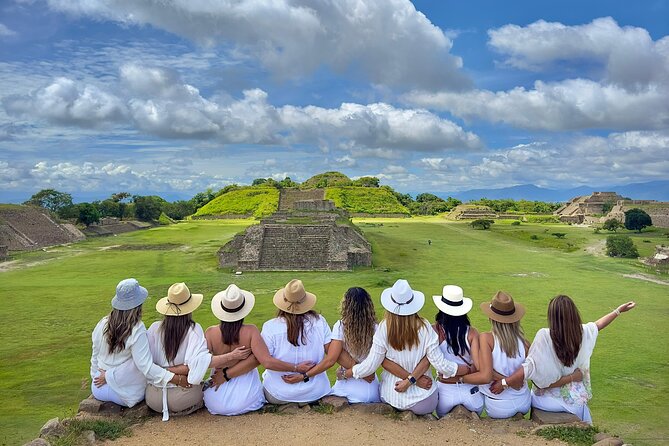
- Monte Albán: squares, structures, and the valley’s photo-friendly payoff
- San Antonio Arrazola: tones and nahuales in copal wood
- San Bartolo Coyotepec and black mud: quartz burnishing without paint
- The private-ride advantage: timing, comfort, and how the day flows
- Price and value: what $328.38 really buys you
- Who should book this Oaxaca day tour
- Should you book TONALLI TOURS OAXACA for this day?
- FAQ
- What is the duration of the tour?
- Is this a private tour?
- Do you offer pickup, and where does it work?
- What language is the tour offered in?
- Is there a ticket or entrance fee included?
- What food and drinks are included?
- What transportation is provided?
- Is the tour suitable for people with limited mobility?
- What is the cancellation policy?
- Can I bring a service animal?
Key highlights
- Quesillo, right from the curds to the signature strip-rolling in Reyes Etla
- Monte Albán guided time with explanations of Zapotec life and social/ceremonial practices
- Tones and nahuales in copal wood in San Antonio Arrazola, with symbolism explained by the creators
- Black mud pottery process at San Bartolo Coyotepec, including quartz burnishing for the metallic shine
- Private, hotel-area pickup with air-conditioned vehicle and bottled water plus soda/pop
Reyes Etla and quesillo: Oaxaca cheese made the hard way
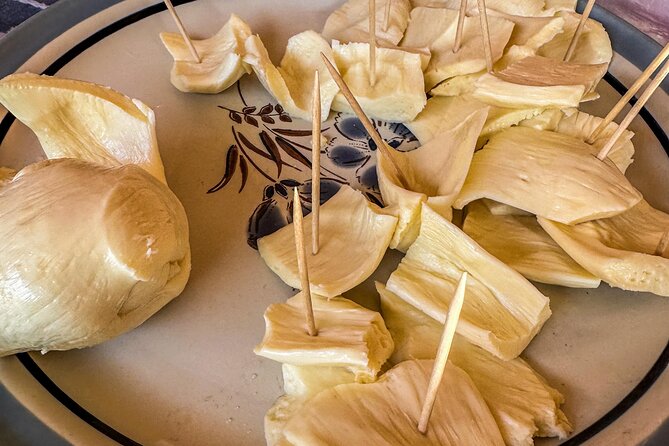
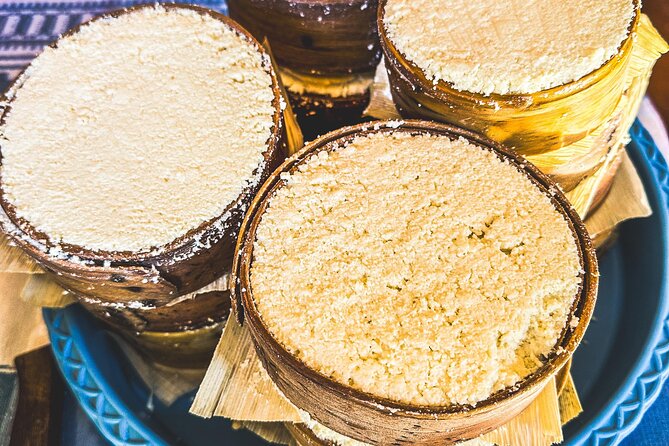
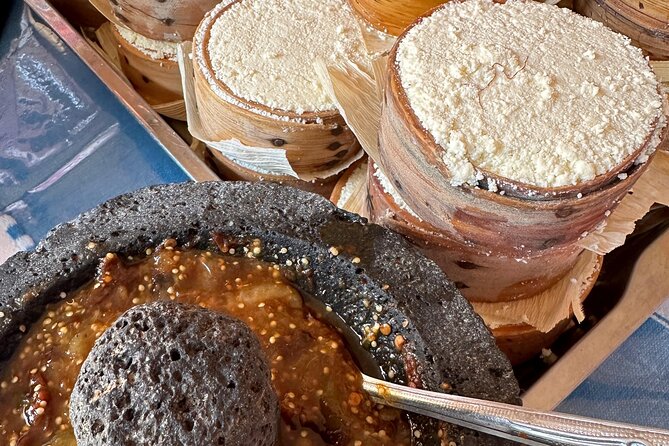
This is where the tour earns its keep fast. Reyes Etla is the starting point, and instead of arriving cold to a museum, you begin with breakfast and a hands-on look at why Oaxaca cheese is so specific to the region. The focus here is the process: curds are formed, then rolled into the characteristic strips that give quesillo its look and texture.
You’ll also get a tasting with memelitas. These are thick corn tortillas, soft and lightly browned, typically made with local ingredients and served fresh. It’s not just food for food’s sake. It helps you understand that cheese in Oaxaca isn’t an industrial product—it’s a family routine with a regional signature, and the tour gives you a close seat at the table.
What I’d watch for: there’s about 1 hour 20 minutes at this stop, and the day is structured so you don’t linger too long. If you’re the type who can happily eat for an hour and then keep eating, you might wish there were a bit more time. Still, the pacing works well for a full-day itinerary.
You can also read our reviews of more tours and experiences in Oaxaca City.

Monte Albán: squares, structures, and the valley’s photo-friendly payoff

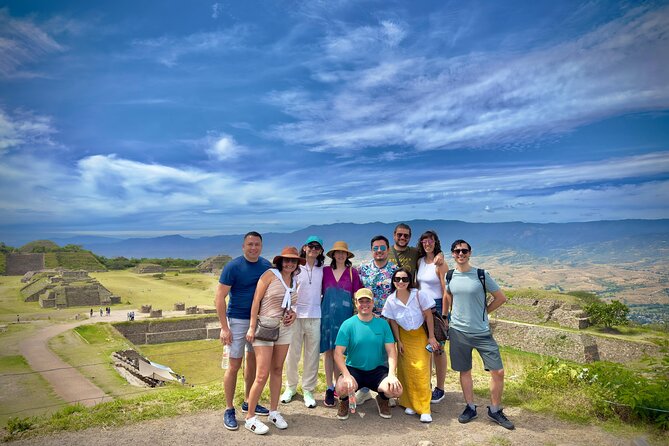
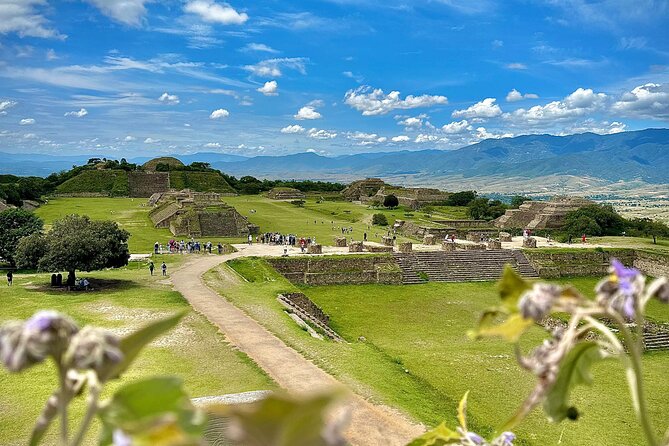
After breakfast, you head to Monte Albán, the major Zapotec site that dominates the Oaxaca Valley. Expect a guided walk through major areas—wide squares and archaeological structures—plus explanations of culture and traditions. The guide time isn’t just about naming stones; you’ll learn how inhabitants lived and how social and ceremonial practices shaped the city.
Then there’s the payoff: panoramic views. Monte Albán sits high enough that you can see the valley spread out, which makes photos easier and helps you understand why this location mattered. For a lot of people, this is the moment when Monte Albán stops feeling like a stop on a list and starts feeling like a place with real geography.
A practical consideration: about 2 hours here means you’ll likely move at a steady pace. If your group has slower mobility, you’ll still be fine with “moderate physical fitness,” but plan to take the slow approach—use the guide’s stops as your rhythm.
San Antonio Arrazola: tones and nahuales in copal wood
In the craft town at the foot of Monte Albán, you’ll meet the tradition behind figures people often call alebrijes. Here, though, the story is more specific to Oaxaca. The workshop focus is on tones and nahuales—concepts rooted in Zapotec worldview.
Here’s the key distinction you’ll hear: tones are protective animals tied to a person’s day of birth, while nahuals are mystical beings linking the human world with the animal and spiritual realms. Those ideas show up in the designs, and the tour gives you time to see the process up close: hand-carved copal wood forms, then hand-painted finishing.
What I like about this stop: it doesn’t treat symbolism like a guessing game. You’ll hear directly from creators about what their designs mean, and if you want, you can buy a piece right from the family workshop. That’s a big difference from buying at a roadside stall—you get the context before the sale.
One possible drawback: craft stops can run “watch and shop” fast. The good news is the timing is about 1 hour, so you shouldn’t feel trapped. But if you’re a deep collector who wants to compare every figure style, you may want to go in knowing you’ll pick one standout.
San Bartolo Coyotepec and black mud: quartz burnishing without paint
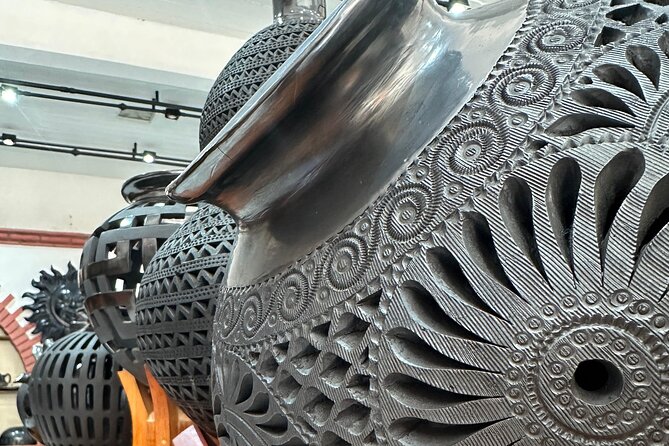
Now you get the other signature Oaxaca craft: black mud. San Bartolo Coyotepec is known for it, and the tour walks you through the full path from raw clay to finished pottery.
You’ll see the steps: mud preparation, modeling, natural drying, and then cooking in traditional ovens. The process matters because black mud isn’t just a color. It’s a technique—and technique is what you’re paying attention to.
The star detail is the quartz stone burnishing. Instead of relying on enamels or paints, artisans work the surface so it gains that distinctive metallic shine. Watching that part of the process helps you understand why these pieces look so crisp and intentional, even when the designs are simple.
You’ll also learn how black mud is used. It can be utilitarian objects, decorative pieces, and figures tied to local worldview. And yes, there’s a purchase option at the workshop, so you can take home something made through the method you just saw.
Quick reality check: this stop is about 1 hour. That’s enough to see the full workflow and buy if you’re ready, but it’s not a full day of pottery classes. If you’re hoping for a long hands-on session where you make your own piece, this isn’t described that way.
The private-ride advantage: timing, comfort, and how the day flows

The tour is private, and it’s built for a group of up to 3. That matters because you’re not competing for space with a bus full of people. In practice, it means your guide can keep the day moving while still adjusting to your pace—especially on the stops that involve looking, listening, and shopping.
Pickup is offered from your hotel or Airbnb within the main areas of Oaxaca de Juárez. If your location is in the Historic Center and car access is limited, pickup is coordinated at a nearby secure landmark. You’ll get a mobile ticket and meet the driver at reception or at the home entrance with the traveler list.
The ride uses an air-conditioned vehicle, and you’ll have bottled water plus soda/pop during the day. That’s small but useful, because the itinerary is long enough that hydration and a quick sugar/refreshment break can help you keep your energy up.
About the schedule: it starts at 8:00 am and runs roughly 8 to 9 hours total. The stop durations add up, but transit and a bit of buffer keep the day feeling “managed,” not chaotic.





Price and value: what $328.38 really buys you
The price is $328.38 per group (up to 3), which sounds like a lot until you break down what’s bundled. You’re paying for private transportation, a guided experience through Monte Albán, and entrance coverage across the route. The tour also includes breakfast and drinks (bottled water and soda/pop).
In other words, you’re not just paying for views. You’re paying for:
- transport (so you don’t negotiate buses or taxis between far-flung craft towns)
- guide time (Monte Albán explanations plus context at the craft stops)
- entry coverage and parking fees
- at least one meal (breakfast), so your day starts strong
Meals aren’t included beyond breakfast. So if you’d normally budget for lunch, factor that in. If you like “one planned meal + snack breaks,” this works well. If you need a full lunch stop at a sit-down restaurant, you may have to adapt your expectations.
Best use of your money: book this if you want a single day that stitches together three sides of Oaxaca—food, archaeology, and craft—without spending your time in transit.
Who should book this Oaxaca day tour
This fits best if you want:
- a guided Monte Albán visit (not just wandering)
- meaningful context for Oaxaca cheese, craft symbolism, and black mud technique
- shopping with explanations, where you can buy directly after understanding the work
It also works well for families, at least in the sense that the guide approach is described as attentive and supportive. The pace is active, though, and the tour asks for moderate physical fitness level. If your group includes anyone who tires easily walking uneven or archaeological terrain, tell the provider your needs early.
Finally, note that this tour is typically booked about 35 days in advance. If you’re traveling during a busy season or you have limited dates, it’s smart to lock it in sooner rather than later.
Should you book TONALLI TOURS OAXACA for this day?
If you like tours that connect dots—food to craft to place—this is a strong choice. The itinerary gives you real process time: quesillo making, Monte Albán interpretation, copal wood carving with tones/nahuales symbolism, and black mud pottery with quartz burnishing. That combination is hard to replicate on your own in a single day without extra planning.
Skip it only if you want a slow, restaurant-heavy day with lots of free time. Because meals beyond breakfast aren’t included and the day is scheduled, you’ll be happiest if you enjoy a structured flow and don’t mind picking up snacks as needed.
If that sounds like you, book it. You’ll leave with purchases that have names and meaning behind them—and with a clearer sense of why Oaxaca traditions keep getting passed down.
FAQ
What is the duration of the tour?
The tour runs about 8 to 9 hours, starting at 8:00 am.
Is this a private tour?
Yes. It’s private, and only your group participates. The group size is up to 3.
Do you offer pickup, and where does it work?
Pickup is offered from your location within the main areas of Oaxaca de Juárez, including hotels and Airbnb addresses you provide. If Historic Center access by vehicle is limited, pickup can be coordinated at a nearby secure landmark.
What language is the tour offered in?
The tour is offered in English.
Is there a ticket or entrance fee included?
Entrance fees are covered as part of the experience. Monte Albán is included, and the other stops are listed as free with the tour.
What food and drinks are included?
Breakfast is included, plus bottled water and soda/pop. Meals beyond breakfast are not included.
What transportation is provided?
You travel by air-conditioned vehicle with private transportation, including parking fees.
Is the tour suitable for people with limited mobility?
The tour asks for a moderate physical fitness level.
What is the cancellation policy?
Free cancellation is available up to 24 hours in advance for a full refund. If canceled less than 24 hours before the start time, the amount paid is not refunded. The experience also requires good weather, and if it’s canceled due to poor weather you’ll be offered a different date or a full refund.
Can I bring a service animal?
Yes, service animals are allowed.