REVIEW · OAXACA DE JUAREZ
Oaxaca: Traditional Oaxacan Cooking Class
Book on GetYourGuide →Operated by Raices oaxaqueñas · Bookable on GetYourGuide
Mole starts with a market stop. This Oaxaca cooking class keeps it old-school and practical: you shop for real ingredients, cook with your hands, and learn why each dish tastes the way it does.
I really like the hands-on flow and the fact that you cook breakfast from tortillas to memelitas and tetelas. I also like the small group size, where hosts like Hector and Aurora can help you fix technique before it turns into a flour-covered mess.
One consideration: plan to eat a lot. If you arrive too full, the later mole lunch can feel like a food marathon instead of a fun afternoon of Oaxacan flavors.
In This Review
- Key Highlights That Matter
- Where the Class Starts: A Downtown Meet-Up and a Real Market Run
- The 20-Minute Trip to the Village House: Cozy, Not Cookie-Cutter
- Your Hosts: Hector and Aurora’s Style (Hands-On, Friendly, and Funny)
- Breakfast Workshop: Tortillas, Memelitas, Tetelas, Empanadas, and Molcajete Sauces
- A Practical Tip Before You Go
- Lunch: Four Moles and How to Read the Flavor Names
- What “All Hands-On” Really Means in This 5-Hour Format
- Price and Value: What $116 Gets You (and Why It’s Not Just “a Class”)
- Who This Cooking Class Is Best For
- If You Have Dietary Needs: Ask Early and Keep It Simple
- Should You Book This Oaxaca Cooking Class?
- FAQ
- How long is the Oaxaca traditional cooking class?
- What will we cook during the class?
- Where do we meet in Oaxaca?
- Is it a small group?
- Are dietary restrictions and allergies handled?
- What languages are offered?
Key Highlights That Matter
- Market first: you shop together for fresh ingredients before cooking
- Small group (max 6): more attention, less waiting around
- Breakfast practice: tortillas, memelitas, tetelas, empanadas, plus three molcajete sauces
- Mole lunch options: yellow, green, black, or coloradito, with flavor naming made simple
- Ingredient history in plain language: you learn where flavors come from and how substitutions work
Where the Class Starts: A Downtown Meet-Up and a Real Market Run
Your afternoon begins downtown, where you meet the team before heading out together. The meeting point is simple: when you enter, ask at the reception desk for the cooking class. From there, you’ll travel by included transportation to the market and later to the village house.
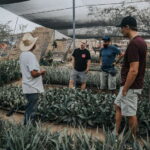
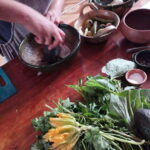
The market portion is one of the smartest parts of the day. Oaxacan cooking isn’t just recipes—it’s ingredients shaped by season, availability, and local food culture. Shopping first helps you connect the dots. You see the ingredients in person, learn what they look like, and get a sense for why certain foods show up in Oaxaca dishes more often than they do back home.
In a good cooking class, you’re not only learning steps—you’re learning choices. This one makes you pay attention. Even if you’re not a “food nerd,” the market run helps you understand what you’re buying and what it will do once it hits the pan, comal, or molcajete.
You can also read our reviews of more cooking classes in Oaxaca De Juarez
The 20-Minute Trip to the Village House: Cozy, Not Cookie-Cutter
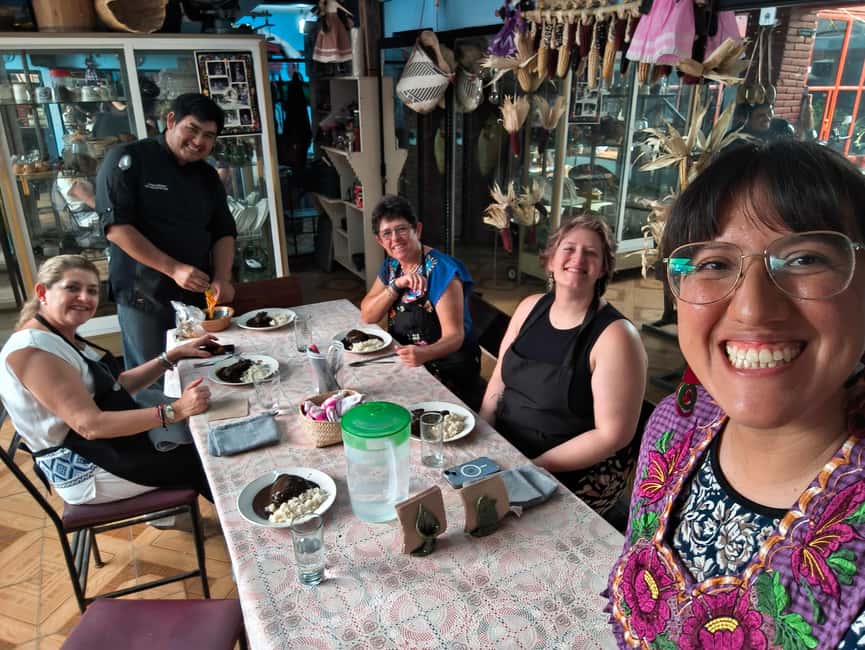
After the market, you head to the hosts’ village home, about 20 minutes from downtown. The vibe here is personal. You’re not herded into a large production kitchen. Instead, you cook in a cozy setting that feels like someone’s home patio turned into a classroom.
That matters because the day is built around doing. When the space is right, you can actually move, fold, pinch, grind, and taste without feeling rushed or crowded. Many cooking classes look great on paper but fall apart when everyone stands around waiting for the instructor to finish prep. Here, the format supports hands-on learning from start to finish.
Also, you’re not just traveling to “a location.” The transport is included for you—market, house, and back downtown—so you can focus on the food and not on logistics.
Your Hosts: Hector and Aurora’s Style (Hands-On, Friendly, and Funny)
The instructors carry a lot of the experience. Hector shows up in the feedback as the kind of teacher who blends cooking technique with story. English and Spanish are both offered, and you can ask questions as you go.
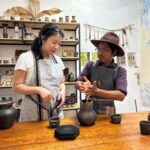
Aurora is often mentioned as part of the welcoming hosting team, and in practice that shows up as warmth and calm: you get guidance without feeling judged. And Hector’s approach is practical. For example, you don’t just hear about what should happen to tortillas—you practice. You don’t just watch mole get explained—you learn how flavors differ and how names connect to the ingredients.
In plain terms: the class doesn’t treat you like a spectator. It treats you like the cook-in-training, with real support.
Breakfast Workshop: Tortillas, Memelitas, Tetelas, Empanadas, and Molcajete Sauces
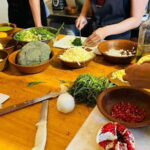
The class kicks off with chocolate and bread, then moves quickly into breakfast cooking. Since it’s a 5-hour experience and the day includes both breakfast and lunch, the schedule is designed to keep momentum. You’ll be tasting, learning, and cooking in a loop.
Here’s the breakfast menu you can expect to make:
- Tortillas
- Memelitas
- Tetelas
- Empanadas
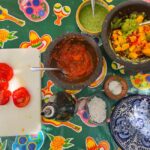
- Three traditional molcajete sauces
- Plus, you’ll get guided explanations of flavors and techniques tied to each dish
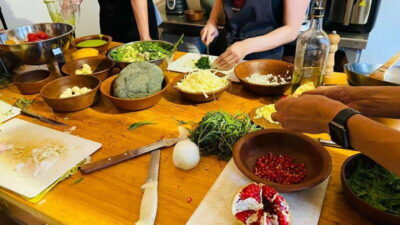
A few specific skills come up in the way people describe the class: things like working with the comal for tortillas, folding tetelas, pinching memelitas, and mashing chilies. That’s exactly what I’d want from a real Oaxacan cooking class—tasks that teach you the feel of the food, not just the concept.
You’ll also learn why Oaxacan breakfast items taste the way they do. The instructor explains not only what ingredients are used, but how techniques change the outcome. For example, grinding and mixing in a molcajete isn’t the same as using a blender. That difference affects texture and flavor release.
And you’ll get context about Oaxacan culture and the history behind the cuisine while you eat what you made. That’s a key point: you don’t learn culture like trivia. You learn it paired with eating.
A Practical Tip Before You Go
If you need to eat breakfast beforehand, keep it light. You’ll have plenty of food to taste during the class. If you arrive stuffed, you may miss the point of the meal—tasting your way through flavors.
You can also read our reviews of more tours and experiences in Oaxaca De Juarez



Lunch: Four Moles and How to Read the Flavor Names
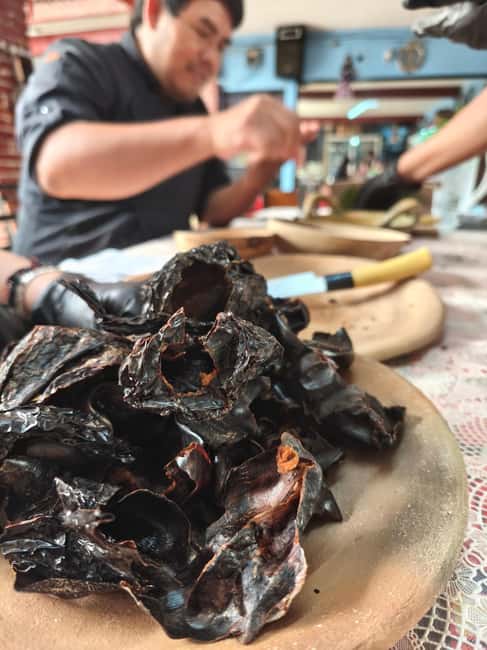
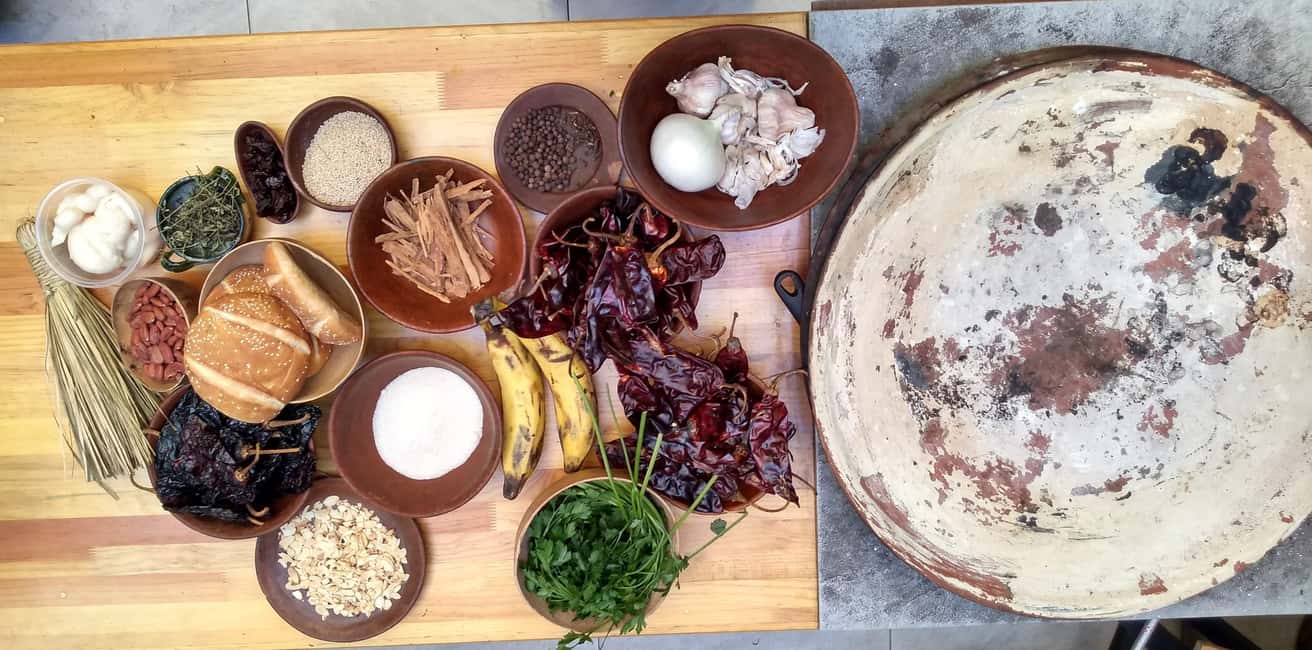
After breakfast, you shift from shaping and frying to the heart of Oaxaca flavor: mole. For lunch, you’ll prepare one of several options:
- Yellow mole
- Green mole
- Black mole
- Coloradito
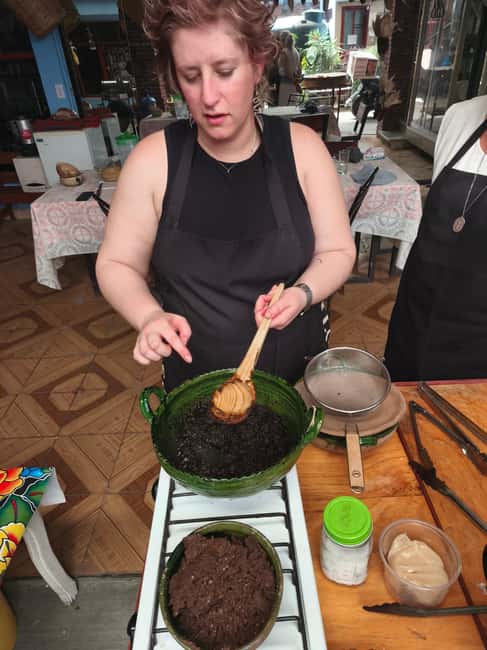
This is where the class gets especially useful if you like to cook at home. The goal isn’t only to make the dish; it’s to understand the flavor logic behind it. You’ll learn:
- how to describe differences between moles
- what each mole name is pointing to
- what ingredients contribute to the taste
- how to substitute when an ingredient is hard to find
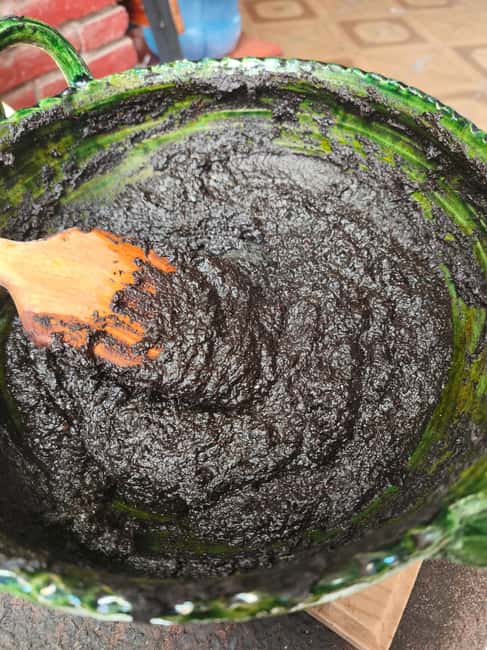
That substitution part is the real-world value. Mole is often built from components that aren’t easy to source everywhere. If you learn what the ingredient is doing—sweet, smoky, bitter, earthy, spicy—you can swap with more confidence later.
You’ll also hear ingredient availability discussed in an Oaxaca context: what grows locally, what might be harder to find elsewhere, and how those constraints shape recipes. That gives you a more accurate picture of why mole varies by region and by household.
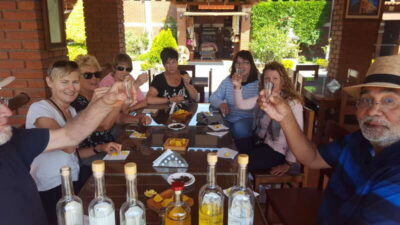
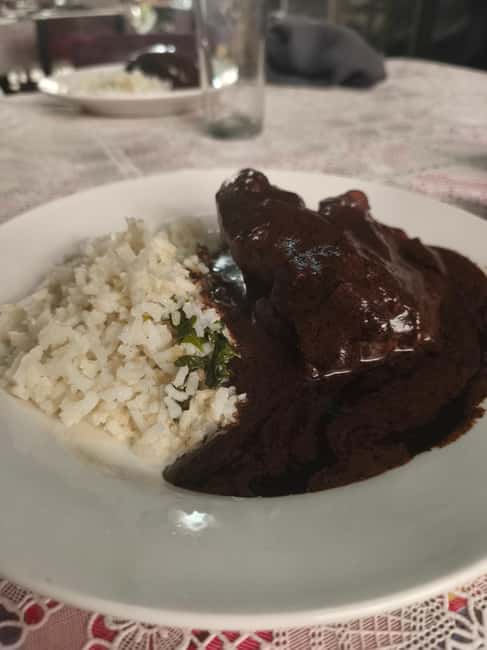
And yes, you’ll eat lunch you made. No tiny plate pretending to be “a tasting.” The quantities and overall food amount are repeatedly praised, so come hungry.
What “All Hands-On” Really Means in This 5-Hour Format
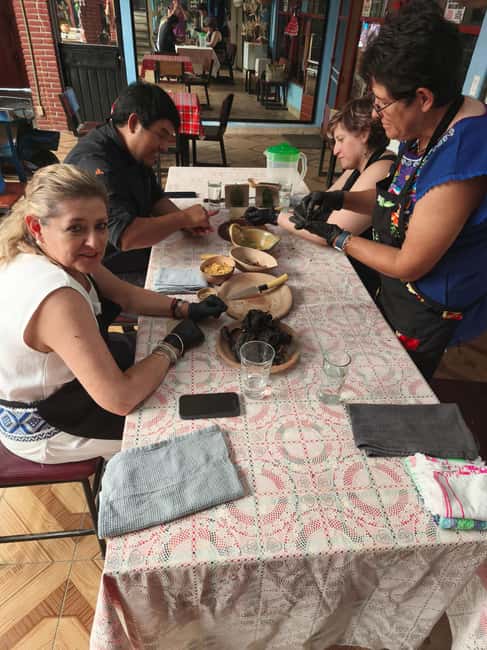
A lot of cooking classes say you’ll be hands-on. This one earns that claim by keeping the group actively cooking through the day.
With a small group limited to 6 participants, the instructor can watch what your hands are doing and coach quickly. That reduces the usual beginner frustration, where you try something once, do it wrong, then spend the next hour waiting for the next step.
You’ll be cooking breakfast components and sauces, then moving into the mole phase. Along the way, you’re tasting and talking about flavors. The pacing stays relaxed, not chaotic. So even if you’re not “a cooking person,” you won’t feel lost.
If you’re worried about skill level, don’t. You don’t need any culinary skills to do well. The structure is designed for learning-by-doing, with guidance built into every stage.
Price and Value: What $116 Gets You (and Why It’s Not Just “a Class”)
At $116 per person for 5 hours, you’re paying for more than instructions. You’re paying for a full cooking-and-tasting meal experience with ingredient sourcing and transport included.
What’s included that helps the price make sense:
- transportation from downtown to the market, to the house, and back
- high-quality, fresh ingredients
- kitchen equipment
- food and drinks during the experience
When you add it up, you’re getting a guided market run (which is half the cultural education), plus cooking support through both breakfast and lunch. It’s hard to recreate that at home without spending time and money on the ingredient hunt and the figuring-out process.
If you compare this kind of experience to a regular cooking class that doesn’t include market shopping, ingredient prep, and full meals, the value gets clearer. Here, the day is built around eating well, learning techniques, and taking home enough knowledge to cook with more confidence later.
Who This Cooking Class Is Best For
This class works especially well if you:
- want an authentic Oaxaca food experience beyond a restaurant meal
- like learning by doing, not by watching someone else cook
- enjoy markets and want to understand ingredients before recipes
- are traveling with a partner or small group and want a shared activity that feels local
It’s also a good fit if you’re a bit nervous about cooking. The format supports beginners, and the instructor attention in a small group helps you avoid the usual “I broke it, now what?” panic.
If you’re the type who loves mole (yellow, green, black, or coloradito), this will feel like a focused lesson. If you’re less into mole, don’t worry—the breakfast training and sauces still give you plenty to learn.
If You Have Dietary Needs: Ask Early and Keep It Simple
If you have allergies or dietary restrictions, tell the hosts so they can adjust ingredients. That’s the practical way to handle it. Oaxacan food uses specific ingredients, so adjustments are easiest when the instructor knows your needs ahead of time.
Also, because there’s a lot of tasting, it’s smart to mention restrictions clearly when you book. Don’t wait until you’re already in the kitchen.
Should You Book This Oaxaca Cooking Class?
If you want more than a recipe handout, book it. This is a hands-on, market-to-kitchen experience where you learn techniques like tortilla work and folding shapes, then connect those skills to Oaxacan flavors through the mole lunch. The small group size is a real advantage, and the hosts’ teaching style makes it feel welcoming rather than intimidating.
Skip it only if you dislike eating a lot during activities, or you prefer purely academic history tours where you watch and never cook. Otherwise, this is one of the most practical ways to spend a half-day in Oaxaca—food first, culture alongside it, and real instruction you can use later.
FAQ
How long is the Oaxaca traditional cooking class?
It runs for 5 hours.
What will we cook during the class?
You’ll make breakfast items like tortillas, memelitas, tetelas, empanadas, and three traditional molcajete sauces. For lunch, you’ll prepare yellow mole, green mole, black mole, or coloradito.
Where do we meet in Oaxaca?
When you enter, ask at the reception desk for the cooking class.
Is it a small group?
Yes. The group is limited to 6 participants.
Are dietary restrictions and allergies handled?
Let the hosts know about allergies or dietary restrictions so they can adjust the ingredients.
What languages are offered?
The instructor speaks English and Spanish.