REVIEW · OAXACA CITY
Monte Alban & artisan house workshop in Arrazola and Coyotepec
Book on Viator →Operated by Encuentro T · Bookable on Viator
A real wow moment starts with a stone skyline. This day trip strings together Monte Albán (Zapotec power center) and two Oaxaca towns where craft is the main event: alebrijes in Arrazola and barro negro pottery in Coyotepec. I like that you get a smooth hotel pickup and an English-speaking guide who helps the ruins and crafts make sense fast. One thing to consider: the artisan stops are short, so you may have less time for deep, story-heavy demonstrations than you’d expect.
The best part is the balance. You’re not stuck in a lecture hall, and you’re not only shopping either—you get real context at Monte Albán, then you see how everyday artisans work. The ride is comfortable, too, with air conditioning that matters in Oaxaca’s daytime sun.
In This Review
- Key Highlights You’ll Care About
- Why This Monte Albán + Artisan Day Works
- Price and Logistics: Pickup, Group Size, and How the Day Flows
- Stop One: Monte Albán’s Zapotec Capital and Tomb 7
- Stop Two: Cuilapan de Guerrero’s Dominican Complex (and a Key Moment in Mexico’s Story)
- Stop Three: Arrazola Alebrijes Made from Copal Wood
- Stop Four: Coyotepec and the Barro Negro Pottery Process
- Shopping Smart: Alebrijes vs Barro Negro (and What to Expect)
- Food Plans: What to Do When Meals Aren’t Included
- Comfort on the Road: Air Conditioning, Waiting Time, and Guide Style
- Who This Tour Suits Best (and Who Might Want a Different Day)
- Should You Book This Monte Albán & Artisan House Day Trip?
- FAQ
- Is admission to Monte Albán included?
- What other stops are included besides Monte Albán?
- Are meals included?
- Do you offer hotel pickup in Oaxaca?
- Is the tour offered in English?
- Does the tour run in bad weather?
Key Highlights You’ll Care About
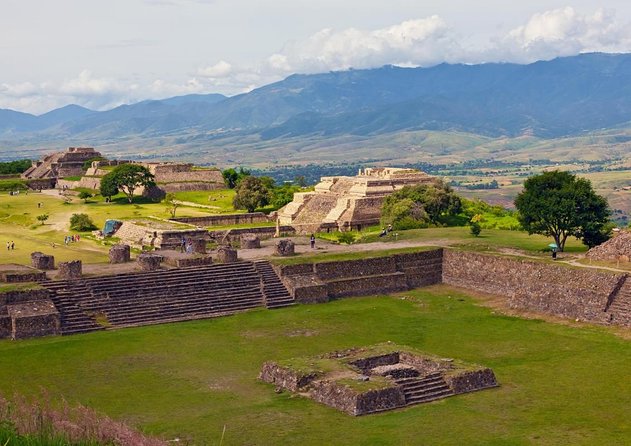
- Monte Albán entry included with real time on-site (about 2 hours)
- Hotel pickup and drop-off from Oaxaca Centro, with mornings starting around 8:30–10:00
- Arrazola for alebrijes: carved figures from the copal tree, hand-painted
- Coyotepec for barro negro: a black-clay pottery process demo plus a chance to buy
- Small-group feel with a maximum of 22 people (but it can still be a lot in one van)
Why This Monte Albán + Artisan Day Works
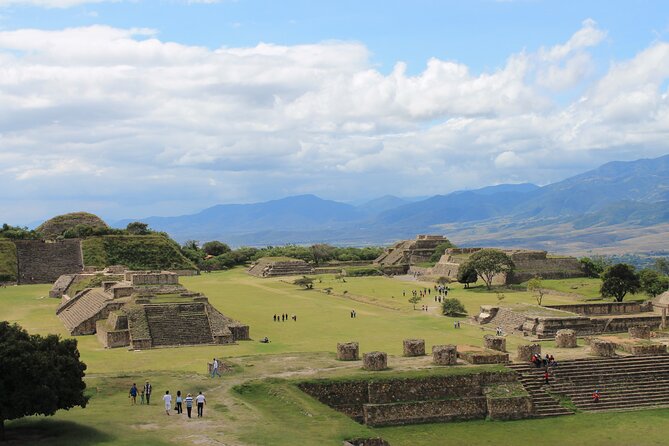
This tour hits a simple sweet spot: big archaeological jaw-drop, then hands-on Oaxaca creativity. Monte Albán gives you the scale—massive terraces, monumental architecture, and the feeling of a major indigenous capital that shaped the Valleys of Oaxaca. Then the day shifts gears to smaller, human-scale craft work in Arrazola and Coyotepec, where you can actually see how the pieces get made.
I also like the “guided but not trapped” rhythm. You get explanations, then you’re free to walk, look, and ask questions. That’s the way to keep history from turning into a checklist.
You can also read our reviews of more tours and experiences in Oaxaca City



Price and Logistics: Pickup, Group Size, and How the Day Flows
For $61 per person, you’re paying for transportation, a professional driver, a guide, and admission to Monte Albán. Food and drinks aren’t included, so you’ll want to budget for that separately. Still, the value comes from not having to coordinate rides or tickets on your own—this is built for convenience.
Here’s what matters on the ground:
- Pickup window: between 8:30 and 10:00 am, based on where you’re staying in Oaxaca Centro.
- Where the operator meets you: in your hotel or Airbnb lobby area, typically by the front desk.
- Tour language: offered in English.
- Group size: up to 22 travelers. That’s manageable, but if you end up with a group that’s large enough, it can affect how loud the guide needs to be at each stop.
From the reviews, I took away a consistent pattern: when guides are clear and the van setup is comfortable, the day feels easy. Names that came up include Gabriel and Zenon, and I’ve also seen notes about guides like Marta / Doña Marta bringing the story to life. If you’re lucky enough to have someone like that, Monte Albán won’t feel like random ruins.
One more practical point: the tour runs in all weather conditions, so you’ll want a light rain layer or umbrella.
Stop One: Monte Albán’s Zapotec Capital and Tomb 7
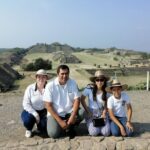
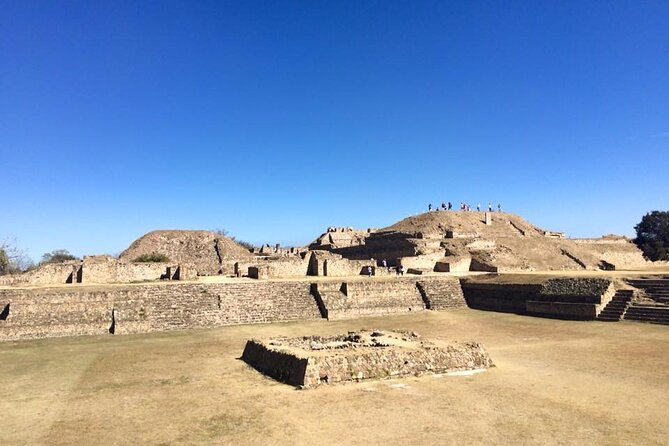
This is the anchor of the day, with about 2 hours on-site and admission included. Monte Albán was the major Zapotec capital starting around 500 BC, and it became the most important indigenous center in the Valleys of Oaxaca.
What you’ll feel here is scale and planning. Even if you don’t know every term, the layout tells you the culture had strong control over space—monumental buildings, ceremonial zones, and the sense that this place was built to last.
One specific detail you’ll hear during the visit is that tomb No. 7 is famous for a major treasure connected to Mesoamerica. Your guide’s job is to translate that kind of “big claim” into something you can actually picture while walking the grounds.
A small tip that makes a difference: when your guide pauses to explain a view or structure, stand where you can see both the explanation point and what’s in front of you. It’s easy to lose the connection if you wander half a second too early.
Stop Two: Cuilapan de Guerrero’s Dominican Complex (and a Key Moment in Mexico’s Story)

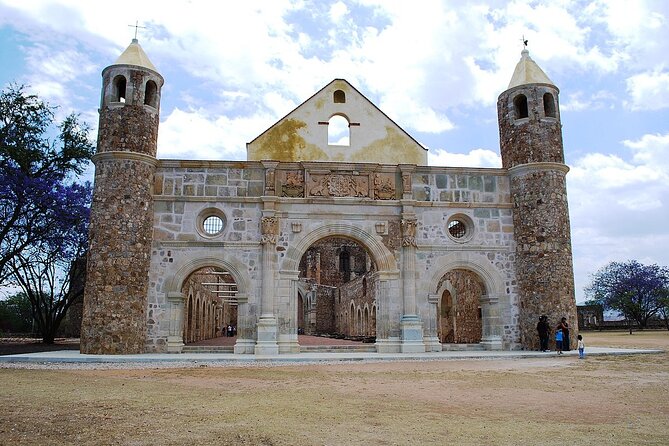
Next up is Cuilapan de Guerrero, usually a shorter stop of about 30 minutes, and admission is free.
You’re going to see an unfinished but striking religious architectural complex built by the Dominicans in the 16th century. That “unfinished” detail matters because it gives you a different kind of visual—you’re not only looking at completed grandeur. You’re also seeing the rough edges of history: intentions, interruptions, and change over time.
There’s also a historical connection tied to Mexican independence: General Vicente Guerrero was shot to death here. Even if you’ve studied Guerrero before, seeing the place (even briefly) adds weight, because you’re connecting the name to a location in real space.
With only 30 minutes, the key is not to expect a deep museum-style experience. Treat this stop like a quick but meaningful “context hit” before the day turns artisan-focused.
Stop Three: Arrazola Alebrijes Made from Copal Wood

In San Antonio Arrazola, you’ll get about 40 minutes and no admission fee.
This is alebrijes country. The figures are carved from the copal tree, then hand-painted. The style is unique—bright, imaginative, and very Oaxaca. You’re not just seeing finished products. You’re seeing a craft identity: the way motifs, colors, and characters become a local signature.
A fair heads-up: one disappointment that popped up in the overall experience is that the alebrije stop can feel a bit light on storytelling. If you’re expecting a long, lore-heavy demonstration about symbolism and origin stories, you might find the explanation shorter than you want. That doesn’t mean the craft isn’t worth seeing—it just means you’ll get more value if your goal is to look carefully at carving and paint techniques, not to hear a full masterclass.




Stop Four: Coyotepec and the Barro Negro Pottery Process
Then it’s Coyotepec, another town built around craft. You’ll usually have about 40 minutes and admission is free.
Coyotepec is known for barro negro, black clay pottery. Here you’ll get:
- a demonstration of how a piece is made
- an exhibition of the finished work
- time to see what’s available
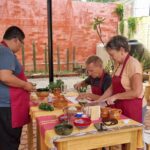
From what I gathered, this stop tends to land better with people who love practical crafts. The demo is quick and focused, and you get a stronger sense of what you’re looking at—how the material behaves, how the process shapes the final look, and why these pieces have a distinct character.
If you want to buy something that feels like it has real technique behind it, this is the place to slow down.
Shopping Smart: Alebrijes vs Barro Negro (and What to Expect)

Bring your wallet—actually bring cash too. One practical shopping note that came up: you’ll likely want to purchase something, and having plenty of cash makes it easier on the spot.
Here’s how I’d approach shopping on this itinerary:
- At Arrazola (alebrijes): focus on craftsmanship details—carving lines, paint layering, and overall finish. If a piece feels expensive, compare it to others in the same stop and ask questions about what you’re getting (size, process, and what’s already included).
- At Coyotepec (barro negro): use the demo as your checklist. If you understand the process you just saw, you’ll be able to judge quality better: finish consistency, shape, and how cleanly the work is done.
One additional caution from real-world experience: the alebrijes stop can feel pricier to some people compared with other places they’ve seen. That doesn’t make it wrong—it just means you should shop with intention, not impulse.
Food Plans: What to Do When Meals Aren’t Included
Food and drinks are not included, so you’ll want a plan. The itinerary timing includes craft stops and one longer archaeological stop, which usually means you’ll end up finding lunch either on your own or at a place along the way.
If you have dietary limits, it’s worth being proactive. One person on this kind of day mentioned ending up at a buffet with very limited vegetarian options and having to ask for help. Translation: don’t wait until you’re standing in front of the food. Ask early when the lunch stop is coming, and be ready with clear wording about what you can and can’t eat.
Also, Oaxaca can be hot. Even if you don’t eat right away, having water (on you) will keep the day comfortable.
Comfort on the Road: Air Conditioning, Waiting Time, and Guide Style
The practical stuff matters on these tours. This one uses air-conditioned transportation and a professional driver, which is a big deal on a day that includes walking at Monte Albán and then shifting to towns where you may be outdoors.
Guide quality is another make-or-break factor. Notes tied to this experience emphasize how much clearer Monte Albán felt when the guide spoke excellent English and explained structures with confidence. Names mentioned include Gabriel and Zenon, and the consistent message is that good guiding turns a “pretty place” into a place you understand.
If you’re in a larger group, sound can be an issue. I’d position yourself where you can hear without craning. It sounds simple, but it can change how much you actually take in at each stop.
Who This Tour Suits Best (and Who Might Want a Different Day)
This is a strong match if you want:
- one-day convenience from Oaxaca Centro with pickup handled for you
- Monte Albán plus craft towns—so history and creativity share the same day
- an English guide who explains as you go
It might be less ideal if you want:
- a long, in-depth workshop experience at Arrazola with lots of lore and deep technique
- lots of free time to wander alone without a guided pace (the stop times are set)
Still, for most visitors, it’s a practical way to see more than one side of Oaxaca without spending the whole day figuring out logistics.
Should You Book This Monte Albán & Artisan House Day Trip?
I’d book it if you’re looking for a well-paced day that mixes major archaeology with real local crafts—and you want pickup, transport, and entry to Monte Albán handled for you. At $61, it’s also a fair value for the combination of guided time plus admission.
I’d skip it or reconsider if your top priority is a long workshop experience where you can stay with artisans for hours, especially at the alebrijes stop. The crafts are worth it, but the demo windows are limited, so your expectations should be “see how it’s made” rather than “learn everything.”
If you go, do two things: bring cash for shopping, and come hungry enough (or planned enough) to handle lunch on your terms. Get those right, and this day turns into one of those Oaxaca blends—big stones, bright art, and the people who keep the tradition moving.
FAQ
Is admission to Monte Albán included?
Yes. Admission to the Monte Albán Archaeological Site is included in the tour price.
What other stops are included besides Monte Albán?
You’ll visit Cuilapan de Guerrero, San Antonio Arrazola (alebrijes), and San Bartolo Coyotepec (barro negro pottery).
Are meals included?
No. Food and drinks are not included.
Do you offer hotel pickup in Oaxaca?
Yes, pickup and drop-off are offered from selected hotels in Oaxaca de Juárez. Pickup time is typically between 8:30 and 10:00 am, depending on your location.
Is the tour offered in English?
Yes, the tour is offered in English.
Does the tour run in bad weather?
The tour operates in all weather conditions. Dress appropriately.