REVIEW · OAXACA CITY
Private Day Tour including Artisan Villages of Alebrijes and Black Pottery
Book on Viator →Operated by Circuitos por México · Bookable on Viator
Black pottery and alebrijes in one day. This is a private day tour that lets you watch Oaxaca artisans at work—especially at Doña Rosa Studio, where black pottery is made using pre-Hispanics techniques like draft and burnished finishing. I like that you’re not just looking at finished pieces; you’re seeing the craft process up close.
I also like the way hotel pickup helps you use the full day without wasting time on transit. The route can include a 16th-century church and ceramics museums, plus stops in artisan towns for alebrijes, weaving, and pottery. One possible drawback: on some days, the studio visits can feel more like a guided tour through a workspace and shop than a hands-on viewing of active work, so it’s worth checking what’s actually running at each stop.
In This Review
- Quick hits before you go
- Private Day Tour with hotel pickup and a realistic 7–8 hour flow
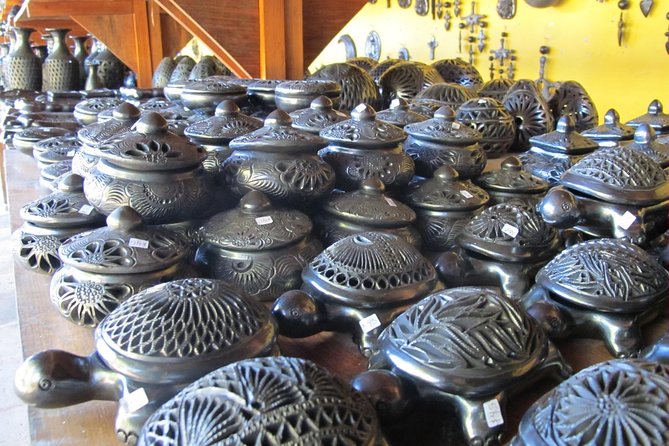
- Doña Rosa Studio and black pottery with draft-and-burnished finishing
- Oaxaca City stops: a 16th-century church plus ceramics museums
- San Martín Tilcajete for alebrijes: carved wooden animals, painted with personality
- Mercado Santo Tomás Jalieza for woven cotton goods
- Ocotlán de Morelos: red clay ceramics, a weekly market on Fridays, and murals
- Price and value: what $221 buys you on a private craft day
- What the private guide format really changes (especially for slower moments)
- Tips to get the most out of artisan towns without rushing your choices
- Who this tour is best for
- Should you book this private artisan tour?
- FAQ
- How long is the private artisan day tour?
- What is the price per person?
- Is hotel pickup included?
- Is this tour private or shared with other groups?
- What language is the tour offered in?
- What stops does the tour include?
- Can I cancel for a full refund?
- Will I receive confirmation after booking?
Quick hits before you go
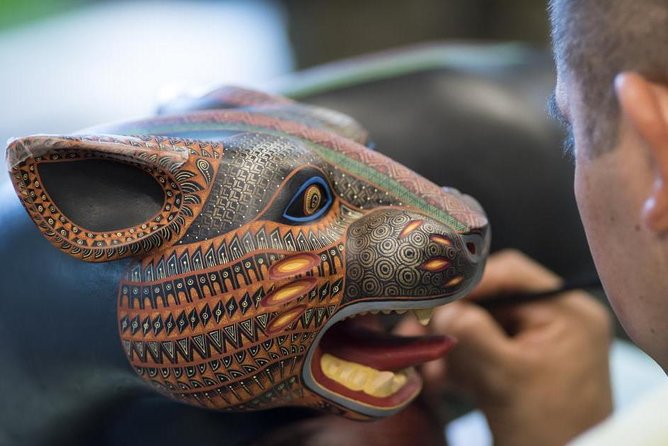
- Doña Rosa Studio’s black pottery demo: watch the steps behind dark-fired ceramics using traditional methods.
- A private guide pace: your group stays together and can ask questions while you move between Oaxaca City and craft towns.
- Alebrijes in San Martín Tilcajete: see hand-carved, painted wooden animals and the shop-floor that supports them.
- Craft towns plus markets: woven cotton products at Santo Tomás Jalieza and indoor market browsing for food and handmade goods.
- Ocotlán de Morelos adds depth: red clay ceramics and often a weekly market on Fridays, if your day lines up.
- Museum context in Oaxaca City: ceramics and popular arts stops help you understand what you’re seeing later in the day.
Private Day Tour with hotel pickup and a realistic 7–8 hour flow
This is built as a full-day craft circuit. You’re in the car for the in-between parts, but the tour is designed so you’re not stuck in traffic with nothing to do. Pickup is included from your hotel, and if your lodging isn’t on the list (like many Airbnb addresses), you can add your pickup location and the team will clarify details before your date.
You’ll also get a mobile ticket and an English-speaking experience. Since it’s private, it’s just your group, not a mixed crowd being pushed through stops. That matters on craft days, because you’ll often want time for questions—How is this made? Why that tool? How long does it take?
Timing is listed at about 7 to 8 hours. In practice, that means you’ll want comfy shoes and a light plan for meals. I treat these days like a museum day plus errands: go in with patience, and you’ll get more out of every stop.
You can also read our reviews of more private tours in Oaxaca City



Doña Rosa Studio and black pottery with draft-and-burnished finishing
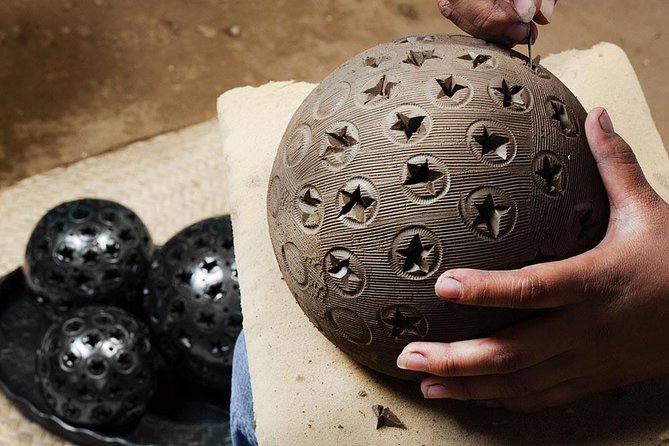
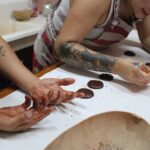
The anchor of the day is the visit to Doña Rosa Studio. You’ll be shown how black pottery is produced using pre-Hispanics techniques, including draft and burnished work. Even if you don’t speak craft jargon fluently, you’ll still understand what’s happening, because you’re watching the process rather than reading labels.
Here’s what’s valuable about a black pottery demonstration on this tour: it gives you a way to “read” the final product. That dark, polished look isn’t just decorative; it’s the result of method. When you see the stages firsthand—prepping, shaping, and the special finishing process—you start noticing details you’d normally miss when you just browse shops.
What to expect from this stop:
- A guided studio look focused on black pottery technique
- Explanations tied to traditional production methods
- Time to see finished pieces after the demonstration
One practical consideration from experience with tours like this: sometimes the pace depends on what’s happening in the workspace that day. A previous guest shared a day where the pottery studio felt more like a shop and facilities visit than an active, working demonstration. If you care a lot about watching artisans in motion, ask your guide ahead of time (or on pickup) what portion of the day will include active work versus store browsing.
Oaxaca City stops: a 16th-century church plus ceramics museums
Before you head out to the artisan towns, the tour includes some cultural grounding inside Oaxaca City. You’ll visit a beautiful 16th-century church, plus two key stops related to ceramics and popular arts: a Museum of Ceramics and the State Museum of Popular Art.
Why these stops are worth your time:
- The church gives you a sense of the historic layers of Oaxaca—religious art and community life shaped how crafts were used, displayed, and valued.
- The ceramics museum helps you connect studio technique to a broader craft tradition. Even if the “museum stuff” isn’t your favorite thing, the payoff is real later when you’re looking at pottery in the villages.
For museum lovers, these are straightforward wins. For craft-focused travelers, they still work because they make your later shopping and sightseeing more informed. You’re not just collecting photos—you’re learning what you’re looking at.
San Martín Tilcajete for alebrijes: carved wooden animals, painted with personality

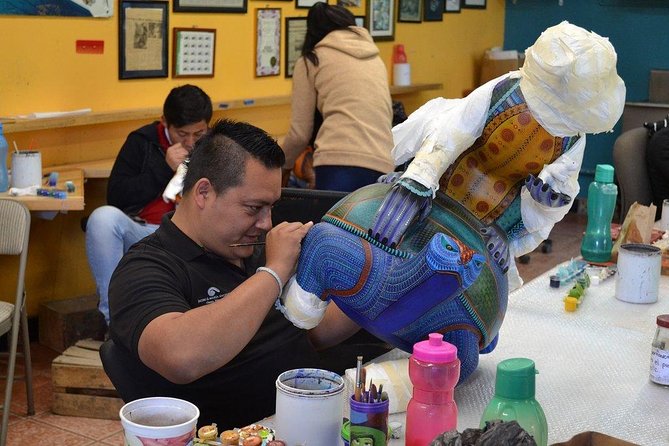
Alebrijes are the fun part—bright creatures, serious craftsmanship. This tour typically includes a stop in San Martín Tilcajete to see alebrijes production, including Jacobo Angeles Alebrijes, where you can view hand-carved, wooden, painted animals.
This is one of those craft experiences where watching the workflow changes everything. From a distance, alebrijes look like playful folk art. Up close, you see how much planning goes into the carve lines, how the painting follows the shape, and why the finished creature looks alive rather than just colorful.
What I like about doing alebrijes on a private route:
- You can slow down when something catches your eye
- You’re not forced to keep moving just because a bigger group needs a photo stop
- You can ask how pieces are made and what sets different artists’ styles apart
If you love gift ideas, this is where you’ll want your spending decisions ready. Many alebrije makers price by size and detail, and you can only tell the quality by looking closely at carving and paintwork.
Mercado Santo Tomás Jalieza for woven cotton goods

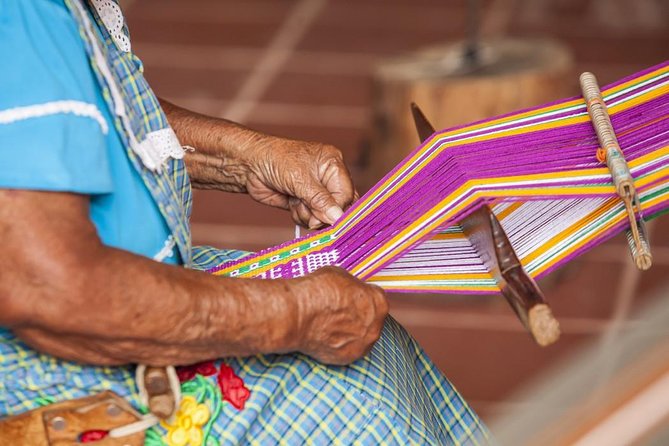
A stop at Mercado Santo Tomás Jaliez is included for woven cotton products. This is a nice counterpoint after the wood carving, because weaving brings you another skill set: patterning, tension, and the time it takes to build texture.
Markets also add a more local feel than a pure studio-only day. Even if you’re not buying, you’ll get a sense of what people use in daily life, how sellers present their goods, and how crafts fit into the local economy.
If your goal is authentic Oaxaca, don’t treat this as a quick photo stop. Give it a few minutes to scan patterns and materials. That’s where you learn to spot quality and not just “pretty color.”





Ocotlán de Morelos: red clay ceramics, a weekly market on Fridays, and murals
Ocotlán de Morelos brings the day home with another layer of craft. You’ll have time around red clay ceramics, with a studio stop that includes Maestro Jose Garcia Antonio. You may also visit the Mercado Ocotlán and La Cocina de Frida (an indoor market/food spot), plus the Palacio Municipal Ocotlán for murals.
One review highlight for this area is the weekly market, especially if your tour lands on a Friday. That’s when the town market energy adds extra life to the day—more stalls, more local food rhythm, and a better chance to see crafts in a real community setting.
Two ways this stop pays off:
- The ceramics connection: after black pottery earlier, red clay gives you a contrast in material and style.
- The town immersion: markets and murals remind you these crafts aren’t just tourist souvenirs—they’re part of how the town displays identity.
Also, this is where lunch often happens during the ride between stops. Even if lunch isn’t included in every version of the experience, the structure of the day usually gives you a break, and that keeps the long day from turning into a sprint.
Price and value: what $221 buys you on a private craft day
At $221 per person for 7 to 8 hours, you’re paying for more than transportation. You’re buying:
- A private format (your group only)
- Hotel pickup and drop-off
- Multiple craft stops across different Oaxaca specialties
- Museum time and cultural context
- English-speaking guidance throughout
Could you find cheaper options in Oaxaca? Probably. But craft days get expensive when you have to hire separate transfers and add a guide only for one workshop. Here, you’re paying for a single day that strings together black pottery, alebrijes, weaving, and market-town context without you having to plan the route.
The value question comes down to your travel style:
- If you enjoy process—watching technique and asking questions—this price feels more reasonable.
- If you just want quick shopping and photos, you may feel the time spent on museums or studio tours is more than you needed.
That’s why one caution matters: if demonstrations don’t look active on your exact day, it can shift the experience from hands-on craft viewing to more of a sales-and-facilities visit. Ask your guide what’s happening each day. It’s the easiest way to protect your value.
What the private guide format really changes (especially for slower moments)

Private tours don’t just remove crowds. They change how the day feels.
In the reviews, different guides stood out—Gerardo, Francisco, and Juan. The common thread wasn’t fancy talk; it was a real connection between what you see and how it’s made. With a private pace, you can:
- Spend longer at the craft stop that grabs you
- Skip or shorten a museum room if you’re getting museum-saturated
- Ask about tools, materials, and why artisans build things the way they do
If you’re traveling with seniors or anyone who doesn’t love long walking loops, private format is often a big win. The route can still be full, but you’re not trapped inside a fast-moving schedule designed for strangers.
Tips to get the most out of artisan towns without rushing your choices
I’ll be honest: craft tours can create a buying frenzy if you’re not careful. Here’s how I suggest handling it.
- Bring small bills and expect you’ll pay for quality. Handmade pieces can vary a lot in price.
- If you plan to buy, do a quick scan first. Look at carving lines on alebrijes or the texture/pattern in woven goods before you commit.
- Keep one “later” decision slot. I like to buy the most personal item near the end of the day so you’ve compared styles already.
- Wear shoes you can walk in. Some market spaces and studio floors aren’t built for slick soles.
Also, remember that studios and workshops are workplaces, not just display rooms. If you see a moment where someone is working, give them space and ask questions when it’s natural.
Who this tour is best for
This is a strong match if you:
- Want a single day that covers black pottery plus alebrijes and other Oaxaca crafts
- Like craft process as much as finished items
- Enjoy market-town atmosphere and small cultural stops like church and murals
- Prefer a private pace with pickup and guide attention
It’s also a good option for many travelers because the experience notes that most people can participate. If you have mobility limits, you’ll still want to plan for road time and some walking in markets and museums, but the private structure usually helps you go at your own rhythm.
Should you book this private artisan tour?
Book it if you want an organized day that mixes technique, context, and browsing—without you assembling the route yourself. The star attraction is the black pottery demonstration at Doña Rosa Studio, and the alebrijes and weaving stops add variety so the day doesn’t feel repetitive.
Skip or rethink it if you’re hunting for nonstop, active studio work at every stop. One past guest noted a day where parts of the pottery experience felt more like touring facilities and shops than watching active work. If that matters to you most, ask your guide before you commit to the day’s priorities and be ready to shift your expectations toward explanation and observation.
Overall, with a 4.9 rating and strong praise for the private experience—plus standout moments like the Friday market in Ocotlán de Morelos when schedules match—this is a smart way to spend a day learning Oaxaca crafts the practical way: by seeing how the work is made.
FAQ
How long is the private artisan day tour?
It runs about 7 to 8 hours.
What is the price per person?
The price is $221.00 per person.
Is hotel pickup included?
Yes. Private pickup is included, and you can add your address if your hotel isn’t listed.
Is this tour private or shared with other groups?
It’s private. Only your group participates.
What language is the tour offered in?
The experience is offered in English.
What stops does the tour include?
It includes Doña Rosa Studio for black pottery, plus a 16th-century church, a Museum of Ceramics, and the State Museum of Popular Art. It also covers artisan villages for alebrijes and other craft stops such as weaving and pottery.
Can I cancel for a full refund?
Yes, free cancellation is available. You can cancel up to 24 hours in advance for a full refund.
Will I receive confirmation after booking?
You should receive confirmation at the time of booking.