REVIEW · OAXACA CITY
Visit to workshops and studios of contemporary art artists
Book on Viator →Operated by JOSE ANTONIO PAREDES ENRIQUEZ · Bookable on Viator
Studio doors in Oaxaca are magic. This private 5–6 hour studio route takes you to working spaces around Oaxaca City, and I loved the no-pressure conversations with artists plus the chance to see how different techniques actually look up close. One drawback: it’s built around short drives and roughly 40-minute studio visits, so if you want slow, meandering sightseeing, you might feel a bit on-the-go.
What makes it special is the structure: you’re not just hopping between galleries. You’re stepping into places where artists talk process, materials, and influences while you’re standing there in the work zone—then you finish with a quick pass by a city viewpoint for a practical photo.
In This Review
- Key Things You’ll Notice on This Oaxaca Artists Workshop Tour
- Why Studio Visits Beat Gallery Hopping in Oaxaca
- Meet José Antonio and the Studio-Chat Style
- The Route: Five Workshops Plus a Fast City View
- Stop 1: Villa de Etla and Enrique Flores’ Engraving Craft
- Stop 2: Priv. de Montoya and Caballero’s Abstract-Figurative Expressionism
- Stop 3: Carretera Internacional and Jesús Cuevas’ Romantic Color Atmosphere
- Stop 4: Pueblo Nuevo and Eddy Vasquez’ Memory-Driven Natural Imagery
- Stop 5: Pueblo Nuevo and Maestro Manuel Miguel’s Geometric Interconnection
- Stop 6: El Mirador for a Quick Oaxaca Photo
- Price and Value: What $101.27 Covers (And Why It Can Be Worth It)
- What to Do During Each 40-Minute Workshop Stop
- Practical Tips That Make This Tour Go Smoothly
- Who This Studio Tour Is Best For
- Should You Book This Oaxaca Artists Workshop Tour?
- FAQ
- Where does the tour start in Oaxaca City?
- How much does the Oaxaca contemporary art studio tour cost?
- How long is the experience?
- Do I get pickup, and when does it happen?
- Is this a private tour?
- Is the tour offered in English?
- How many studios and stops are included?
- Are there admission tickets for the stops?
- What happens if the weather is bad?
- When does the tour operate?
Key Things You’ll Notice on This Oaxaca Artists Workshop Tour
- You meet artists in their working rhythm, not staged demonstrations.
- Five studio stops, one quick viewpoint pass, with around 40 minutes at each workshop.
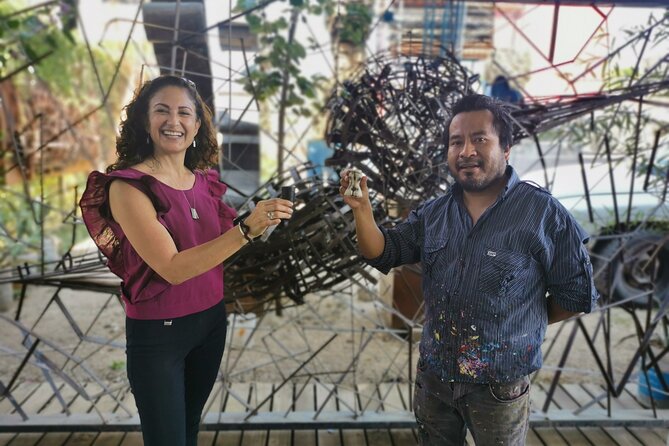
- Real variety of mediums, from engraving and graphics to metal sculpture, ceramics, and oil/acrylic painting.
- English-friendly guidance with a conversational style that stays respectful.
- Admission at the stops is free, so your money mostly covers time with the guide and transportation.
Why Studio Visits Beat Gallery Hopping in Oaxaca
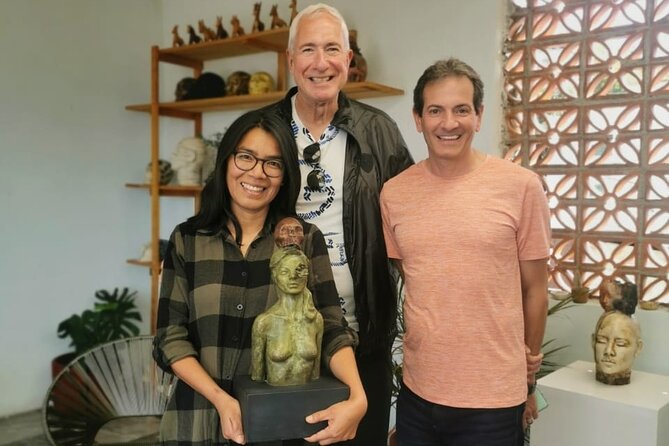
Oaxaca City has plenty of art to see—but studio tours hit different. A museum label tells you what you’re looking at. A working artist shows you how they got there. That practical, human side is what makes this experience feel like more than a sightseeing add-on.
I also like the focus on contemporary work. You’re not only seeing finished pieces; you’re hearing how ideas evolve. Whether it’s printmaking rules learned decades ago or an artist describing why they draw eyes round and square, the conversation ties the artwork to real choices.
There’s another underrated advantage: you get to ask questions in context. In a studio, it’s normal to wonder about materials, textures, or why a particular color scheme creates a certain mood. The tour keeps that vibe friendly, not salesy.
You can also read our reviews of more tours and experiences in Oaxaca City



Meet José Antonio and the Studio-Chat Style
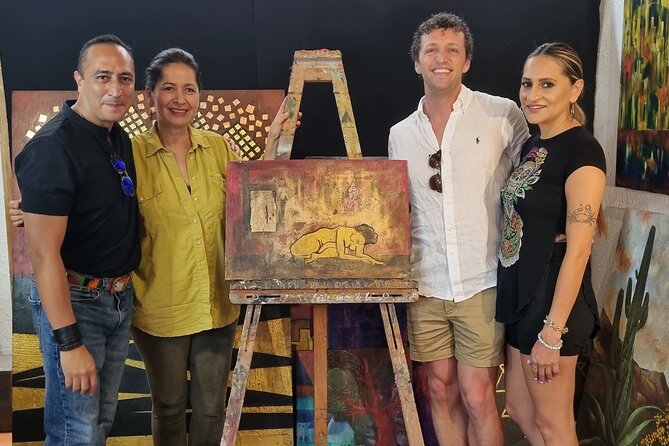
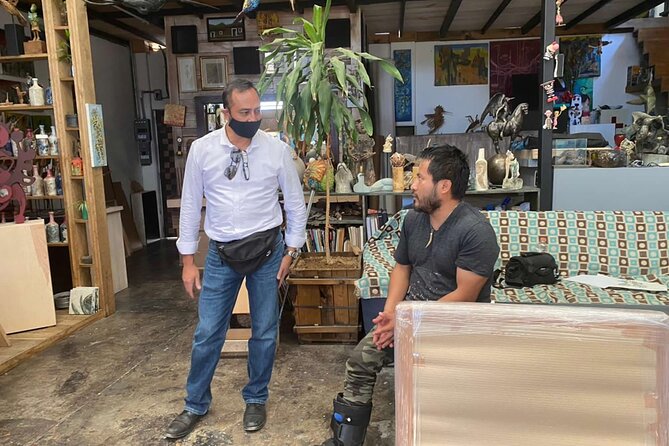
Your guide is José Antonio Paredes Enriquez. In practice, the tour feels like he’s sharing Oaxaca as lived culture, not a script. He sets the tone quickly: curious, calm, and focused on letting you talk with the artists at a comfortable pace.
From my perspective, the best part of a guide-led studio visit is managing the balance between your questions and the artist’s workflow. This one seems to do that well. The encounters are described as cordial and informative, with plenty of patience—plus you’re not pushed to buy anything. If you’re an art lover, that matters, because you can spend your attention on the work, not on sales pressure.
You may also be guided alongside Maria (mentioned as part of José’s group), which adds a helpful layer of organization during the studio-to-studio transitions.
The Route: Five Workshops Plus a Fast City View
This experience runs about 5 to 6 hours and is built around short, efficient stops. You’ll start at Mariano Matamoros 500, Centro, Oaxaca de Juárez, Oax., and the tour ends back at the same meeting point.
Each of the first five stops is timed at about 40 minutes, then there’s a final 10-minute viewpoint pass. That rhythm is great if you want variety without spending your whole day lost in traffic.
Stop 1: Villa de Etla and Enrique Flores’ Engraving Craft
Your first stop is in the Villa de Etla Municipality area, centered on Enrique Flores, a member of the first generation of the Rufino Tamayo plastic arts workshop.
What I’d highlight here is the engraving focus. Flores has spent decades studying, practicing, and improving engraving techniques, with training connections that include teachers such as Atanasio García Tapia, Octavio Bajonero, and Juan Alcázar. He also ties this into community practice through the free graphic workshop known as Oaxaqueña, where the “rules of the stamp” were understood starting in the mid-70s.
Even if engraving isn’t your main art interest, this stop gives you a foundation. It’s where you learn that printmaking isn’t just pretty images—it’s method, precision, and repeatable decisions.
Practical note: since this is free admission for the stop, the real value is in the conversation and the demonstration-by-presence. Give yourself time to look closely at the process before you rush to the next studio.
Stop 2: Priv. de Montoya and Caballero’s Abstract-Figurative Expressionism
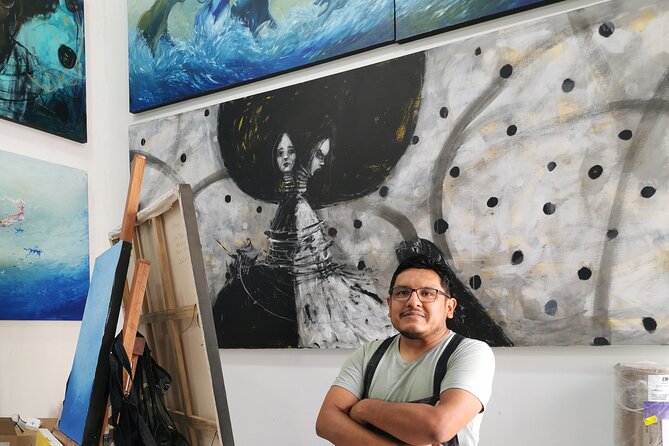
Next you’re at Priv. de Montoya 1 for the work of Caballero. His style is described as abstract-figurative Expressionism, with a recurring theme: characters from his imagination, each tied to infinite stories.
One detail worth watching for is how he draws faces—especially the round and square eyes. The explanation matters: he treats those shapes as a way to show how everyone sees the world through their own experiences. That’s the kind of interpretive key that you don’t usually get from a gallery wall text.
This stop also includes attention to the next generation. You’ll hear about Alexis, a young artist whose work is described as spectacular and part of the new wave the Oaxaca scene will recognize even more in coming years.
If you like art that feels like it’s telling a story without spelling everything out, this is a good moment to slow down and ask questions.



Stop 3: Carretera Internacional and Jesús Cuevas’ Romantic Color Atmosphere
At Carretera Internacional, you’ll spend time with Jesús Cuevas. His pictorial work uses multiple techniques, including what’s described as French impressionism, especially in how color and atmosphere work together.
What to look for: the handling of color and the textures that build mood. Cuevas’ pieces are described as creating romantic atmospheres where color and texture become the protagonists. That’s a useful way to think while you’re standing in front of the work—ask yourself what feeling seems to lead the piece, not just what subject is shown.
This stop is also a good counterbalance to the engraving and expressionist themes. If you’re the kind of person who enjoys texture and atmosphere, you’ll likely find this one satisfying.
Stop 4: Pueblo Nuevo and Eddy Vasquez’ Memory-Driven Natural Imagery
Back in Pueblo Nuevo, you meet Eddy Vasquez. His art is described as powered by strong memories—especially the past and family history. Those ideas don’t stay abstract; they animate the work.
The visual world mixes individual creations with attention to a natural and biodiverse setting. You’ll hear examples like grasshoppers, mantises, palm trees, pochotes, elephant feet, and willows. It’s not random naming—it’s telling you that his technical choices are aimed at creating a believable world full of motion.
Vasquez is also noted for continuous experimentation with substances to build textures, aiming to recreate a sense of depth with diverse colors, joy, music, and movement. Translation for you: texture isn’t just decoration here. It’s part of the storytelling.
If you love art that feels both personal and observational, this stop tends to land well.
Stop 5: Pueblo Nuevo and Maestro Manuel Miguel’s Geometric Interconnection
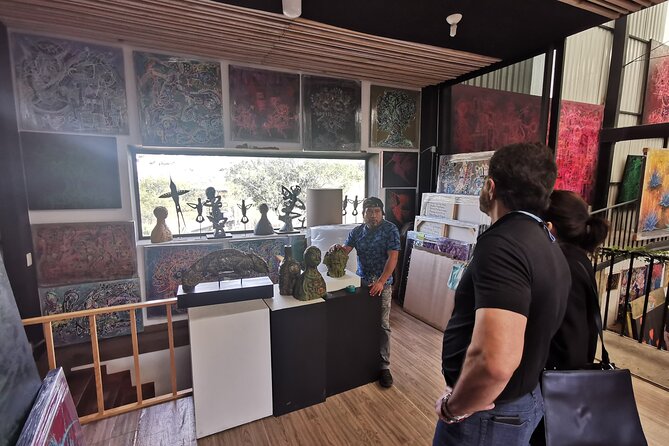
You’ll return to Pueblo Nuevo for Maestro Manuel Miguel. This workshop stands out because Miguel’s output is spread across multiple mediums and methods.
His current work includes sculpture in metal, ceramics, and wood, plus graphics, oil, acrylic, and even graphic design. The description frames him as a builder and architect type—someone fascinated by geometric shapes and networks of meaning in the modern world of interconnection.
And yes, there’s an imaginative quality: he paints like a fantastic chronicler of fauna and flora. That combination—geometry and organic life—creates a fun tension. You can often spot it right away in how forms repeat, connect, or balance.
Stop 6: El Mirador for a Quick Oaxaca Photo
Finally, you’ll pass by El Mirador, a city viewpoint. It’s timed at about 10 minutes, with a simple payoff: you can grab a souvenir photo of Oaxaca on your return.
Don’t plan on a long hike here. This is a quick visual punctuation mark—use it to reset your eyes after the studios.
Price and Value: What $101.27 Covers (And Why It Can Be Worth It)
The price is $101.27 per person, for about 5 to 6 hours, with pickup offered and a private format. It’s also booked on average 69 days in advance, which usually signals it’s a popular slot.
Here’s how I’d think about value:
- Admission at each studio stop is listed as free, so you’re not stacking museum ticket costs on top of your experience.
- You’re paying mainly for transportation, guide time in English, and the coordination of getting you into working spaces.
- The “private” setup matters. If you’re traveling with a small group, you’re not competing with crowds or waiting your turn while other people ask questions.
Is it expensive compared to a general city tour? Sure. But the trade is more direct access—artists talking about their practice in their own context. For me, that’s exactly what you want if you’re specifically interested in contemporary Oaxacan art.
What to Do During Each 40-Minute Workshop Stop
Because time is limited at each studio, your best move is to come prepared to ask focused questions. That’s how you get more than just a quick look.
A few prompts that fit the kind of art you’ll see:
- Ask how a technique shapes the final look (especially printmaking and texture-building).
- Ask about color choices and what mood they’re aiming for (Cuevas is a strong lead-in).
- Ask why particular imagery shows up repeatedly (whether it’s eyes shaped a certain way, or creatures and plants used as memory carriers).
- If you’re noticing geometry or networks, ask what those connections mean to the artist.
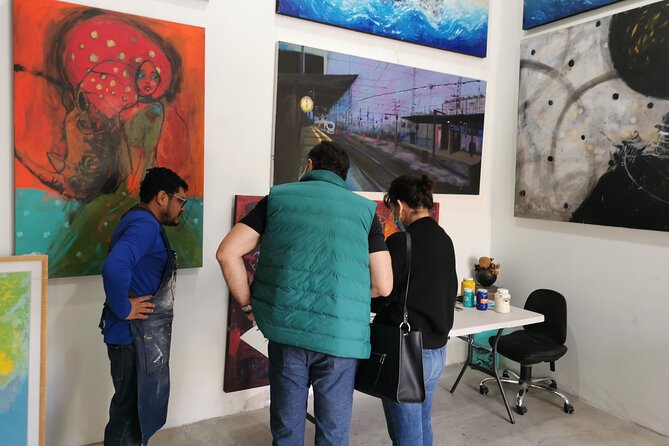
Also, be ready for the fact that the artists may work on projects in real time. The best vibe is respectful curiosity.
And if you’re worried about shopping pressure: the tone here is described as friendly and no-pressure. You can enjoy the art without feeling cornered.
Practical Tips That Make This Tour Go Smoothly
This tour requires good weather. If weather is poor, you’ll be offered a different date or a full refund. That matters because part of the experience includes travel between studio areas and a viewpoint stop.
Bring your basics:
- Comfortable shoes for walking around studio spaces.
- A bit of patience during transitions. The stops are frequent enough that you’ll spend some minutes moving, even though the total day is only half.
You’ll get a mobile ticket, and you’ll receive confirmation at the time of booking. Pickup happens 15 minutes before departure, so don’t plan to be late and then scramble in the Centro streets.
Who This Studio Tour Is Best For
This experience is a strong fit if:
- You like contemporary art and want to understand process, not just products.
- You enjoy asking questions and hearing artists explain influences, technique, and meaning.
- You want variety in styles—engraving, Expressionist figures, impressionist-leaning atmospheres, texture-driven nature work, and geometric experimentation.
It might be less satisfying if:
- You’re only in Oaxaca for a fast hit of landmark photos.
- You dislike structured schedules and prefer long, unbroken time in one place.
Should You Book This Oaxaca Artists Workshop Tour?
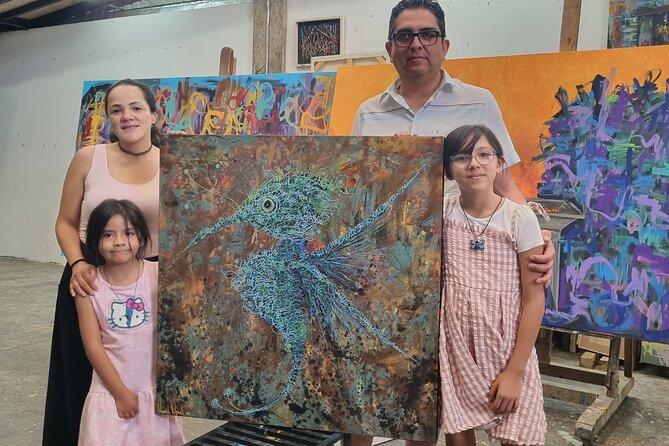
Book it if you want a real feel for Oaxaca’s contemporary art world—where technique, memory, and creative thinking show up right in the workspace. The private format, English guidance, and the respectful studio conversations are what make this one a standout value for the money.
Skip it only if you’d rather spend your day on major sights or you don’t enjoy the pace of back-to-back stops. At 5 to 6 hours with about 40 minutes per studio, this is designed for motion and discovery.
FAQ
Where does the tour start in Oaxaca City?
The meeting point is Mariano Matamoros 500, Centro, 68000 Oaxaca de Juárez, Oax., Mexico. The tour ends back at the same meeting point.
How much does the Oaxaca contemporary art studio tour cost?
The price is $101.27 per person.
How long is the experience?
It lasts about 5 to 6 hours.
Do I get pickup, and when does it happen?
Yes. Pickup is offered, and the driver will pick you up 15 minutes before departure time.
Is this a private tour?
Yes. It’s listed as private, meaning only your group participates.
Is the tour offered in English?
Yes. The tour is offered in English.
How many studios and stops are included?
You visit five workshop/studio stops and then have a short viewpoint pass at El Mirador.
Are there admission tickets for the stops?
The stops listed show admission ticket free for each workshop stop and the viewpoint pass.
What happens if the weather is bad?
The experience requires good weather. If it’s canceled due to poor weather, you’ll be offered a different date or a full refund.
When does the tour operate?
The listed opening hours are Monday through Saturday, 10:00 AM to 4:00 PM (within the overall date range shown). Confirmation comes at the time of booking.