REVIEW · OAXACA DE JUAREZ
Oaxaca: Day of the Dead Evening Walking Tour with Dinner
Book on GetYourGuide →Operated by Mexico Kan Tours · Bookable on GetYourGuide
Dia de Muertos turns Oaxaca into a moving lesson. This 5-hour evening walking tour threads church plazas, markets, and Day of the Dead offerings into one easy route (with dinner at the end).
I like that the group stays small, limited to 10 participants, so your guide can slow down and answer questions. I also like the mix of big-city landmarks and neighborhood altars—Santo Domingo Plaza and then places like Jalatlaco—so you don’t just see the famous stuff.
One thing to weigh: it’s a real walk (about 4.5 km), and it’s not a good fit if you have mobility limits or recent surgeries. The dinner is included, but the restaurant quality can be a mixed bag depending on the night and setup.
In This Review
- Key takeaways before you go
- Dia de Muertos in Oaxaca, explained on foot
- Meeting at Plaza Cruz de Piedra (Stone Cross) and setting the route
- Markets and food culture: learning Oaxaca through what people buy
- Santo Domingo Plaza: when churches and history wear flowers
- Oaxaca Cathedral and route swaps on different dates
- The cemetery stop: Panteón energy and why it sticks
- Jalatlaco and neighborhood altars: where the street party lives
- Dinner from 7 to 8 pm: included food, water, and snacks
- How hard is the walk? (And who should skip it)
- Price and value: why $109 (or $115) can be fair
- Who this tour fits best
- Should you book this Oaxaca Day of the Dead evening walk?
- FAQ
- How long is the Oaxaca Day of the Dead evening walking tour?
- Where do I meet the guide?
- What’s included with the tour price?
- Which dates does this tour run?
- How much walking is involved and what should I wear?
- What languages are available?
Key takeaways before you go
- Small-group pacing (up to 10 people) keeps the tour from feeling rushed.
- Plaza Cruz de Piedra to Santo Domingo gives you a strong first look at how Oaxaca celebrates.
- Cemetery altars can be the emotional high point on the main dates.
- Jalatlaco neighborhood stop shows how Dia de Muertos works at street level.
- Dinner + water + snacks end the night without you hunting for food afterward.
- Local guide variety (Jorge Sigüenza, Pablo, Tania, Tonya) means storytelling style can differ by guide.
Dia de Muertos in Oaxaca, explained on foot
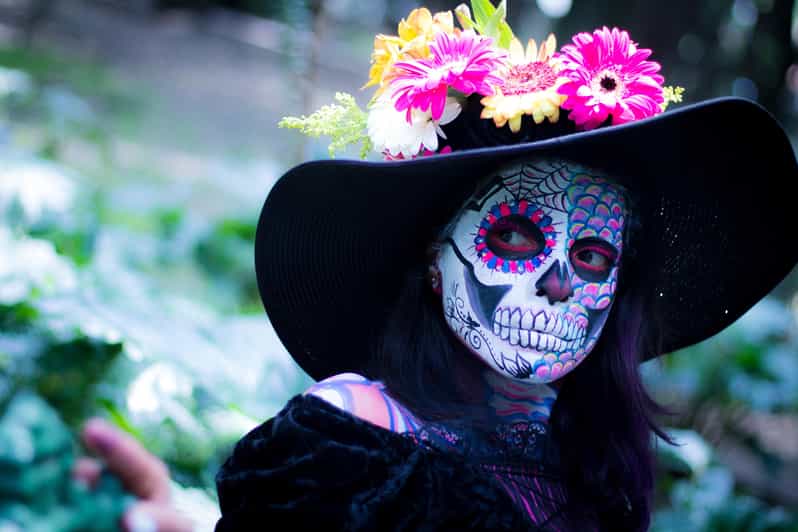
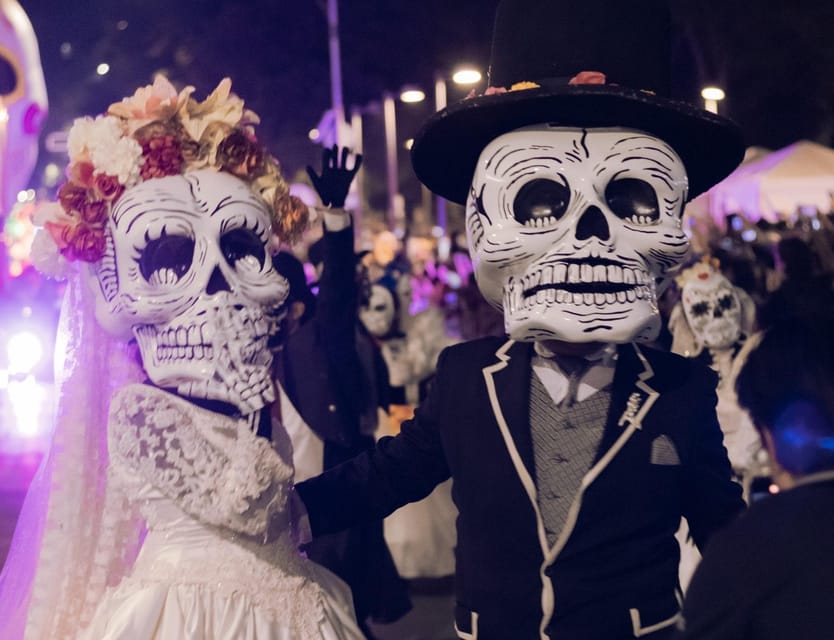
Dia de Muertos is one of those celebrations you can’t really “watch” from a distance. In Oaxaca, the meaning is right there on the street—on paper cut-outs, on flower arrangements, on handwritten offerings, and in the way people move through their evening.
This tour is built for that kind of seeing. You start with the grand public spaces and you end in a different mood: neighborhood altars, family-focused displays, and a sense that the living are hosting the people they miss. You’ll also get an Oaxaca dinner included, which helps you avoid the common problem of booking the perfect cultural plan and then starving afterward.
The biggest strength is that you’re not just handed photos and told to take them. Your guide points out what you’re looking at—what an altar is trying to say, why cemeteries matter on these dates, and how the celebration connects to Oaxaca’s food and craft culture.
You can also read our reviews of more walking tours in Oaxaca De Juarez
Meeting at Plaza Cruz de Piedra (Stone Cross) and setting the route
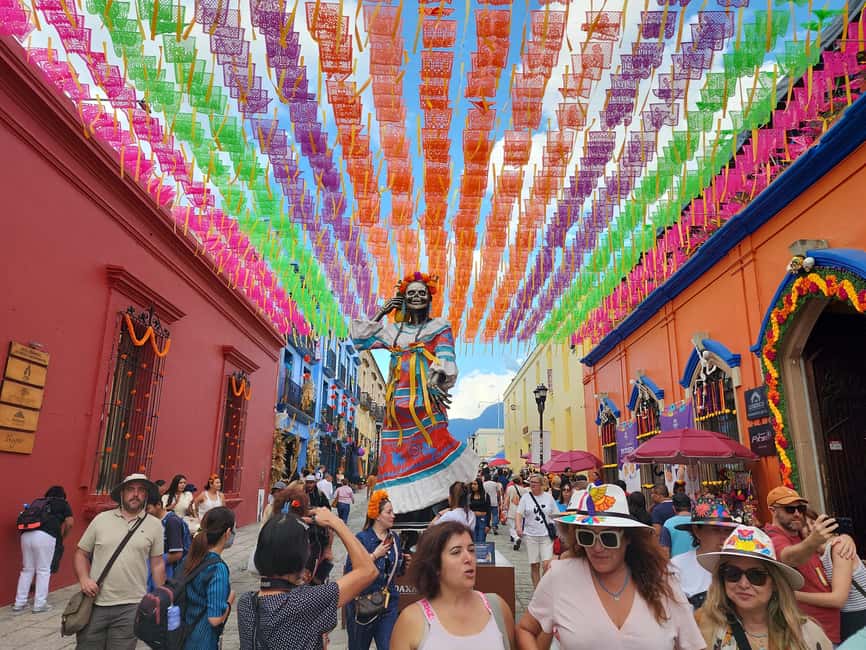
You meet at Plaza Cruz de Piedra, in front of the Stone Cross. That’s helpful because it puts you near the historic center right where Dia de Muertos decorations start to show up in numbers.
From the first part of the walk, the plan is simple: you move through markets and city streets, then you hit major plazas where the buildings and church spaces are also part of the show. Starting this way means you get the sense of the city as a “stage,” not just a list of stops.
One practical tip: go in with comfortable closed-toe shoes. Even if you’re not a fast walker, you’ll want steady footing because you’re covering distance plus stops, steps, and uneven sidewalks.
Markets and food culture: learning Oaxaca through what people buy
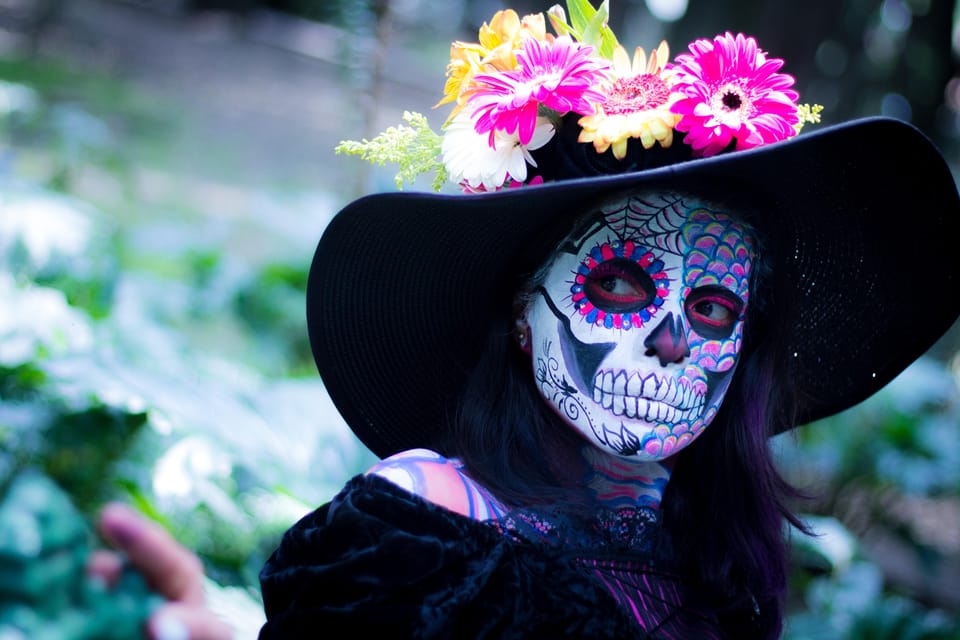
A chunk of the experience happens while you’re walking through markets and city streets. This matters because Day of the Dead in Oaxaca isn’t only about altars—it’s tied to how people eat, trade, and celebrate day to day.
On this tour, you’ll see the market energy while your guide explains what you’re noticing: seasonal items, gift-like foods, and the general “this is how we live” side of Oaxaca. If you care about gastronomy, this is the part that makes the later dinner feel more grounded. You’ll understand what you’re eating and why it fits the moment.
You may also run into chocolate-related tastings or stops, since multiple guide-led versions of this walk include market food moments. If your idea of a cultural tour is mostly about stories, don’t worry—Oaxaca’s food is part of the storytelling here.
Santo Domingo Plaza: when churches and history wear flowers
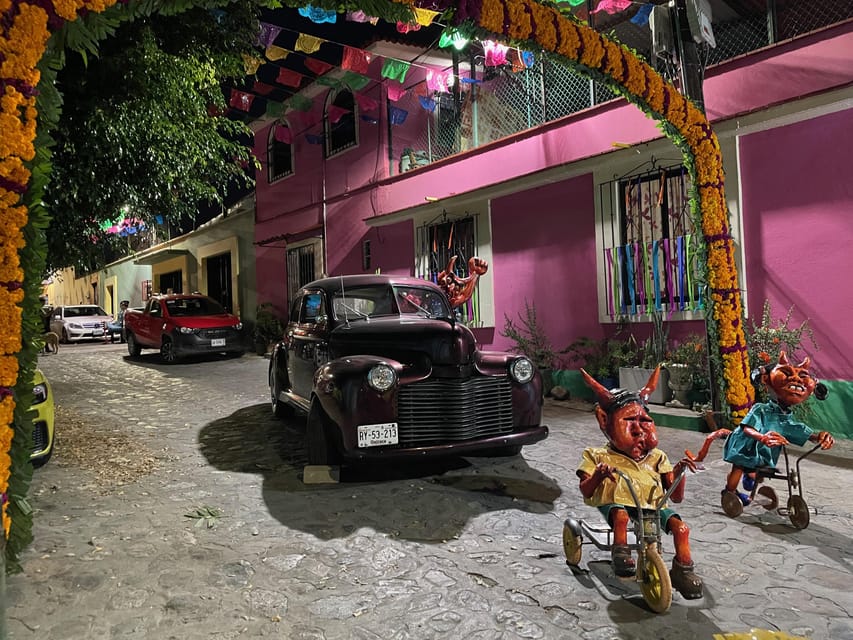
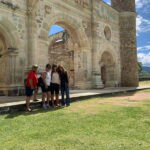
The tour spends time at Santo Domingo Plaza, where the church and ex-convent appear decked out for the occasion. This is the kind of stop where your guide’s timing really helps: you get to see the scale of decorations, and you understand the symbolism behind what’s placed where.
Santo Domingo also gives you perspective. It’s easy to think Day of the Dead is only about cemeteries and private altars, but Santo Domingo shows how public spaces carry the celebration too. The church setting amplifies the feeling—part ritual, part community performance.
If you love architecture or you just like looking closely, this stop is worth slowing down for. Take the time to notice how offerings are arranged and how people interact around the plaza.
Oaxaca Cathedral and route swaps on different dates
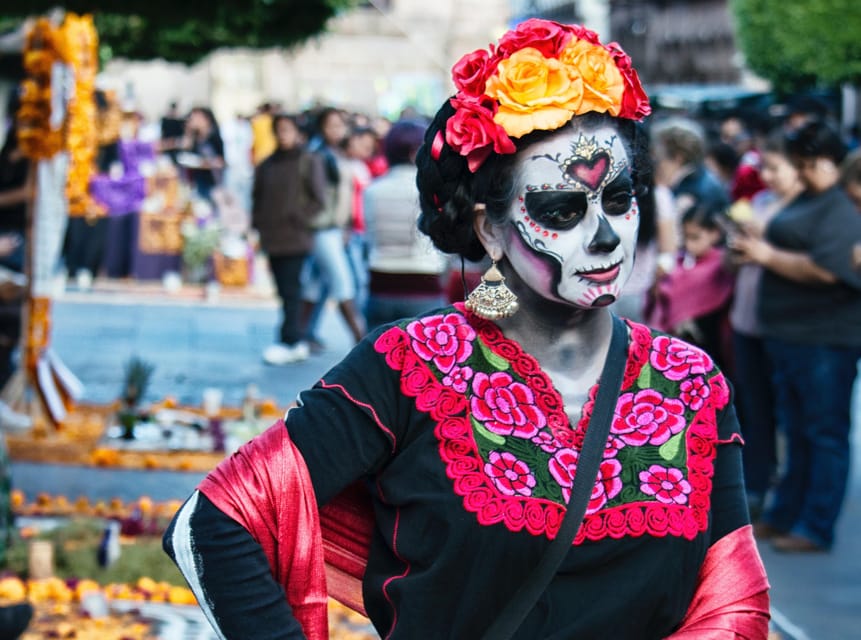
Depending on your exact date, the route can include Oaxaca Cathedral instead of (or in addition to) certain cemetery elements. The tour has two program types based on the dates around the main Dia de Muertos window.
Here’s the practical point: if you’re traveling for the peak dates around Oct 30 to Nov 2, you’re more likely to get the fuller-feeling celebration that people remember most. If you’re going earlier or later, you still get Dia de Muertos context, but the festivities may not be the same intensity on the nights you attend.
So before you book, match your travel dates to the vibe you want:
- Peak window = higher chance of seeing the cemetery stop as a headline moment.
- Shoulder dates = still festive, but plan for a slightly different mix of stops.
You can also read our reviews of more tours and experiences in Oaxaca De Juarez

The cemetery stop: Panteón energy and why it sticks
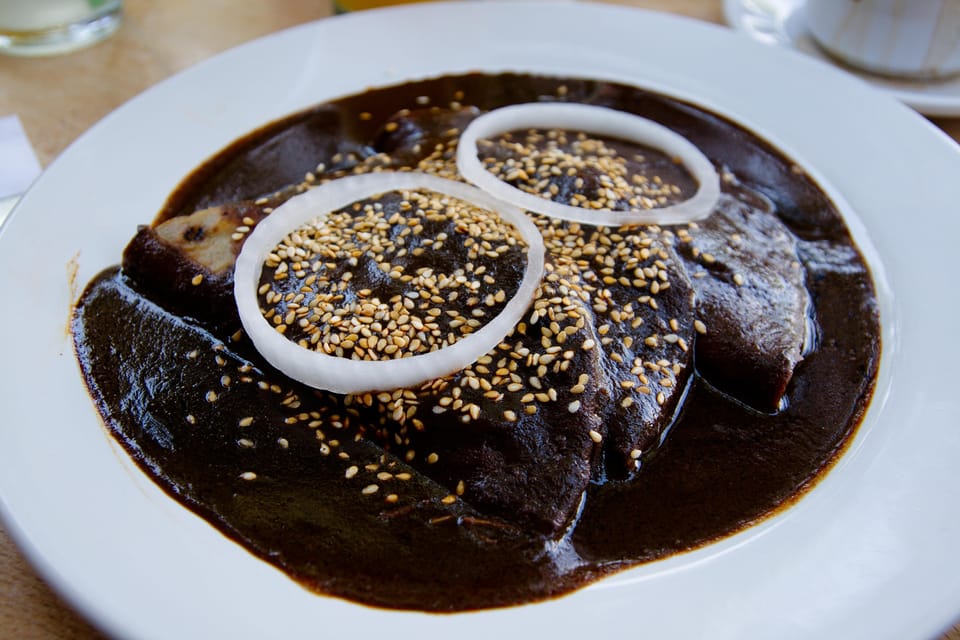
For many people, the emotional highlight is the cemetery. On the main nights, the walk includes a stop at the cemetery where you’ll see thousands of offerings and altars transforming the resting place into something closer to a festival.
This is where Dia de Muertos stops being “a theme” and becomes a belief system you can sense. Your guide explains the idea that loved ones return to visit, while the living prepare the welcome. You’ll notice how the atmosphere can feel joyful and also very human—like a family gathering that happens to be public.
In guides’ hands, this stop can become surprisingly personal. Several guides on this tour have described how visitors sometimes talk, reflect, or feel moved right there among the altars. If you’re the type who gets quiet at ceremonies, this will land with you.
One consideration: the cemetery portion can be intense. If you’d rather keep the evening strictly light, balance it with a plan afterward where you can reset your mood.
Jalatlaco and neighborhood altars: where the street party lives
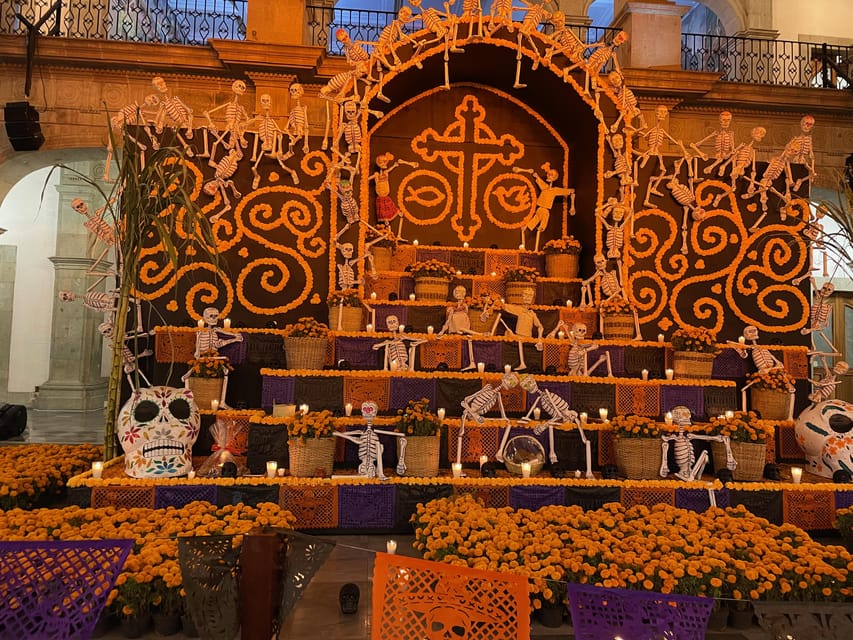
After the big plaza energy, the tour shifts away from the largest crowds and heads into a neighborhood setting—often Jalatlaco—where you see how families and locals build altars and lay out offerings.
This change is important. Public monuments tell you what the city celebrates. Neighborhood streets tell you how people practice the celebration in real life. The feeling here can be party-like at times, but it also keeps reminding you of the transient nature of life and gratitude for time with the people you love.
You’ll likely notice more street-level details: decoration styles that aren’t “tour designed,” smaller altars with personality, and the sense that the whole block is taking part. If you’re trying to get beyond the postcard, this is the stop that helps the most.
Also, some versions of the evening walk include nearby street art moments, which makes the neighborhood segment feel like a blend of cultural photography and living ritual.
Dinner from 7 to 8 pm: included food, water, and snacks
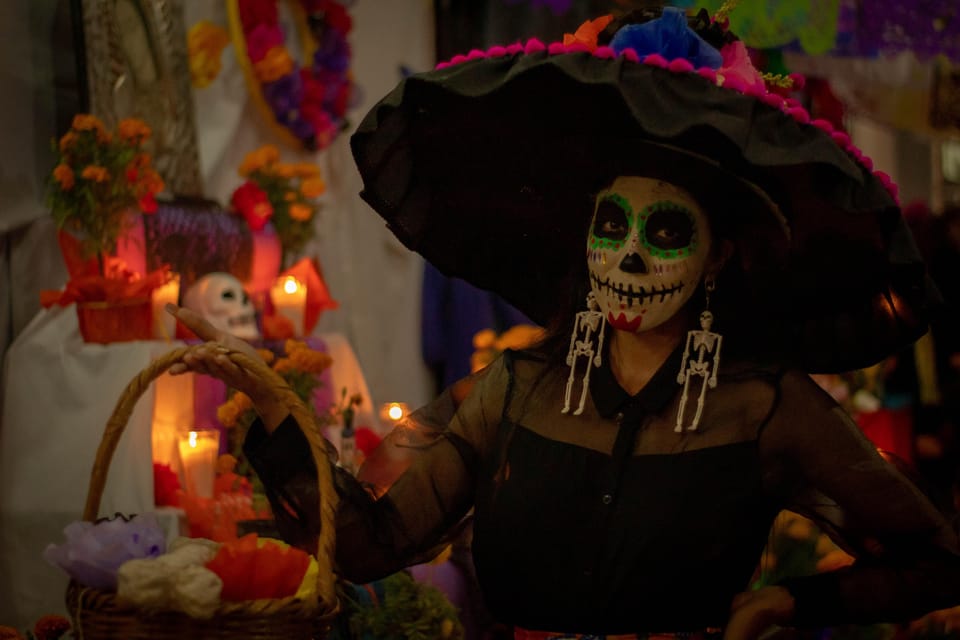
Dinner runs from 7–8 pm and is included, along with water and snacks. This is a relief because it lets you focus on the tour instead of timing your own meal around crowds and decorations.
Quality seems to vary slightly by night and venue. Some people loved the dinner as delicious and authentic, even describing local restaurant settings outside the main tourist zone. Others flagged that the restaurant experience (like drink atmosphere or the setting) wasn’t ideal and could be improved.
What you can do with that information:
- Go in expecting good local food, but don’t assume it’ll feel like a top-tier dining room every single time.
- If you want drinks beyond water, you’ll likely need to handle that separately (the tour data only guarantees water).
- If you’re sensitive to noise, dinner can be lively—some evenings include live music.
The upside is that dinner doesn’t feel like an afterthought. It’s built as the final stop after the most emotional visuals of the evening.
How hard is the walk? (And who should skip it)

The tour lasts about 5 hours and covers about 4.5 km on foot, with various stops along the way. It’s evening walking, so pace matters: the group isn’t sprinting, but you’re still moving continuously enough that shoes and leg stamina matter.
The tour isn’t recommended if you have mobility impairments, use a wheelchair, have had recent surgeries, have kidney problems, are over 80, or just have low fitness. Kids under 8 aren’t suitable either.
If you’re generally fit and you’re good with an evening walk in historic streets, you’ll probably find it manageable. Still, plan to rest beforehand. A long Dia de Muertos day can be tiring, and you’ll want enough energy to enjoy the cemetery stop without rushing through it.
Price and value: why $109 (or $115) can be fair
At $109 per person (and $115 on specific dates), you’re paying for more than “a dinner and a walk.” You’re getting:
- A guided route in English, Spanish, French, or German
- Entry fees (so you’re not paying extra at each stop)
- Dinner plus water and snacks
- A small group size (up to 10), which helps with pacing and questions
Value depends on what matters most to you. If you want the neighborhood altars plus cemetery context plus history around Santo Domingo, this price can feel fair because you’re buying local guidance for multiple locations in one night.
If you’re the type who’s happy wandering on your own, you might question the price. But for Dia de Muertos, the difference is the meaning behind what you’re seeing. Without a guide, it’s easy to miss the “why.”
My take: it’s a good value if you want context and you’ll actually stay engaged through the whole route.
Who this tour fits best
This works especially well if you:
- Want a guided way to see Oaxaca de Juárez during Dia de Muertos
- Like walking tours but don’t want a huge group
- Care about how traditions connect to Oaxacan food and local culture
- Prefer an emotional, reflective highlight like a cemetery stop
It might not be your best choice if:
- You need step-free routes or have mobility limits
- You want a short, easy outing with minimal walking
- You’re very sensitive to heavier themes at cemeteries
Should you book this Oaxaca Day of the Dead evening walk?
Book it if you want an organized, local-feeling way to experience Dia de Muertos—with the best parts of Oaxaca’s public plazas and neighborhood practices in one evening. The small group, the guided explanations, and the included dinner make it a practical choice rather than a “we’ll figure it out” plan.
Skip or reconsider if the walking distance is a problem or if you’d rather avoid the cemetery emotional weight. Also, if your priority is a high-end restaurant atmosphere, keep expectations flexible since dinner quality has gotten mixed feedback depending on the night.
If you’re coming to Oaxaca for the celebration, this is one of those tours that helps you understand what you’re seeing fast—and enjoy it longer.
FAQ
How long is the Oaxaca Day of the Dead evening walking tour?
The tour lasts about 5 hours, starting in the afternoon and ending after dinner. Dinner is scheduled between 7 and 8 pm.
Where do I meet the guide?
Meet your guide in front of the Stone Cross at Plaza Cruz de Piedra.
What’s included with the tour price?
You get a guided walking tour, entry fees, dinner, water, and snacks, plus a live tour guide.
Which dates does this tour run?
Dia de Muertos takes place from Oct 30 to Nov 2. The tour also runs on earlier and later dates, but the festivities won’t be the same intensity on those nights.
How much walking is involved and what should I wear?
You’ll walk about 4.5 km and you should wear comfortable closed-toe shoes.
What languages are available?
The tour is available in English, Spanish, French, and German.