REVIEW · OAXACA DE JUAREZ
Oaxaca: Monte Alban and the Art of Oaxaca
Book on GetYourGuide →Operated by PARAISO HUATULCO · Bookable on GetYourGuide
One great day in Oaxaca starts with ancient ruins. This trip strings together the Zapotec world at Monte Albán and the living art of Oaxaca—carved copal wood alebrijes and dark pottery—so you see how history and craft share the same streets. It’s guided, structured, and built for people who want big sights without spending the whole day figuring it out.
I especially like the mix of major archaeology and hands-on artisan storytelling. The Monte Albán part isn’t just walking: you get background on the Zapotec site, plus time to take photos from the top structures. I also like that the art stops focus on process—wood carving in San Antonio Arrazola and black clay work in San Bartolo Coyotepec.
One consideration: this is a walking-heavy 7-hour schedule, and the craft stops can feel more shop-forward than museum-like, depending on the day. If you want maximum history detail every minute, you’ll want to pace yourself and ask your guide what to prioritize.
In This Review
- Key points before you go
- Why Monte Albán and Oaxaca crafts fit in one 7-hour day
- Monte Albán: what you should expect from the site walk
- A practical timing note
- What a good Monte Albán guide should do (and how to get it)
- San Antonio Arrazola: copal wood carving and the making of alebrijes
- What to expect with your time and your wallet
- Cuilapam de Guerrero: a Mixtec town and the Dominican ex-monastery (optional)
- San Bartolo Coyotepec: black clay pottery you can actually watch happen
- Why black pottery belongs on this itinerary
- Price and value: $42 for a guided Oaxaca art-and-ruins mix
- Is it worth it for you?
- Logistics that actually affect your day
- Pickup and timing
- Walking load
- What to bring so you’re comfortable at every stop
- Who this tour suits best
- Should you book this tour?
- FAQ
- How much is the Monte Albán entrance fee?
- Are food and drinks included?
- How long is the tour?
- Will I be picked up from my hotel?
- What language is the guide?
- Is the Cuilapam de Guerrero convent stop guaranteed?
- Is the tour suitable for wheelchair users?
- Is there free cancellation and a pay-later option?
Key points before you go
- Monte Albán views + Site Museum time so you can connect what you see to the Zapotec story.
- Copal wood carving at San Antonio Arrazola gives you the real steps behind alebrijes.
- Black pottery process in San Bartolo Coyotepec shows how the color comes from the clay tradition.
- Optional Cuilapam de Guerrero convent stop that may be closed due to safety restrictions.
- Bilingual guide support (Spanish/English), with guides known for adding clear context.
- Entrance fee and food aren’t included, so plan a cash buffer and lunch time.
Why Monte Albán and Oaxaca crafts fit in one 7-hour day
Oaxaca can be a lot. Even with good planning, it’s easy to spend your trip on logistics—transfers, tickets, and trying to match your interests to the “right” neighborhood.
This day trip solves that problem by clustering three kinds of Oaxaca you don’t want to miss: the big stage of Zapotec civilization at Monte Albán, the craft identity of the city’s artisans (especially through alebrijes), and the Mixtec and regional pottery traditions around black clay work. The result is a day that feels like theme-based travel: power and religion at the top, creativity at ground level.
You’ll also get guided context—often the difference between seeing ruins and actually understanding them. In particular, guides you’ll meet on this style of tour (like Ivan, Eloy, Antonio, and Oscar, depending on the departure) are known for telling the story in a way that helps you remember what you’re looking at, not just where to stand for a photo.
You can also read our reviews of more tours and experiences in Oaxaca De Juarez.
Monte Albán: what you should expect from the site walk
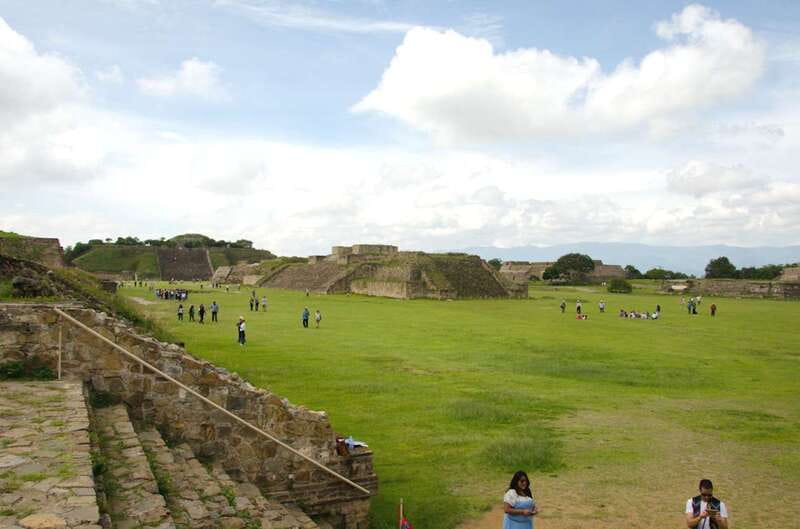
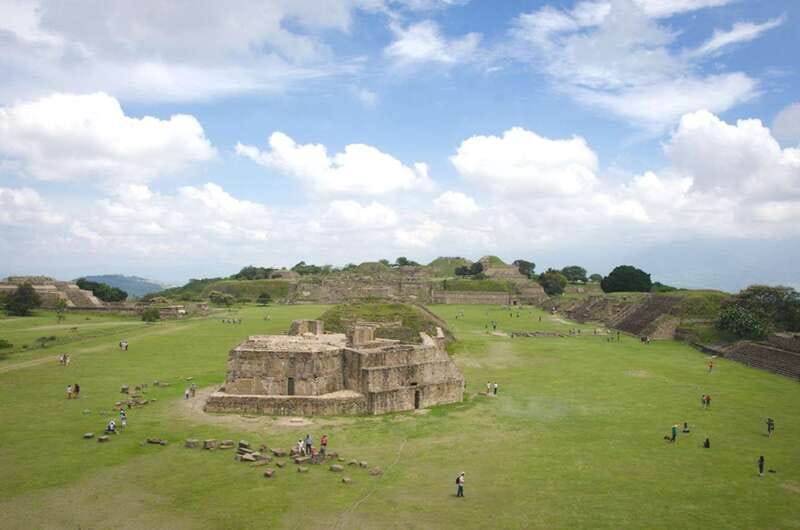
Monte Albán is often the anchor stop in Oaxaca tours for a reason: it’s the major archaeological site tied to the Zapotec civilization, in what was once a religious, political, and economic center. From street level it looks like “just ruins,” but once you’re up there, you can feel the layout doing its work.
On this tour, you’ll walk around the main square area and spend time at the Site Museum. This matters because the museum gives you a quick map for your eyes. Without it, it’s easy to treat platforms and rooms like random stone piles. With it, you start spotting the logic of where structures sit and why they matter.
Then comes the part most people remember: photo time from the top of the archaeological structures. You’ll want your camera ready because the view is dramatic—and the angle helps you understand how the ancient city dominated the landscape below.
A practical timing note
You’ll be on your feet for a while. Even if the museum and the photo viewpoints are “tour-paced,” you’ll still want comfortable shoes and a water plan. The tour description also calls out that you’ll have time to wander the site, but it’s still a guided day, not a slow personal visit.
What a good Monte Albán guide should do (and how to get it)
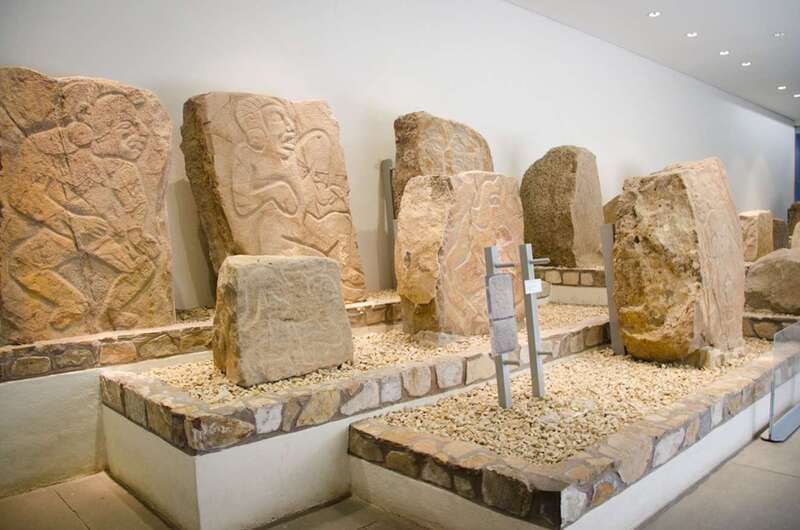
The strongest Monte Albán experiences aren’t about memorizing dates. They’re about connecting shapes to meaning—temples to belief, terraces to organization, and the site’s overall position to political power.
This tour is designed around that idea. Guides typically add the story behind the site, and that’s where departures can vary: some guides spend more time walking with you through the “why,” while others focus on hitting highlights quickly so you can do your own exploring too.
When your guide explains details as you move—like what the Zapotec center represented and how the city functioned—you’ll get more out of every stop you take. If you feel the pacing is moving fast, ask a simple question right away, something like what you should focus on first, or which structures matter most for the Zapotec story. That’s the fastest way to turn a tour into real learning.
Also: entrance fee is not included. The tour lists Monte Albán entrance fee ($6 per person) separately, so bring cash so you’re not scrambling on arrival.
San Antonio Arrazola: copal wood carving and the making of alebrijes
If Monte Albán gives you the past, San Antonio Arrazola gives you Oaxaca’s creativity in motion.
This stop is where you’ll see traditional artisans carve copal wood and learn how the famous alebrijes take shape. These figures are known for color and character, and on this tour you’re not just browsing finished pieces—you’re watching the process. You’ll see how carving turns a block into a form, and then how painting finishes the personality.
Why this stop works so well on a single-day tour is that it’s hands-on in a way that still feels cultural, not like a random shopping pit-stop. Even if you do end up buying something, the value is in understanding the work behind it.


What to expect with your time and your wallet
Here’s the reality check: craft sites often have strong sales presence, and that can affect the feel of the visit. If you’re there mainly to learn the craft, you can do that—but you’ll want to set expectations about browsing time and purchases.
Bring small bills if you plan to buy. The tour info explicitly asks for cash, and it’s a good sign for smoother payment rather than negotiating on the spot.
Cuilapam de Guerrero: a Mixtec town and the Dominican ex-monastery (optional)
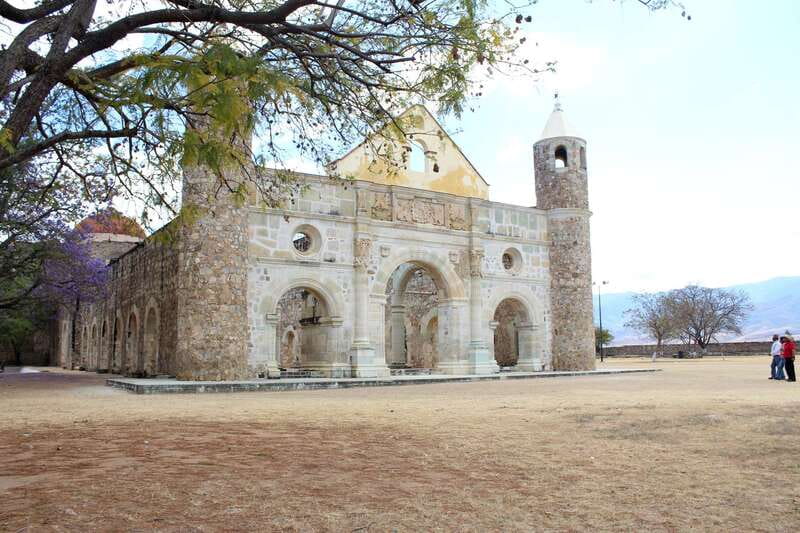
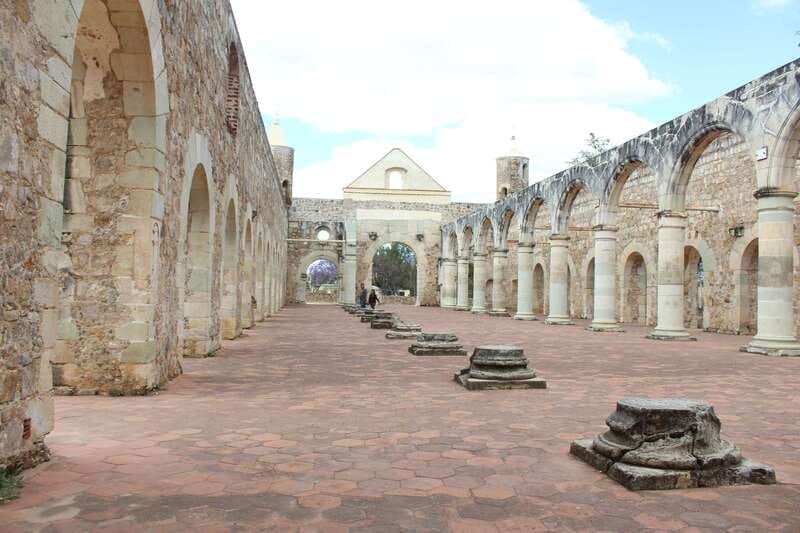
Cuilapam de Guerrero is a Mixtec town known for a 16th-century Dominican ex-monastery stop. It’s listed as optional, which is useful because it gives you flexibility if schedules shift.
This is the kind of stop that can be worth it for the architecture and the layered story of colonial-era influence in Oaxaca. If you like history that you can walk through—stone walls, religious buildings, and the way towns grew around them—this stop can add texture to your day.
But there’s a key consideration: the convent may be closed on your visit due to safety restrictions. Since the tour notes that the former convent can be shut, don’t build your day around it.
If it’s closed, you can still enjoy the town stop as a breather between the more intense archaeology and artisan work. Either way, it’s a good pacing moment.
San Bartolo Coyotepec: black clay pottery you can actually watch happen

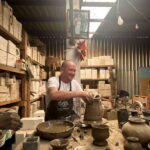
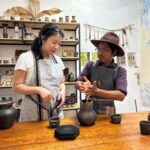
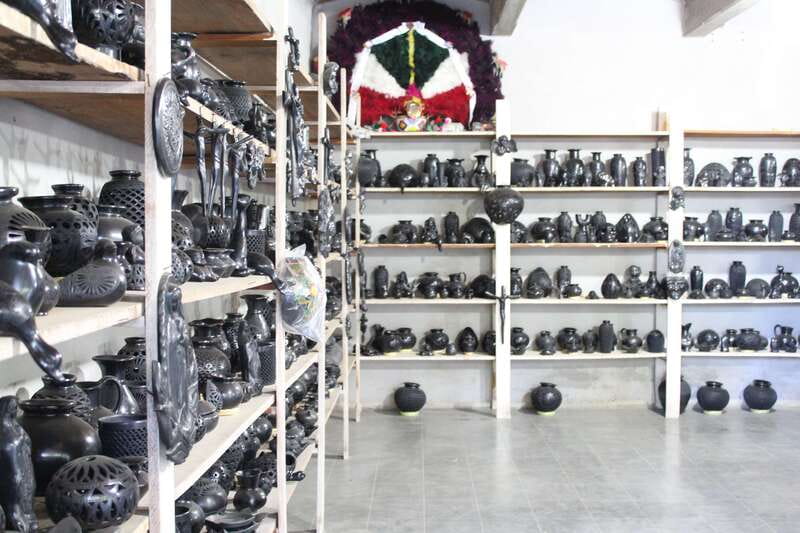
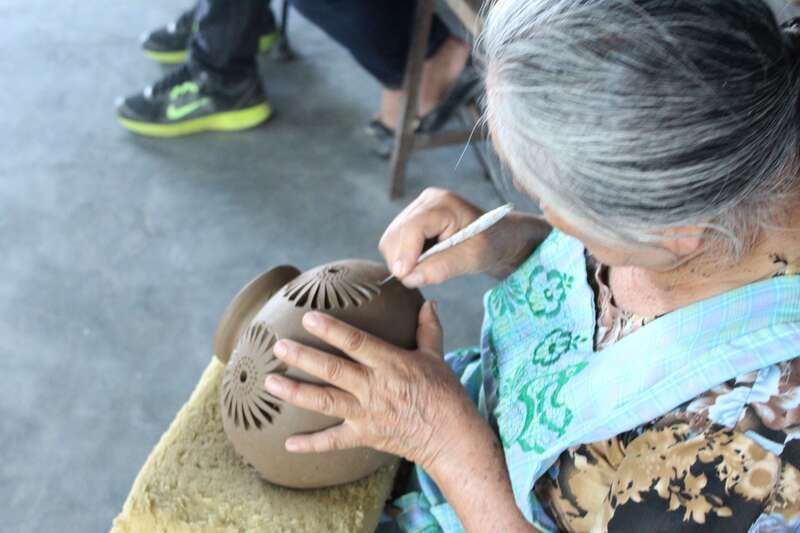
Black pottery in Oaxaca is one of those traditions that feels like magic until you see the method. In San Bartolo Coyotepec, you’ll watch the process of making black clay figures—small works with strong presence.
This stop works because it’s straightforward: you get to observe artisans shaping the clay and working toward the distinctive finish. Even if you don’t know the first thing about ceramics, you’ll understand the craft by watching the steps and paying attention to how the artists handle the material.
Why black pottery belongs on this itinerary
This isn’t just “another souvenir stop.” Put it next to the alebrijes carving experience and you see a theme: Oaxaca crafts preserve identity through technique. One is carved copal wood tied to an ancestral spirit of creativity; the other is black clay tied to regional craft knowledge.
That contrast is a big reason this tour feels more complete than tours that only hit one type of activity.
Price and value: $42 for a guided Oaxaca art-and-ruins mix
At $42 per person for a 7-hour day, the value comes from what’s included: hotel pickup and drop-off, a guide (English and Spanish), and visits to the three named artisan/culture areas (San Antonio Arrazola, Cuilapam de Guerrero, and San Bartolo Coyotepec).
What’s not included matters for your budget:
- Monte Albán entrance fee is $6 per person.
- Food and drinks aren’t included.
So your realistic day cost is closer to $42 + $6 for the entrance, plus lunch you choose on your own (or any optional meal stop arranged during the day). I like that transparency—no surprise “gotchas” once you arrive.
Is it worth it for you?
If you want one guided day that covers:
- a top archaeological highlight (Monte Albán),
- plus two craft traditions with visible process,
- plus a town stop tied to colonial-era architecture,
then the price is fair.
If you’re the type who wants a long, slow, detailed museum-style experience, or you hate walking, you might feel rushed. This tour is built for movement and variety, not for lingering.
Logistics that actually affect your day
This trip runs on local timing, not your perfection. Here are the details that change how smooth the day feels.
Pickup and timing
If you’re staying in the right area during low season, you get hotel pickup and drop-off. During high season, you may meet at a set downtown Oaxaca city meeting point.
You’ll want to be ready: wait in the hotel lobby 15 minutes before your scheduled pickup. The driver wears a blue shirt with a Paraiso Huatulco logo and will call your name. After the scheduled pickup, the driver waits no longer than 5 minutes—so don’t treat this like a vague window.
Also, pickup time is described as flexible to fit the visit schedule. That’s good news because it can reduce waiting, especially for the most popular site.
Walking load
The tour description calls out that it includes a considerable amount of walking, and it’s not suitable for wheelchair users. Even if you’re “fine with walking,” plan for uneven ground at ruins and long stretches between stops.
What to bring so you’re comfortable at every stop

The tour lists a smart checklist, and I agree with it:
- Comfortable shoes (you’ll earn this on the Monte Albán walk)
- Sunglasses and a sun hat
- Water
- Biodegradable sunscreen
- Comfortable clothes for warm weather
- Cash (important for Monte Albán entrance fee and craft purchases)
If you have a small day bag, keep it simple. You’re moving between sites, and you don’t want a bunch of extra carry-ons.
Who this tour suits best
This is a strong fit if:
- you want a high-impact day in Oaxaca without bouncing between too many locations on your own,
- you like artisan culture and want to see how pieces are made, not just buy them,
- you enjoy guided context that helps you interpret what you’re seeing at Monte Albán.
It may be a weaker fit if:
- you’re sensitive to long walking,
- you need a fully accessible route (the tour notes it isn’t suitable for wheelchair users),
- you dislike any shopping atmosphere at craft stops.
Should you book this tour?
Yes—if you’re trying to pack Oaxaca meaningfully into one day.
I’d book it when your priorities match the itinerary’s strengths: Monte Albán for Zapotec context, plus San Antonio Arrazola and San Bartolo Coyotepec for craft you can watch happening. The guide component is especially important here, and the tour’s guiding style is the part most often praised for making the day feel like more than checkboxes.
Skip or reconsider if you know you hate walking or you’re looking for a deeply slow museum-and-lecture experience. This is a “see, learn, and move” day.
If you do book, come prepared with cash, water, and comfortable shoes. That’s what turns a good plan into an easy day.
FAQ
How much is the Monte Albán entrance fee?
The tour lists the Monte Albán entrance fee as $6 per person, and it is not included in the tour price.
Are food and drinks included?
No. The tour notes that food and drinks are not included. Plan for lunch on your own during the day.
How long is the tour?
The duration is 7 hours. Starting times depend on availability.
Will I be picked up from my hotel?
Hotel pickup and drop-off are included, but where pickup happens depends on season. During low season, pickup is available at hotels; during high season, there may be a set meeting point downtown.
What language is the guide?
The tour offers a live guide in Spanish and English.
Is the Cuilapam de Guerrero convent stop guaranteed?
It’s listed as an optional stop, and the convent may be closed due to safety restrictions on your visit.
Is the tour suitable for wheelchair users?
No. The tour is not suitable for wheelchair users.
Is there free cancellation and a pay-later option?
Yes. The tour offers free cancellation up to 24 hours in advance for a full refund, and it has a reserve now & pay later option (you pay nothing today).