REVIEW · OAXACA CITY
Oaxaca Walking Tour
Book on Viator →Operated by The Mezcal Journey · Bookable on Viator
Oaxaca clicks into place fast on foot. In just about 2 hours, you get a tight circuit through the sights that define central Oaxaca City, plus time to ask questions as you walk.
Two things I really like: the stops include free-entry access (so you can spend your money on food and souvenirs), and the small group size (max 10) keeps the talk personal. Guides I’ve seen mentioned by name—Ricardo, Gilberto, and Beto—also share practical recommendations that go beyond the monuments.
One possible drawback: it’s a longish stroll. If you want a slow, seat-and-sit kind of day, bring comfortable shoes and keep your pace steady. And if you’re craving heavier, lecture-style history, you may find the story is more tied to what you’re seeing than a deep academic breakdown.
In This Review
- Key highlights to know before you go
- Oaxaca City by Foot: why this 2-hour route works
- Meeting point at Saint John of God Parish (5:00 pm) and what to expect
- Mercado 20 de Noviembre: the smoke aisle and local food energy
- Zócalo time: understanding Oaxaca’s main square in context
- Teatro Macedonio de Alcala and the Porfiriato-era spotlight
- Templo de Santo Domingo de Guzman: why it’s so often called the star
- Finishing at Templo de San Matías Jalatlaco in Barrio de Jalatlaco
- The guide makes the difference: Ricardo, Gilberto, and Beto vibes
- Price and value: what $21.51 buys you in central Oaxaca
- Who should book this Oaxaca City walking tour?
- Should you book this tour or DIY it?
- FAQ
- How long is the Oaxaca City walking tour?
- What is the price per person?
- What time does the tour start, and where do I meet?
- Where does the tour end?
- Is the tour offered in English?
- How large is the group?
- Are there admission fees for the stops?
- What happens if the weather is poor?
Key highlights to know before you go
- Small group (max 10) for questions without feeling rushed
- 4 major stops with free admission built into the route
- Market-first approach at Mercado 20 de Noviembre, including the smoke aisle
- Iconic Oaxaca landmarks: Zócalo, Teatro Macedonio de Alcala, and Santo Domingo
- Real guide personality (names like Ricardo, Gilberto, and Beto show up often)
- Photo help and extra tips can be part of the experience
Oaxaca City by Foot: why this 2-hour route works
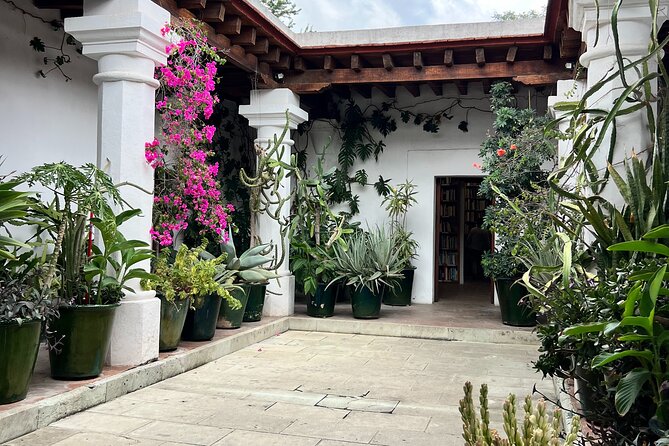
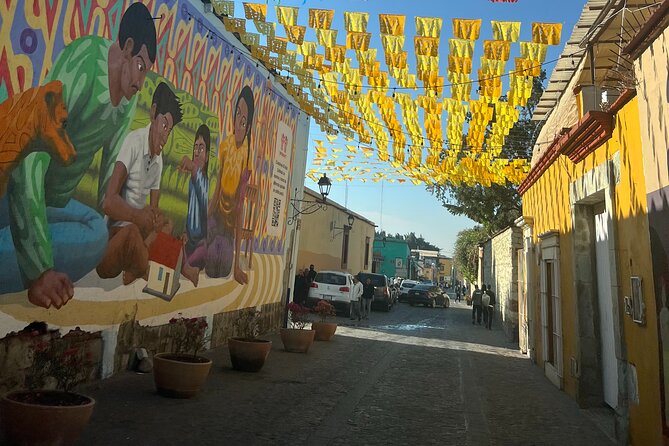
This tour is a smart first-day move because it does the “orientation job.” You start in the Centro area, walk through the heart of the city, and leave with a mental map that makes everything else—restaurants, side streets, churches—feel easier to navigate.
You’re also not paying extra for the big draw buildings. Each of the main stops is listed with free admission, which matters in Oaxaca City where it’s easy to lose track of small added fees. Here, your $21.51 mostly buys guide time and access to the places you’ll want to see anyway: the Zócalo area and the standout church sights.
And because it’s offered in English, you don’t have to rely on translating signs while you’re trying to understand what makes Oaxaca’s public spaces and architecture tick. The whole thing is built to keep you moving, but not sprinting.
You can also read our reviews of more walking tours in Oaxaca City



Meeting point at Saint John of God Parish (5:00 pm) and what to expect
You meet at Saint John of God Parish, C. de Ignacio Aldama 217, in Centro (Oaxaca de Juárez). The start time is 5:00 pm, which is a practical choice: the light starts to soften, the heat often eases, and you’re less likely to feel cooked by mid-afternoon walking.
This is also a good format if you like meeting people but don’t want the chaos of a huge bus group. With a maximum of 10 travelers, you should expect a steadier pace and more chances to ask questions while you’re on the street.
One more practical note: the tour ends at Templo de San Matías Jalatlaco, Miguel Hidalgo 211, Barrio de Jalatlaco. That end point matters. You’re not walking in circles back to the same door. Instead, you finish in a different pocket of the city, which can make it easier to continue your evening without needing a ride right away.
Mercado 20 de Noviembre: the smoke aisle and local food energy

Your first stop is Mercado 20 de Noviembre, around 30 minutes. This is where Oaxaca smells like Oaxaca. The standout detail here is the famous smoke aisle, a legendary slice of market life where food is prepared right in front of you and the whole space feels alive with activity.
Even if you don’t plan to eat immediately, arriving at the market first does something valuable: it sets the tone. It reminds you this city is not only about churches and plazas—it’s also about everyday food craft. You also get a chance to learn what to look for in a market setting, like how stalls are organized and what kinds of local gastronomy are worth seeking out later.
A neat bonus from the experience as some guests describe it: mezcal can appear as part of the tour. One account mentions two mezcal tastings during the walking portion. If that doesn’t happen on your day, you’ll still leave with clearer instincts for where to find mezcal responsibly and what to ask about.
Zócalo time: understanding Oaxaca’s main square in context
Next comes the Zócalo, also about 30 minutes. The Zócalo is the city’s meeting point for everything: civic life, daily errands, and major events. But the Zócalo in Oaxaca isn’t just a big open space. It’s a stage where history, politics, and local culture show up in the surrounding street layout and the rhythm of people moving around it.
This stop works well because you’re not just looking at a pretty square. You’re learning how to read it—how the streets fan out, where key buildings sit, and why this is the place locals treat as their center. Once you understand that, you’ll feel more confident walking to other sights on your own.
If you’re the kind of traveler who likes to understand the “why” behind the “what,” this part is the payoff. You’ll likely come away with better direction for what to do next after the tour ends—where to wander safely, where to pause for photos, and where the best atmosphere tends to gather.
Teatro Macedonio de Alcala and the Porfiriato-era spotlight
After the square, you head to Teatro Macedonio de Alcala for another 30 minutes. This theatre is described as an icon from the time of the porfiriato and its maximum splendor—and that framing matters.
A theatre like this isn’t just a building. It’s a clue about how Oaxaca viewed public art and social life when the city was projecting power and prestige. Seeing it as part of a walk (rather than as a standalone “check the box” stop) helps you connect the dots between architecture styles, public spaces, and what the city valued at different times.
One practical reality: outside viewing from street level means you’ll get the feel of the façade and setting, but you’re not guaranteed a deep interior walkthrough. That’s usually fine for a tour this length. It keeps the pace moving so you still make it to the church stop that often becomes the highlight for many people.




Templo de Santo Domingo de Guzman: why it’s so often called the star
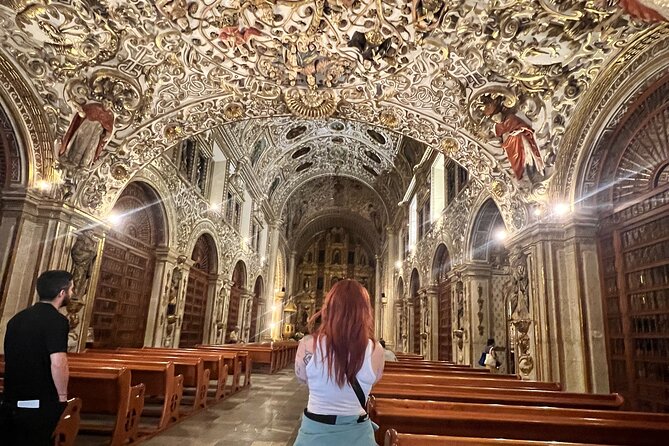
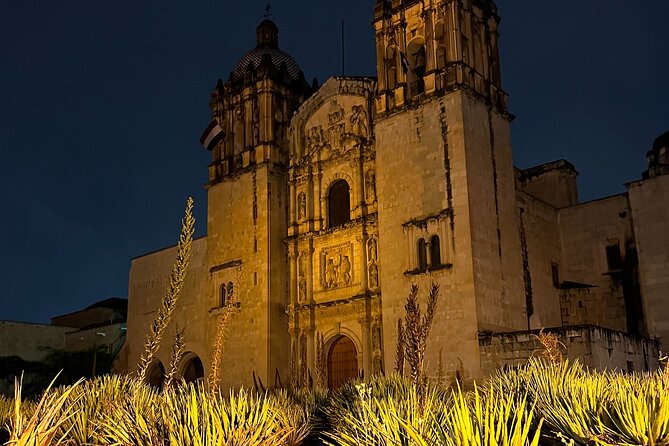
Your final major architectural stop is Templo de Santo Domingo de Guzman, about 30 minutes. This is one of Oaxaca’s best-known churches, described as emblematic and for many the most beautiful in all of Mexico. Even if you don’t rank it personally as your #1, it’s hard not to see why people get emotional here.
This is the part of the tour that gives you a “slow down” moment. Churches like this pull you upward with their details, and they also ground you in why Oaxaca’s public life and faith culture are tied together. You’ll get time to take in the front, absorb the scale, and connect what you learned earlier at the Zócalo to a key monument.
If you love photography, this is usually when good shots happen. You’ll have street context in front of you, plus a stable landmark shape that’s easier to frame than narrow side streets.
Finishing at Templo de San Matías Jalatlaco in Barrio de Jalatlaco
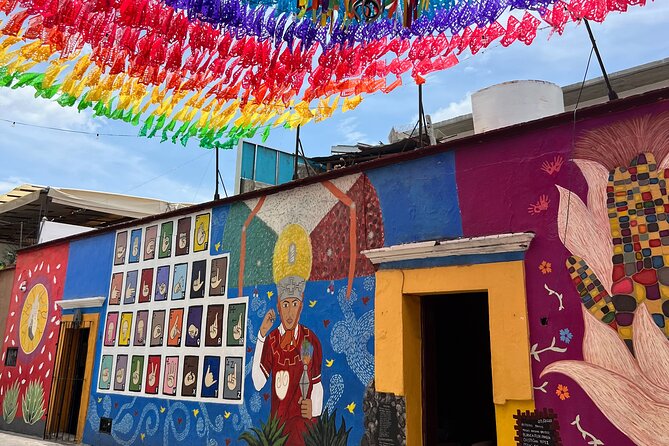
The tour ends at Templo de San Matías Jalatlaco in Barrio de Jalatlaco. Ending here is a smart move for value because you’re not done the minute you see Santo Domingo. You get a second church environment to watch the city shift in tone—from the big headline attraction to a more neighborhood-feeling finish.
That can be a great setup for your evening. If you’re hungry, you’ll already have the market-and-plaza appetite from earlier. If you’re tired, you can still enjoy the atmosphere without needing to immediately line up another major activity.
And because the meeting and ending points are different, it can reduce your dependence on rideshare or bus routes right after the tour. You’re simply closer to the next thing you’ll want to do.
The guide makes the difference: Ricardo, Gilberto, and Beto vibes
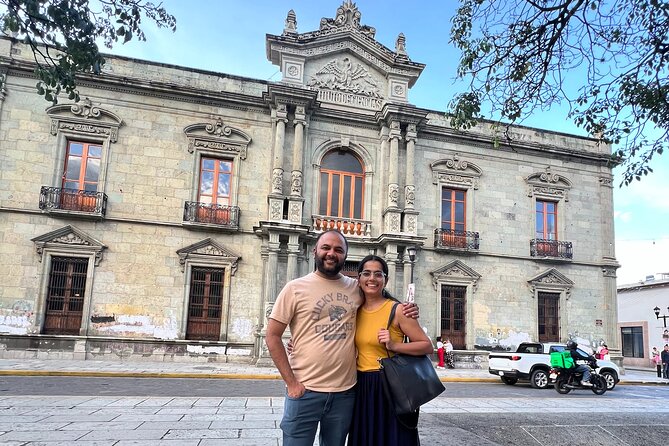
The biggest strength of this tour is the guide. Names that show up include Ricardo, Gilberto, and Beto, and the thread running through their style is clear: they explain what you’re looking at and answer questions without brushing you off.
You’ll also benefit from their practical side. Multiple accounts highlight restaurant and store recommendations, plus help with photos. That matters because Oaxaca has a lot of great options, and a “here’s where I’d go tonight” suggestion saves you time and avoids the tourist-trap guessing game.
Another small but useful point: at least one guest noted fast responsiveness from a guide via WhatsApp/text. That can be handy if you’re navigating on your own between stops or trying to coordinate where to meet back up.
Price and value: what $21.51 buys you in central Oaxaca
Let’s talk money in plain terms. At $21.51 per person for about 2 hours, you’re paying for three things: guided context, efficient routing, and free-entry access to the listed stops.
The route includes four major sights, and each stop is described as free admission. That’s meaningful value because church and theatre areas can cost extra depending on what’s open and what access is offered that day. Even if you only end up enjoying one stop deeply, you still got multiple “anchors” that give you a strong Oaxaca baseline.
The small-group cap (10 people) also improves value. With fewer travelers, you’re more likely to get direct attention and better pacing for photos, questions, and “wait, what is that?” moments.
If you’re trying to see Oaxaca City efficiently—especially on day one—this feels like a good investment rather than a random add-on.
Who should book this Oaxaca City walking tour?
You’ll likely love this if you:
- want an easy, high-impact introduction to Centro Oaxaca City
- like walking tours where conversation matters as much as the monuments
- want to hit the major landmarks without planning each stop
- prefer an English explanation tied to real places
You might not love it as much if you:
- dislike walking long distances in an evening schedule
- want a heavy, structured history lecture rather than stories tied to sights
- need lots of seating breaks (this is a walk-first format)
Also, if you’re the type who likes to photograph churches and market spaces, your odds are good. You’re set up for those moments.
Should you book this tour or DIY it?
If you’re asking whether to book or just wander: I’d book this when it’s your first time in Oaxaca City. The tour gives you a map in your head, not just images on your phone.
If you already know your way around and you’re mostly looking for flexible time to explore markets on your own, you could DIY parts of this route. But the guide does more than point. The guide context at the Zócalo and the Santo Domingo stop helps you understand what you’re seeing fast—so your self-guided wandering later feels less random.
My practical recommendation: book it early in your stay, ideally the first day you’ll have energy for walking. Wear shoes you can move in, bring water, and plan to use the guide’s recommendations right after the tour while restaurants and streets are still fresh in your mind.
FAQ
How long is the Oaxaca City walking tour?
The tour lasts about 2 hours.
What is the price per person?
It costs $21.51 per person.
What time does the tour start, and where do I meet?
The tour starts at 5:00 pm. You meet at Saint John of God Parish, C. de Ignacio Aldama 217, Centro, 68000 Oaxaca de Juárez, Oax., Mexico.
Where does the tour end?
The tour ends at Templo de San Matías Jalatlaco, Miguel Hidalgo 211, Barrio de Jalatlaco, 68080 Oaxaca de Juárez, Oax., Mexico.
Is the tour offered in English?
Yes. The tour is offered in English.
How large is the group?
The experience has a maximum of 10 travelers.
Are there admission fees for the stops?
The listed stops are described as free admission for each stop: Mercado 20 de Noviembre, Zócalo, Teatro Macedonio de Alcala, and Templo de Santo Domingo de Guzman.
What happens if the weather is poor?
The tour requires good weather. If it’s canceled due to poor weather, you’ll be offered a different date or a full refund.